 21805 FOOTHILL BLVD, HAYWARD, CA 94541
 1-510-581-6804
Charge Air Cooler Leak Testing: What a Test Can and Cannot Tell You
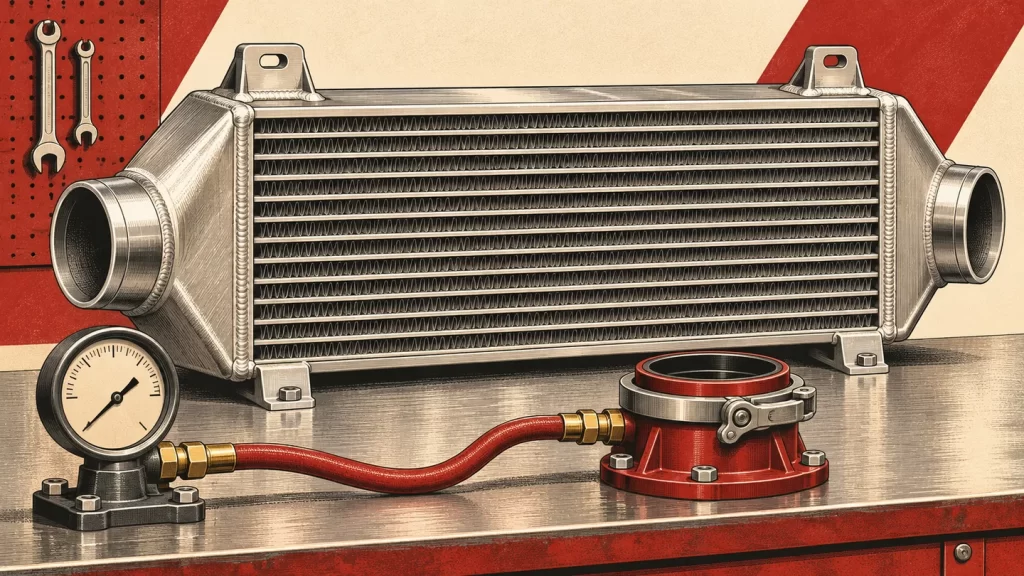
What does a charge air cooler leak test measure?
A useful test starts with a defined boundary and a matching manufacturer procedure, so everyone knows exactly what was checked.
A qualified technician records the equipment identity, the scope of the check and the actual result. A core-only check examines the cooler and the test fixtures at its ports. A check that includes more of the assembled charge air path can also include connections and joints. A report that says “failed leak test” without explaining the setup is incomplete for a component repair decision.
Ask whether the technician located the escape path. A pressure drop records loss under the test conditions. It may take another step to distinguish a core or tank fault from a hose, an attached joint or a fixture leak. A marked photo can help the equipment technician and the component shop discuss the same part. Describe the location relative to a port, mounting corner or tank seam so a shop receiving the cooler after removal can orient it correctly.
A static leak result also has limits. It describes the assembly under the defined conditions and says little about airflow through the external fins. If the symptoms appear only with a warm engine or during a specific load, keep those details attached to the report.
If a report uses a generic term such as “charge side,” ask the technician to name the actual ports. That small clarification helps prevent a second team from mistaking a hose-only check for a test of the complete cooler assembly.
How do you separate a cooler leak from a boot or clamp problem?
The most useful record shows the suspected location, the test boundary and what changed after a connection or component check.
The charge air path runs from the turbocharger outlet through the cooler and onward to the intake. A boot connects rigid parts while allowing some movement. Loose or damaged clamps, deteriorated boots, pipe damage and the cooler itself deserve distinct entries in the inspection. The Detroit Gen 5 DD platform manual calls out cooler, ductwork and flexible connections together when describing its inspection. Use the instructions for your own equipment.
For example, a crew may hear a hiss on a loaded climb. If a technician locates it at a boot connection and the core passes its applicable check, the service discussion should follow the evidence at that joint. If the core is tested separately and the loss is localized at its tank seam, note the finding and document the surrounding area. If the loss was measured with several joints in the test boundary and no location was confirmed, report it as unresolved.
A dark ring at a joint can be a useful observation. Record whether it appeared after recent service and whether the technician identified a leak there. Pair a detail photo with an overall image. A close-up alone can be hard to place once the component is off the truck or machine.
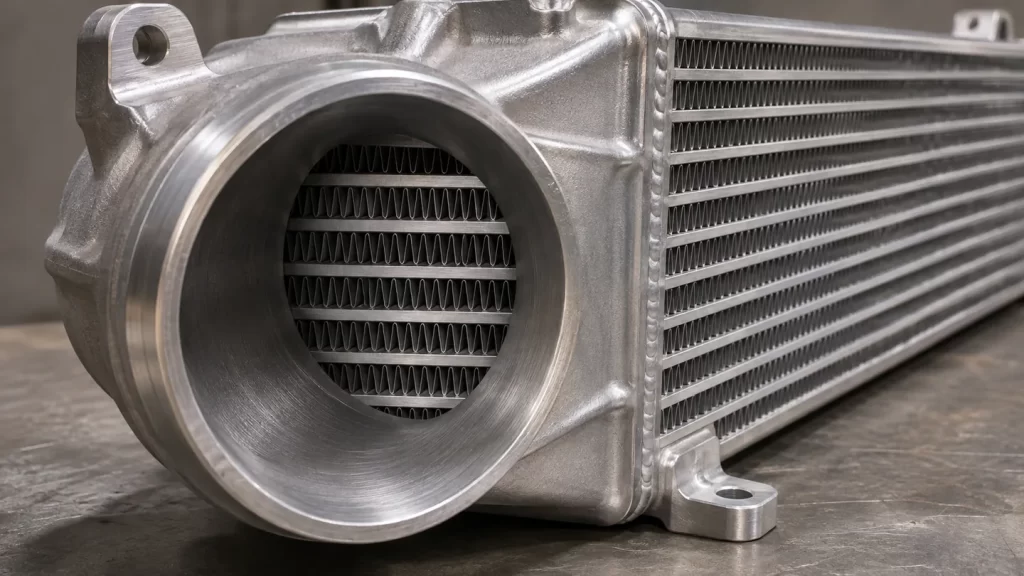
What should you ask for in a leak test report?
A short written result is more useful than a pass or fail when you are planning removal, handling or repair.
Ask for the engine, chassis or machine identification, as appropriate, plus any cooler number and the source of the applicable test procedure. Have the technician record which joints, ports and components were included. If there is a measured result, capture the units, duration and applicable acceptance criterion as recorded by the technician. This documentation helps a second person interpret the result without guessing how the check was done.
| Record | What it helps the next technician decide |
|---|---|
| Core checked separately, leak located at a seam | Whether a documented core concern can be taken to a component shop for assessment |
| Loss with cooler and boots included, leak unlocated | Which area needs further isolation before choosing a part |
| Core passed its applicable test, external fins packed | Whether to pursue airflow or heat transfer separately |
| No written result after a shop visit | Which evidence to recover before ordering or removing a cooler |
If a test was performed before or after changing boots, clamps or pipes, write down the sequence. Results from different setups should be labeled separately. On a fleet vehicle with repeated complaints, capture the unit number and date so results for neighboring trucks cannot be mixed.
What can a passed leak test leave unresolved?
A passing result helps narrow the search, but the operating complaint and the conditions under which it appears still matter.
A leak check does not assess the whole engine’s performance. The technician may still need to investigate the rest of the intake and exhaust systems, the controls or the operating conditions. A cooler may also pass a leak check while road debris or folded fins restrict outside airflow. If the complaint includes high temperature under load, record which temperature was elevated and where the reading came from.
Do not treat a pressure number found online as a procedure. Different equipment and components can have different criteria and tooling. Compressed air stores energy. Use the correct manufacturer procedure and qualified personnel with approved equipment, and leave setup decisions to the technician. Owners can add the most value by providing original observations, service history and the report, rather than trying to repeat a test from a video.
A useful handoff ends with a clear open question. For example, “core passed the isolated check, loss remains when the outlet connection is included” sends the next technician to a defined part of the system. “Seems like the cooler” can lead to unnecessary removal.
What do owners ask about charge air cooler leak tests?
These answers help owners read a test report, talk with their engine technician and decide whether a component inquiry fits.
Does a failed test mean the core is bad?
It depends on what the technician tested and whether the leak was located. A check that includes pipework, joints or fixtures can register loss outside the cooler core.
Can a cooler pass a leak test with bent fins?
Yes. The air passages can hold pressure even when external fins are damaged. Assess airflow and pressure integrity as separate conditions.
Is there one test pressure for all heavy equipment?
Use the specification and approved procedure for the identified application. Share the documented result and setup with anyone reviewing the repair.
What if a hissing sound only occurs under load?
Record the load, operating state and any warnings. Give that information to the equipment technician, who can decide which checks apply safely.
How can Pankey’s help with a documented cooler leak?
Bring the component identity and test findings to a Hayward service conversation so Pankey’s can discuss the appropriate component scope.
Pankey’s lists charge air cooler services for industrial equipment. If the technician found a leak at the core, tank or port, share the location, report and component photos when you call. If the check included boots and pipework and the loss is still unlocated, share that boundary before arranging removal. Ask about accepted work and handling for your specific cooler before bringing it to the shop.
