 21805 FOOTHILL BLVD, HAYWARD, CA 94541
 1-510-581-6804
Oil Inside a Charge Air Cooler: What to Report Before Cleaning
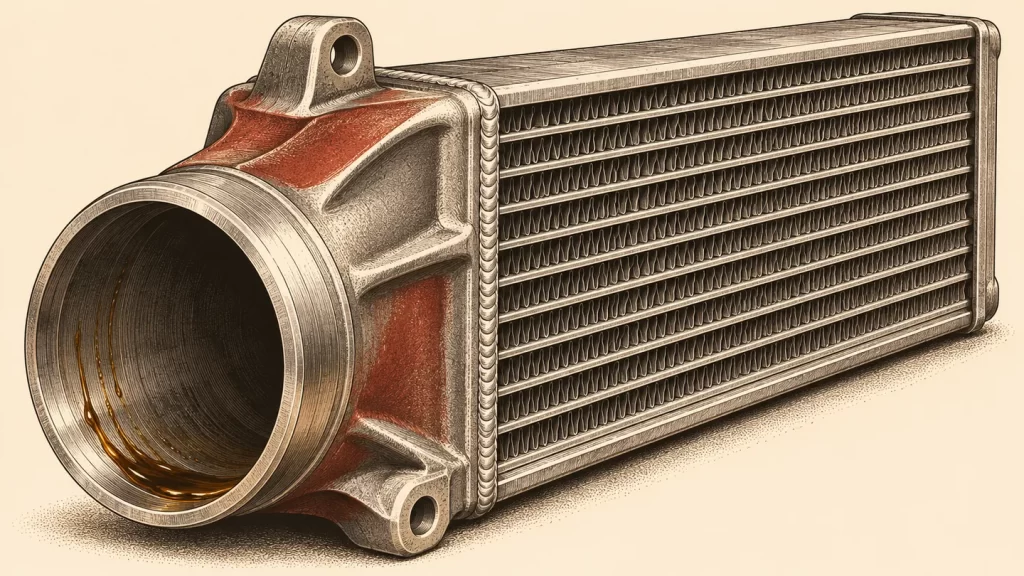
What should you record when you find oil in a charge air cooler?
Start with where the oil was seen, when it appeared and what the equipment was doing before the discovery occurred.
Describe the observation in ordinary language. A light film visible at a disconnected inlet, liquid that collected during a technician’s inspection and a stain on the outside of a hose are different findings. Say who observed it and what had already been moved, drained or cleaned. If the quantity was estimated by the technician, record it as an estimate. If nobody measured it, leave the amount unknown.
Include the make, model, engine and available cooler identifier. Note which end of the cooler was involved. A wide photo can show whether the observation was at the turbo side or the intake side. A detail photo preserves the condition if the equipment technician later needs to clean or remove the component. Gather photos only when the equipment is safely out of service and the area is accessible under the applicable procedure.
An external mark around a joint does not tell you how much material is inside the cooler. Likewise, oil seen in the cooler does not, by itself, identify how it arrived. Keep a written distinction between what was seen and what the technician has verified.
When several repairs were performed together, bring the work orders in sequence. A note made before the cooler was disconnected can help preserve the location of an oil trace. Keep it separate from later observations on a cleaned or transported component.
Why does a recent turbo failure change the cleaning conversation?
When a turbocharger has failed, the equipment technician needs to consider where oil or debris could have traveled before restart.
A turbo-related event can affect multiple parts of the intake or exhaust path. The engine and chassis instructions determine which components must be checked and how to handle contamination. Detroit’s Series 60 service manual, for example, treats cleanup after a turbocharger failure as a wider equipment job, with oil and debris among the concerns. The same document refers readers to OEM guidance for charge air cooler service. Its requirements should be applied to the appropriate engine and vehicle only.
Give the responsible technician the sequence of events. Include the first warning or symptom, the diagnosis they made, what was replaced and what parts have already been inspected. If the failure involved suspected debris or a significant release of oil, ask the technician to determine readiness for restart under the equipment procedure. A cleaned cooler is one entry on that checklist.
A planned shutdown creates a chance to preserve information. Have the technician label the cooler ends in the work record, record whether contaminants were found upstream or downstream and retain any service photos. That history can matter if a second technician receives the cooler after the original truck or machine has moved elsewhere.
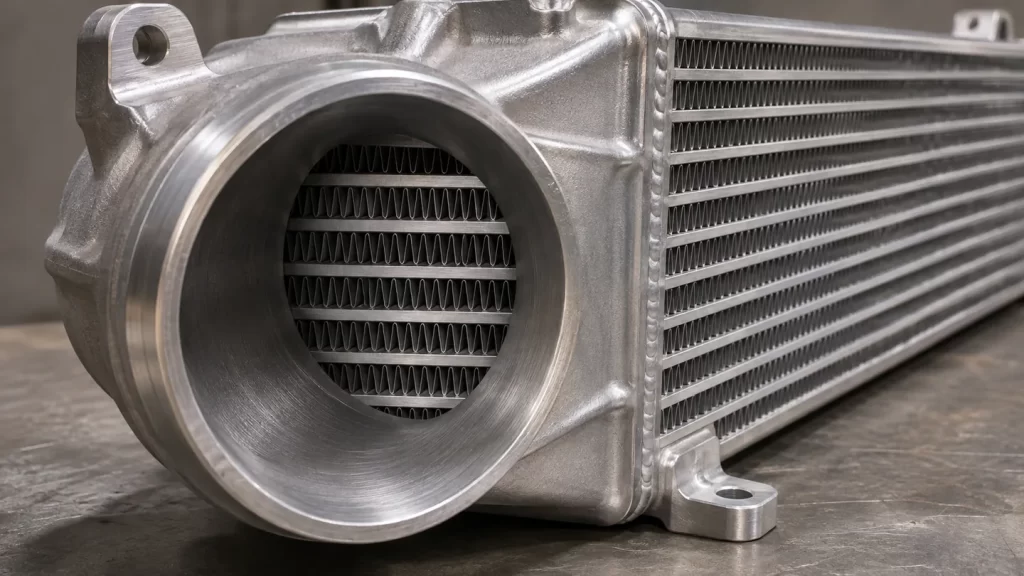
What belongs in a charge air cooler contamination handoff?
A good handoff describes what was found, what the technician already checked and who will decide when the equipment returns.
| Observation | What to report |
|---|---|
| Film seen inside an inlet during inspection | Which end, who observed it, when the duct was opened and whether there was recent intake work |
| Oil found at an external boot joint | Whether the stain is old or fresh, any loss of boost and whether the joint was assessed |
| Liquid or debris after a confirmed turbo event | Failure sequence, affected sections of the air path and the technician’s disposition for each component |
| Oil appears again after cleaning | Run time or hours since service, any new warnings and whether the source was confirmed |
If you have a previous invoice, separate what it documents from what you remember. “Turbo replaced last week” provides a time reference. “Cooler inspected, oil at hot-side port” identifies a component finding. “Cooler cleaned and accepted under the manufacturer’s criteria” is a different statement and should appear only if the responsible technician documented that outcome.
For a fleet handoff, put the unit number and date on the same record as the part identifier. A cooler in a shared shop can be easy to confuse with a similar unit. If the part is still installed, say so. Let the technician coordinate removal, protection of openings and any transport requirements before the cooler changes hands.
When does cooler cleaning fit the engine repair plan?
The equipment maker’s requirements and the condition of the identified cooler guide the decision about inspection, cleaning, repair or replacement.
Exterior cleaning deals with the exposed fin area and outside airflow. Internal contamination is a separate question. The engine technician should identify the type of material, which sections may be affected and what the maker allows for the cooler. A service plan should say how the cooler will be evaluated and what would make replacement necessary. Cleaning selection, verification and reassembly belong to the responsible service team.
If the cause is still unresolved, keep it open on the work order. Oil found again after service can lead to further diagnosis and comparison with earlier records. Capture when it reappeared and whether the operating conditions changed. Wiping a joint before documenting it can erase the location evidence another technician needs.
Keep leak assessment separate too. If there is a low-boost complaint along with oil residue, ask whether the technician found an air leak, confirmed contamination or found both. Record the relevant test boundaries and results. Two issues can coexist, and each needs its own work decision.
What do owners ask about oil inside a charge air cooler?
These common questions help frame a cleaning inquiry while keeping the equipment technician’s engine diagnosis separate from the cooler work.
Does an oily film prove the turbocharger failed?
A film is an observation. Give the technician its location, timing and any changes in oil consumption or performance so they can evaluate the system.
Can I clean the outside and reinstall the cooler after a turbo failure?
The outside and inside are separate areas. Follow the equipment technician’s cleanup and return-to-service plan for the complete affected air path.
What should I tell the shop if the cooler has already been removed?
Report the engine and cooler IDs, which end showed oil or debris, what was cleaned and whether the technician has a written finding.
Does residue at a hose clamp prove the core leaks?
It indicates an area to inspect. The technician needs to assess the joint and determine whether any leak has been located in the core.
How can Pankey’s help with a contaminated charge air cooler?
Tell the Hayward shop what the technician found and ask which component work fits the wider cleanup and service plan.
Pankey’s handles inquiries about industrial charge air cooler service. Tell the shop whether the concern is external buildup, possible internal contamination or a documented leak. Share the equipment and component identity, particularly if the job follows a turbocharger event. Confirm the work the shop can consider before moving the cooler. Keep the equipment technician involved in decisions about the source, the rest of the system and return to service.
