21805 FOOTHILL BLVD, HAYWARD, CA 94541
 1-510-581-6804
Where Can You Get Industrial Heat Exchanger Cleaning Near San Francisco?
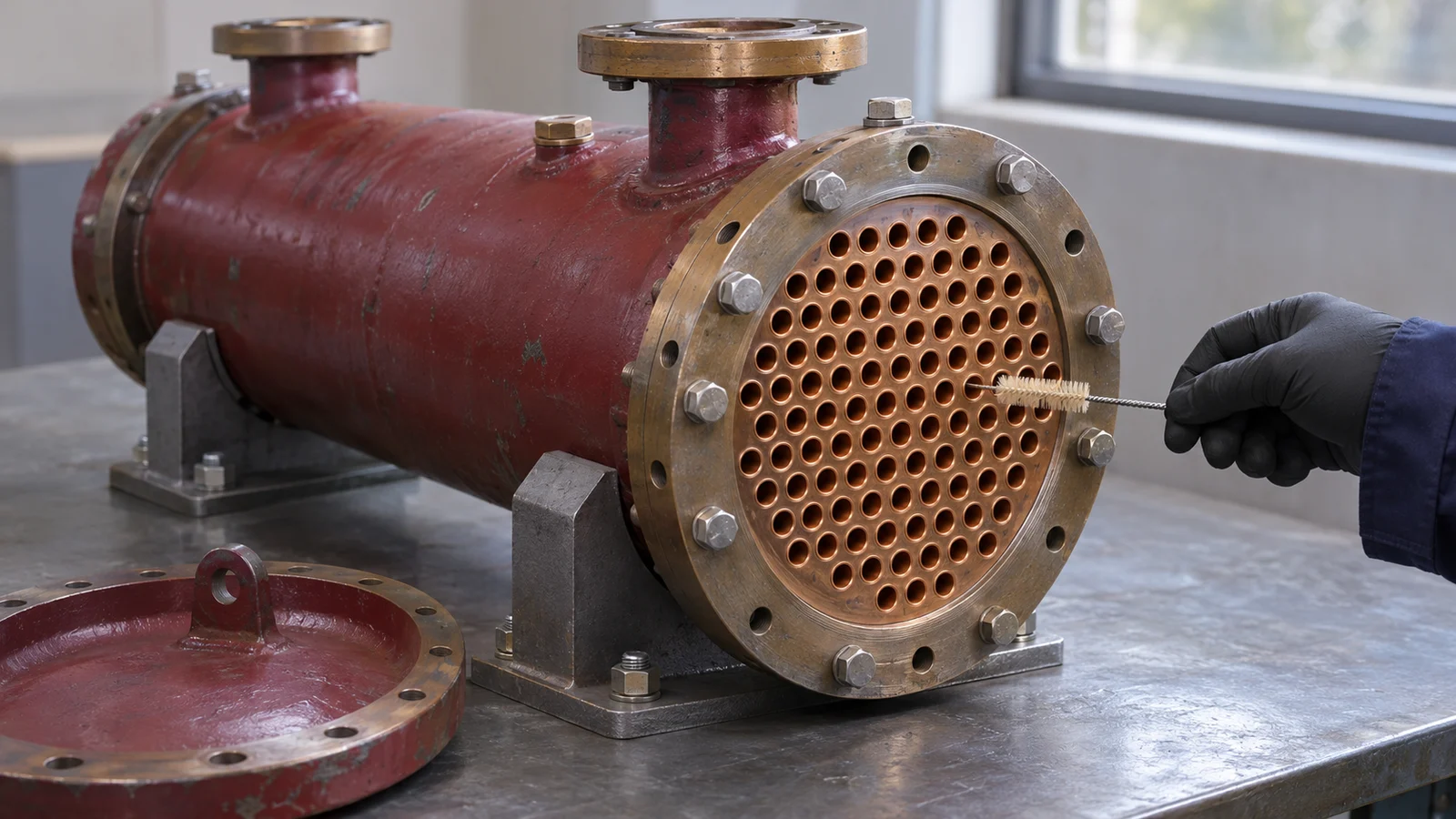
San Francisco industrial operators can contact Pankey’s in Hayward about heat exchanger cleaning and repair. Identify the exchanger construction, both process circuits, observed fouling and service objective before arranging component handling.
A request to clean a heat exchanger can describe very different equipment. A shell-and-tube unit, plate exchanger, oil cooler and marine exchanger do not share one universal cleaning procedure. The media, deposits, materials and construction all matter before a component shop can discuss the work.
This guide is for industrial and commercial equipment, not home HVAC. It helps San Francisco maintenance teams prepare an inquiry without claiming that every exchanger can be serviced the same way or that a city article establishes an on-site visit.
Who services industrial heat exchangers near San Francisco?
Choose a shop by the actual component and service question. Industrial heat exchanger work is not the same as residential furnace service, building air-conditioning maintenance or a generic chemical flush. State the equipment application and whether the exchanger is installed or already removed.
Pankey’s lists industrial heat exchanger service from its shop at 21805 Foothill Blvd in Hayward. San Francisco businesses can contact that location, but this page does not create a San Francisco branch or promise jobsite, pickup or delivery service.
Start with the manufacturer and model if known, nameplate, overall photographs and connection layout. Then identify the construction: shell-and-tube, plate-and-frame, brazed plate, finned cooler or another design. If the term is uncertain, say so and provide images rather than selecting a service from a similar-looking product online.
Describe the application and the media on each side. Water, coolant, oil, seawater and process fluids can leave different deposits and raise different compatibility and safety questions. Do not omit a known chemical or contamination history simply because the unit has been drained.
Identify who owns process isolation, decontamination, removal and recommissioning. Component cleaning does not automatically include facility piping, production-system diagnosis or a declaration that equipment is safe to open.
Which industrial heat exchangers can a component repair shop assess?
A component repair shop may assess exchangers that fit its equipment, material and service capabilities, but suitability must be confirmed. A removable shell-and-tube cooler presents different access from a welded assembly. A gasketed plate exchanger can be opened in ways that a brazed plate unit cannot.
Photograph the whole exchanger, nameplate, end covers, tube sheet or plate pack, connections, mounting supports and visible leak or deposit areas. Show scale with dimensions rather than an uncalibrated close-up. Record the connection labels used by the facility.
Ask whether the initial information is enough to discuss the component or whether drawings, a data sheet or additional measurements are needed. Previous modifications can matter when a replacement cover, nonstandard fitting or repair changes the original arrangement.
Do not send a component containing unknown hazardous residue without agreement on preparation. The equipment owner must communicate process history and follow its environmental, safety and shipping procedures. A clean exterior is not proof that internal passages are safe.
| Exchanger detail | What to document | Why it matters |
|---|---|---|
| Construction | Shell, plates, tubes, fins and removable covers | Shapes access and service options |
| Two circuits | Normal media, pressure context and contamination | Prevents the sides from being confused |
| Deposits | Color, texture, location and process history | Frames compatibility questions |
| Leak evidence | External location or suspected cross-contamination | Separates cleaning from repair |
Can industrial heat exchangers be repaired instead of replaced?
Repair versus replacement depends on construction, defect location, material condition and access. A damaged end cover, tube concern, leaking joint and broad corrosion pattern require different discussions. The fact that an exchanger can be opened does not mean every internal defect can or should be repaired.
Ask what inspection or testing supports the proposed work and whether the rest of the assembly affects the recommendation. If cross-contamination is suspected, explain the evidence and let the appropriate system provider determine what other equipment or product may need evaluation.
Replacement decisions also require direct identification. Preserve connection sizes and positions, mounting geometry, dimensions, materials and duty information available from the owner’s records. A visually similar exchanger may not match the process requirements.
Cleaning can expose condition that deposits were hiding. Confirm how new findings would be reported and who can approve added work. Do not treat a cleaning quote as an unconditional promise that the exchanger will be suitable for continued operation.
If the equipment owner has design, pressure or regulatory requirements, raise them before service. A local article cannot establish code compliance, testing acceptance or suitability for a process.
Can cleaning help when industrial cooling equipment overheats?
Cleaning may help when fouling restricts flow or heat transfer, but the method must fit the exchanger and deposit. Exterior fin cleaning, tube brushing, chemical circulation and disassembly are not interchangeable. Each has access, compatibility and waste-handling questions.
EJ Bowman’s manufacturer FAQ discusses cleaning shell-and-tube heat exchangers and emphasizes maintaining tubes without damaging them. Use the exact manufacturer’s manual for the installed unit, because generic guidance does not define Pankey’s service or the correct method for every exchanger.
Report whether the concern is reduced performance, pressure change, overheating, visible deposits, leakage or contamination between circuits. Those signs help frame the inquiry but do not prove the exchanger is the only system problem.
Preserve samples or photographs only when the facility’s procedures allow. A deposit description can help, yet chemistry and hazard classification belong with qualified process and safety personnel. Do not taste, touch or improvise a test on unknown material.
After cleaning, the party responsible for the system must decide how the exchanger is reinstalled, filled, vented, checked and returned to operation. Component work should be documented precisely rather than summarized as the whole process being fixed.
What affects the cost of industrial heat exchanger service?
Cost depends on the defined scope: construction, size, access, contamination, disassembly, condition and testing expectations. A cleanable tube deposit and a suspected tube-to-shell leak are different work requests even if both began with poor heat transfer.
Ask what the initial assessment includes and what requires the component to be available. Clarify how extra findings are handled, which testing is included and what documentation will be returned. Identify one authorized contact for the equipment owner.
Confirm isolation, decontamination, removal, lifting, transport and installation responsibilities. This article does not promise on-site work or logistics from San Francisco. Do not move a heavy or contaminated exchanger until the applicable parties agree on a safe plan.
Keep drawings, nameplate photos, service history and the final work description together. When an exchanger returns to service, the facility record should state what was cleaned or repaired and which system-level checks remain the owner’s responsibility.
If production timing matters, share the constraint without asking for a guaranteed turnaround before assessment. A responsible schedule follows identification and scope, not the city in the page title.
What should I send before arranging industrial heat exchanger service?
Prepare a concise handoff: equipment ID, application, construction, dimensions, both circuit media, observed problem, process history, photographs and current installed or removed status. Note any known hazards or cleaning restrictions through the owner’s normal documentation.
Separate facts from interpretations. Reduced performance may be real while the location and composition of fouling remain unknown. A suspected internal leak should be described as suspected unless testing or qualified analysis has confirmed it.
Ask how the shop prefers to receive drawings or photographs and what must happen before the component is accepted. The contact page can start the conversation but does not itself approve transport, decontamination or work.
For multiple exchangers, label every image and document with the asset ID. Similar units can serve different processes or contain different materials, making a copied assumption especially risky.
Retain the as-found information before cleaning changes the evidence. It helps the shop and process team compare the original concern with what is discovered during component assessment.
What questions should I ask before booking service near San Francisco?
Does Pankey’s have a San Francisco branch?
No. Pankey’s is in Hayward. San Francisco operators can contact that shop and confirm whether the specific exchanger and proposed work fit its scope.
Is every heat exchanger cleaned with the same method?
No. Construction, materials, deposits and process media matter. Shell-and-tube, plate and finned exchangers can require different access and compatibility decisions.
Should I identify both process circuits?
Yes. State what normally flows on each side and any suspected contamination. Do not describe an unknown residue as harmless or omit process history.
Can cleaning repair an internal leak?
Cleaning and repair are separate questions. Cleaning may expose condition, but it does not by itself repair a tube, joint, plate or seal defect.
Can I send an exchanger without decontamination records?
Confirm requirements first. The owner is responsible for communicating process history and following applicable safety, environmental and transport procedures before component handling.
How can Pankey’s help with industrial heat exchangers near San Francisco?
Pankey’s handles industrial cooling components from one Hayward shop. Mario and Paul own the business. Mario is the elder and most experienced, and Paul is the estimator and general manager.
San Francisco operators can contact the shop with the heat exchanger identification, circuit information and service objective. Confirm the accepted component, preparation and handling arrangements before moving it.
The industrial heat exchanger guide offers broader maintenance context. Use it as background, then rely on the exact component documents and agreed scope.