 21805 FOOTHILL BLVD, HAYWARD, CA 94541
 1-510-581-6804
Drill Rig Radiator Cleaning and Repair: Planning Service Around the Job
Drilling equipment works around changing tasks, site conditions and project schedules. A cooling complaint needs those details as well as the radiator’s identity. This guide helps owners and maintenance coordinators prepare an industrial drill-rig radiator cleaning or repair inquiry. It concerns mobile drilling machinery, not handheld drills, and it keeps component work separate from diagnosing or servicing the entire rig.
What should be recorded when a drill-rig radiator runs hot?
A drilling rig’s cooling complaint belongs with its actual working conditions. Start with the task, warning and available equipment identification.
A temperature warning is a reason to follow the rig’s operating instructions and arrange an appropriate assessment. It does not identify a failed radiator by itself. The equipment technician may need to evaluate airflow, coolant loss, circulation and other conditions in the cooling system. Keep the actual warning and operating context on the work order.
Explain what the rig was doing when the concern appeared and whether anything changed after recent maintenance. If there is visible leakage or contamination, list it separately. A broad note saying only “drill radiator” can lose the observations that made the operator request attention in the first place.
| Detail | What it clarifies |
|---|---|
| Rig and engine identity | Which equipment and cooling arrangement are involved. |
| Actual warning | What indication prompted the concern. |
| Task and timing | When it appeared during the work. |
| Recent maintenance | What changed before the complaint. |
If several people coordinate the job, preserve the original description as it moves between them. The person arranging service may not be the operator who saw the warning.
How should dust and airflow concerns be discussed?
Dusty work can leave a cooling package looking guilty. Inspection still needs to consider access, airflow and the surrounding system.
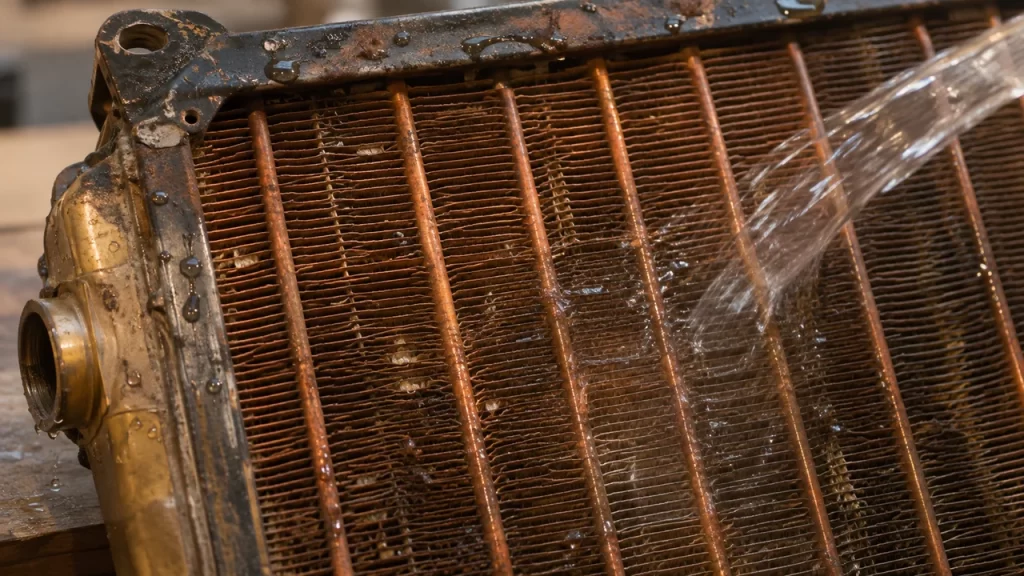
Exterior material can collect on cooling surfaces and in spaces that are difficult to see from the front. A drilling rig may have several cooling components close together. Identify which core and airflow path are involved before treating all visible dirt as one radiator-cleaning job.
Ask what access is appropriate and which manufacturer procedure applies. A clean-looking front face does not establish the condition between components, and an internet pressure recommendation is not a specification for the actual unit. Leave isolation, guarding and component access to the people trained for the equipment.
Also keep exterior cleaning separate from coolant-circuit work. If a concern remains after cleaning, share exactly what was done and what symptom persisted. That helps the next discussion address the actual condition instead of repeating an assumption about dirt.
How should radiator repair fit into drilling-project planning?
A component repair needs its own plan within the drilling schedule. Keep removal, handling and wider equipment responsibilities clearly assigned.
Leakage or visible damage should be assessed as a separate concern from external buildup. Ask what source or defect has been identified and what inspection shows about the unit. Construction, damage extent and surrounding condition guide the repair or replacement discussion, not the project schedule by itself.
Confirm which component work is accepted and which tasks remain with the rig’s equipment team. Removal, draining, lifting, transport and reinstallation need appropriate arrangements. A radiator service listing does not establish field repair, rig disassembly or site transport capability. Discuss those responsibilities before the unit is moved.
If replacement is proposed, preserve the component identity and connection information. A similar-looking radiator is not a complete fit or application specification. The wider equipment technician should remain involved in the decision and return-to-service plan.
What details help arrange drill-rig radiator service?
Before booking radiator work, send the details that connect the part to the rig. Good identification keeps the conversation grounded.
Start with equipment and engine identity, available radiator information and a short symptom record. Include an overall photograph and a safe close-up of the concern. Explain whether the radiator remains installed, which person is coordinating the rig’s maintenance and where the equipment is located in the Bay Area.
Ask what inspection and information are needed before discussing a quote or transport. The heavy-duty cooling service guide explains the wider handoff. For other construction machinery, the industrial radiator repair and cleaning guide links to equipment-specific discussions without assuming every machine has the same cooling arrangement.
What questions do equipment owners ask about drill-rig radiator service?
Drill-rig radiator questions often combine dirt, heat and project timing. These answers help organize component service without guessing the diagnosis.
Does a dusty drilling site prove the radiator is clogged?
No. Dust exposure is useful context, but it does not identify the only cause of a cooling complaint. Report visible buildup and operating observations, then let the equipment technician determine which airflow, coolant and wider system checks are appropriate.
Is drill-rig radiator service about handheld power tools?
No. This article concerns radiators and related cooling arrangements on industrial drilling machinery. Provide the rig and engine identification so the shop understands the application rather than relying on the broad word “drill” in a service request.
Should the radiator be removed before service is discussed?
Discuss the component and arrangements first. Explain the symptoms, identification and installed status, then ask what information and handling are needed. Removal, draining, lifting and transport require appropriate planning with the responsible equipment team rather than assumptions from a general article.
Can the job schedule decide whether repair is suitable?
The schedule is important context, but the component’s construction and condition still need evaluation. Ask which finding supports the proposed work and what arrangements are realistic. Do not choose a repair solely to fit a date before the unit has been assessed.
How can Pankey’s help with drill-rig radiator inquiries?
Have a drill-rig radiator inquiry in the Bay Area? Tell Pankey’s about the equipment, symptoms and the component needing attention.
Pankey’s Radiator Repair Shop in Hayward lists industrial drill-rig radiator services. Start with the equipment identity and the actual complaint, then ask which component inspection, cleaning or repair work can be considered.
Tell Mario or Paul whether the unit is installed or removed, share available photographs and provide your Bay Area location. Confirm accepted work and handling before removal or transport. Keep the component inquiry aligned with the technician responsible for the wider equipment. The heavy-duty cooling service guide explains that coordination in more detail.
Pankey’s Radiator Repair Shop · 21805 Foothill Blvd, Hayward, CA 94541 · Bay Area industrial equipment service inquiries.
