 21805 FOOTHILL BLVD, HAYWARD, CA 94541
 1-510-581-6804
Semi-Truck Radiator Overheating: Cleaning, Leaks and Service Planning
A semi-truck cooling complaint can affect workshop planning as much as the next route. Before choosing cleaning, repair or replacement, keep the actual warning, leakage and operating circumstances clear. This guide focuses on heavy commercial truck radiator components and coordination with the vehicle technician. It does not cover passenger cars or assume that radiator service includes roadside assistance, complete vehicle diagnosis or removal and installation.
What does semi-truck radiator overheating tell you?
An overheating truck can put the whole schedule under pressure. Start with the warning and conditions, not a replacement guess.
Overheating is a condition, not a diagnosis of one part. The vehicle technician may need to evaluate coolant loss, airflow, circulation and other cooling-system conditions. Follow the truck’s warning procedure and do not continue operation just to see whether the indication clears. Record what happened once it is safe to do so.
Explain whether the concern occurred during sustained working load or another observed situation, and include recent cooling-system maintenance. If coolant loss or visible deposits are also present, report those separately. A clear work order preserves the operator’s observations instead of replacing them with an early assumption about the radiator.
| Observation | Useful context |
|---|---|
| Temperature warning | Actual indication and operating situation. |
| Coolant loss | Where it is observed and when it appears. |
| Recurring problem | Earlier work and what happened afterward. |
| Visible buildup | Location, type and accessible extent. |
These details help the component shop understand why the unit is being assessed. They do not replace the vehicle technician’s investigation of the complete cooling system.
When should a semi-truck radiator cleaning scope be discussed?
Road debris and cooling fins often meet during ordinary work. Describe the buildup and access before choosing a cleaning method.
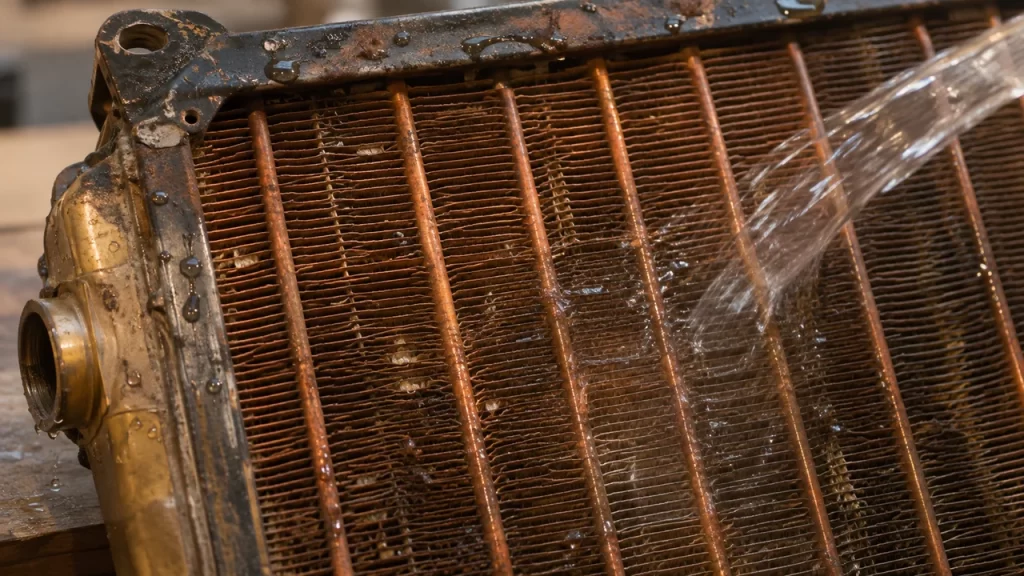
Exterior contamination can collect on cooling surfaces and around the available airflow path. A visible front face may not show the condition between nearby components. Ask which areas require access and which vehicle or component instructions govern the work. Cleaning should suit the identified unit rather than a generic online pressure recommendation.
Keep exterior cleaning separate from coolant-circuit work. A clean-looking core does not establish that a flush has been performed or that another cooling-system concern has been resolved. Ask what the proposed scope includes and what findings will be recorded.
The charge air cooler service guide explains that intake-air component. If contamination returns after cleaning, share that history so the next discussion can consider the source and wider context as well as the visible buildup.
What affects semi-truck radiator repair or replacement?
A coolant leak needs a source, not just a wet photograph. Connection details and component condition help shape repair discussions.
A wet area can help locate the concern without proving its origin. Ask which connection, tank, core or surrounding component has been identified as the source. Cleaning may improve inspection access, but it is not itself a repair. Keep the defect discussion separate from the request to remove external debris.
Repairability depends on the actual construction and damage. A localized concern and extensive deterioration can lead to different recommendations. Ask what inspection found, how the proposed work addresses it and which appropriate checks or limitations apply. Avoid deciding from material, age or appearance alone.
If replacement is proposed, preserve the original identification and relevant connection photographs. A similar-looking radiator is not a complete specification. Coordinate selection and installation with the appropriate equipment information and responsible technician.
How should a semi-truck radiator service handoff be organized?
Before a radiator leaves the truck, make the handoff clear. The vehicle technician and component shop need the same information.
Start with truck and engine identification, available radiator information and the actual complaint. Explain whether the unit remains installed and who is handling the wider vehicle work. Provide your Bay Area location and ask what component services are accepted before arranging removal or transport.
Do not assume roadside service, pickup or removal and installation are included. Confirm the arrangements. The heavy-duty cooling service guide explains how component work fits into the wider maintenance plan without treating the radiator’s return as completion of every vehicle check.
What questions do equipment owners ask about semi-truck radiator service?
Truck owners need practical answers about cleaning, leaks and handling. These questions help define radiator work without assuming roadside services.
Does a semi-truck temperature warning mean a new radiator is needed?
No. The warning needs an appropriate cooling-system evaluation before the component decision is made. Record the operating circumstances and other observations, follow the vehicle’s procedure and let the responsible technician determine which conditions and parts need attention.
Is cleaning the fins the same as flushing coolant?
No. Exterior fin cleaning and servicing the coolant circuit are different scopes. Ask which work is included and what concern it addresses. A clean exterior should not be recorded as proof that the internal circuit or the wider cooling system has been assessed.
Can a coolant leak be identified from a photograph alone?
A photograph can help explain location and visible condition, but it may not establish the full source or damage. Include a wider view and relevant history, then ask what inspection is needed before choosing a repair or replacement option.
Does Pankey’s provide roadside or truck-removal service?
Do not assume those arrangements from a component-service article. Ask the shop which work is accepted and coordinate removal, transport and reinstallation with the responsible people. Explain whether the radiator remains installed before making plans to move it or the vehicle.
How can Pankey’s help with semi-truck radiator inquiries?
Need semi-truck radiator help in the Bay Area? Tell Pankey’s about the truck, component and the symptoms you are seeing.
Pankey’s Radiator Repair Shop in Hayward lists semi-truck radiator services. Start with the equipment identity and the actual complaint, then ask which component inspection, cleaning or repair work can be considered.
Tell Mario or Paul whether the unit is installed or removed, share available photographs and provide your Bay Area location. Confirm accepted work and handling before removal or transport. Keep the component inquiry aligned with the technician responsible for the wider equipment. The heavy-duty cooling service guide explains that coordination in more detail.
Pankey’s Radiator Repair Shop · 21805 Foothill Blvd, Hayward, CA 94541 · Bay Area industrial equipment service inquiries.
