 21805 FOOTHILL BLVD, HAYWARD, CA 94541
 1-510-581-6804
Aluminum Oil Cooler Maintenance: Benefits, Cleaning and Repair Decisions
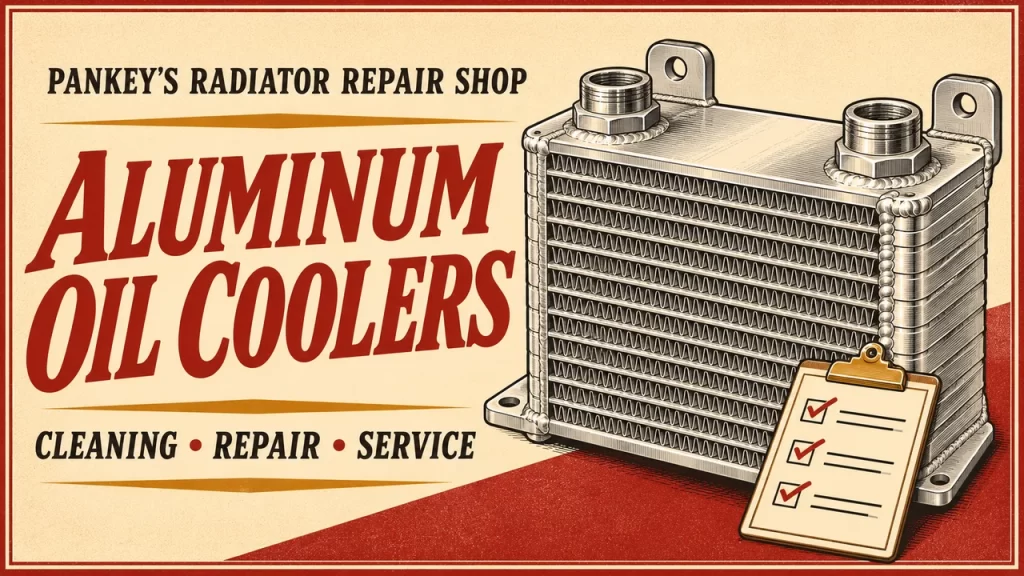
An aluminum oil cooler can look like a simple finned panel until temperature warnings, contamination or leakage interrupt the job. Its value lies in the cooling system it supports, and its service needs depend on the actual construction and condition. This guide explains the benefits of an oil cooler in industrial equipment, then helps you organize a practical cleaning or repair discussion without assuming the cooler is the only possible fault.
What are the benefits of an oil cooler in industrial equipment?
An oil cooler earns its place by moving heat away from working oil. The benefits depend on the complete system.
The basic benefit is controlled heat transfer: the cooler provides a path for heat to leave the oil circuit. That supports the operating conditions the equipment was designed to maintain. It does not establish that any particular cooler will prevent overheating regardless of airflow, oil circulation or machine load. Those conditions remain part of the wider system.
Aluminum is used in many compact finned cooling units, but appearance alone does not identify capacity or suitability. If a replacement is being considered, fit, connection arrangement and application requirements matter alongside material. Do not choose a unit solely because it looks similar or has a larger visible face.
If the discussion starts with “benefits of an oil cooler,” bring it back to the equipment in front of you. Which oil circuit is involved, what is its specified arrangement and what changed? That is more practical than expecting a generic cooler upgrade to solve an unidentified temperature complaint.
When does an aluminum oil cooler need cleaning?
Dust looks harmless until it settles into cooling fins. Oily buildup deserves attention too, especially when it keeps coming back.
Exterior buildup can collect around the fins and available airflow paths. A cooling package may also hide material between components. Describe whether the contamination is dry dust, oily residue or a mixture, and explain whether it returns soon after cleaning. That distinction can point the inspection toward both the buildup and a possible source nearby.
Exterior cleaning and internal passage cleaning should be discussed separately. A clean-looking face does not establish the condition inside the cooler. If a hydraulic or lubrication-system failure occurred, share that history before service is planned. The equipment technician may need to evaluate the wider circuit as well as the cooler.
Use the equipment’s maintenance guidance for inspection and cleaning planning. Dust exposure differs between a clean handling area and a site where debris is regularly drawn into the cooling compartment. Record actual conditions instead of assuming every aluminum cooler needs the same interval.
Can an aluminum oil cooler be repaired?
A bent fin and a leaking connection are different problems. Aluminum construction makes identifying the actual damage especially useful upfront.
Repairability depends on the design, damage location and surrounding condition. Ask whether the concern is limited to a connection, involves a tank or affects the core itself. An accessible localized problem presents a different discussion from widespread damage or repeated leakage. The material name alone does not settle whether repair or replacement is appropriate.
| What you notice | What to ask |
|---|---|
| Damaged fins | How much of the cooling surface is affected? |
| Oil near a fitting | Has the leak source been identified? |
| Repeated leakage | What does the surrounding material or installation show? |
| Replacement proposal | Which specifications and connections need to match? |
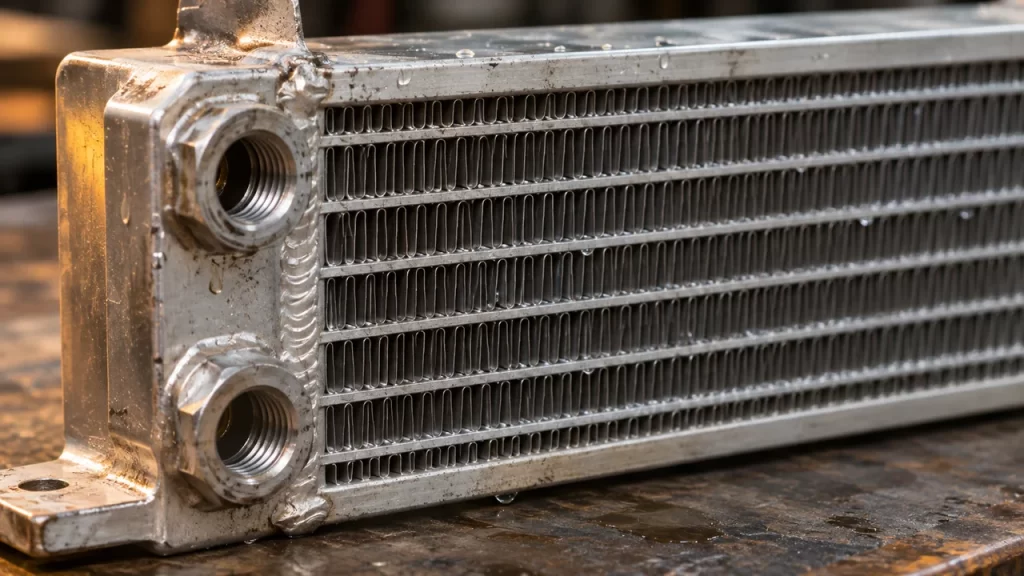
Photographs can help locate the concern, but they cannot establish the full condition of the unit. Ask what inspection and appropriate checks are needed. Avoid treating an online example of an aluminum repair as proof that the same method fits every industrial oil cooler.
What information helps arrange aluminum oil cooler service?
Before arranging aluminum cooler work, collect the clues that travel well: identification, photographs, symptoms and the history behind your concern.
Start with the machine identity and any accessible cooler identification. Include a wider photograph showing the connection arrangement as well as the close detail that concerns you. Explain whether the cooler remains installed and whether another technician is assessing a wider system problem.
Confirm accepted work and handling before removing or transporting the unit. Ask which findings are needed before the scope can be quoted. The oil cooler repair cost guide explains that conversation, while the hydraulic oil cooling guide focuses on temperature complaints involving a hydraulic circuit.
What questions do equipment owners ask about aluminum oil coolers?
Questions about aluminum coolers usually start with dirt, heat or leaks. These answers help you plan the next service conversation.
Does an oil cooler prevent every overheating problem?
No. The cooler supports a particular system design, but airflow, fluid circulation, operating load and other faults can still affect temperature. Record the circumstances and follow the equipment’s warning procedure. The appropriate technician should assess the system rather than assume a cooler replacement will solve it.
Can cleaning stop oil leakage?
Removing contamination can make an area easier to inspect. It does not itself repair a defective connection, tank or core. Explain both the buildup and leakage, then ask what source was identified and what separate work is proposed to address it.
Should every damaged aluminum cooler be replaced?
No blanket rule applies. Construction, damage extent and the intended application matter. Some units may have a suitable repair option, while others may need replacement. Ask about the actual inspection findings and the checks or limitations relevant to the proposed work.
Is exterior cleaning the same as flushing the oil system?
No. Cleaning exterior fins concerns the cooler’s outside surfaces. Internal cooler work and servicing the wider oil circuit are separate scopes. Ask which is included, particularly after contamination or a component failure, so a clean exterior is not mistaken for a completed system assessment.
How can Pankey’s help with aluminum oil cooler service?
Have an aluminum oil cooler question in the Bay Area? Share your equipment details with Pankey’s and discuss service options.
Pankey’s Radiator Repair Shop in Hayward lists aluminum oil cooler service for industrial equipment. Begin by describing the component and the condition you want assessed, rather than requesting a repair method before anyone has seen it.
Tell Mario or Paul the equipment identity, your Bay Area location and whether the cooler is installed or removed. Share photographs, symptoms and relevant maintenance history. Ask what inspection, cleaning or repair options can be discussed and confirm component-handling arrangements before transport. For broader context, see the industrial oil cooler cleaning and repair guide.
Pankey’s Radiator Repair Shop · 21805 Foothill Blvd, Hayward, CA 94541 · Bay Area industrial equipment service inquiries.
