 21805 FOOTHILL BLVD, HAYWARD, CA 94541
 1-510-581-6804
Copper Oil Cooler Cleaning and Repair: What Condition Can Tell You
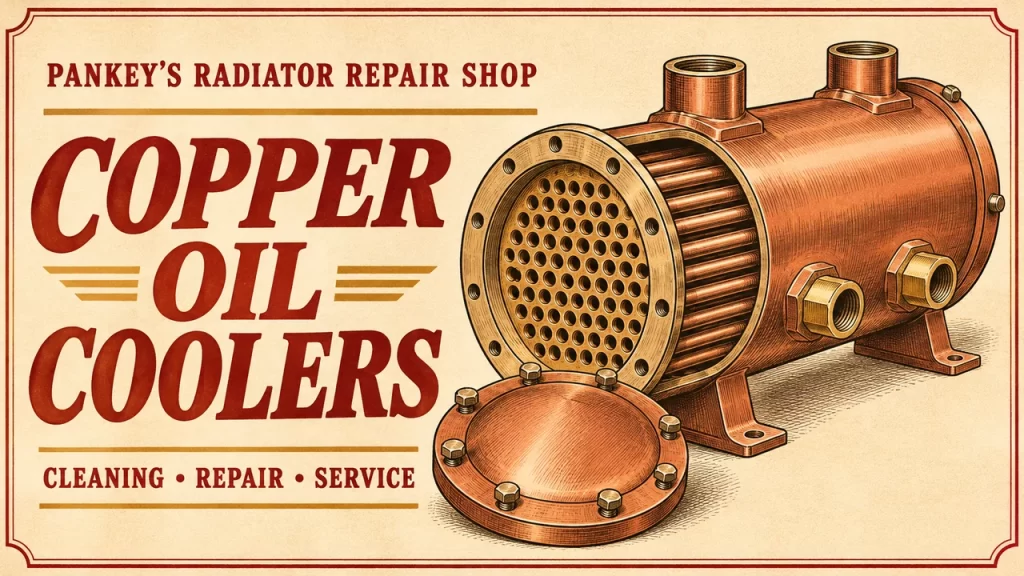
A copper oil cooler can raise a surprisingly specific set of questions. Which passages carry oil? Which side contains water? Is the concern a deposit, an external leak or possible mixing between circuits? Getting those distinctions right makes the service conversation more useful. This guide focuses on copper and copper-alloy industrial cooling components, including shell-and-tube arrangements, without assuming every copper-colored unit has the same construction.
What should you identify on a copper oil cooler?
That copper-colored shell can hide several important details. Let’s identify the circuits and construction before deciding what needs cleaning next.
Copper and copper-alloy components appear in different heat-exchanger designs. A shell-and-tube unit uses a tube bundle inside a surrounding body, with the fluids kept in their intended passages. The exact arrangement, materials and access details should come from the unit’s documentation. Color and shape are useful visual clues, not complete identification.
Photograph the whole cooler, available identification and the connection arrangement before focusing on an individual stain or deposit. Explain what equipment it belongs to. If a similar unit has been fitted previously, preserve the part or service record rather than relying on memory. That helps keep the discussion tied to the correct application.
| Detail | Why it helps |
|---|---|
| Component number | Connects the inquiry to the correct design information. |
| Connection layout | Helps distinguish the separate circuits. |
| Equipment application | Explains the service conditions and installation context. |
| Maintenance history | Shows what has already been cleaned, repaired or replaced. |
The component should not be opened merely to answer a phone inquiry. Share the information accessible safely, then ask what further inspection is needed.
What does copper oil cooler cleaning need to address?
Deposits can tell you where to look, but not always what failed. Keep the oil side and water side separate.
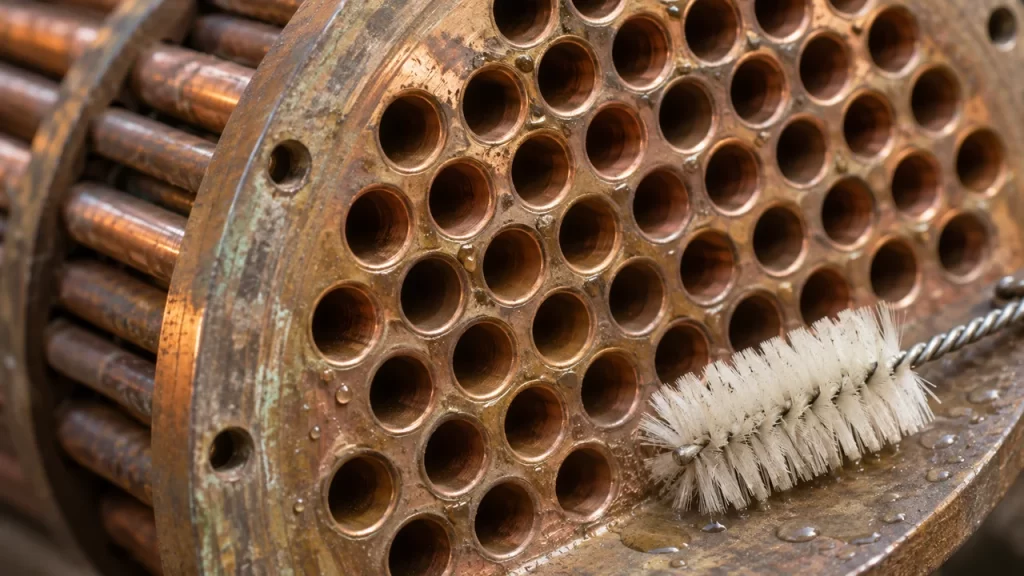
Cleaning depends on where contamination is located and what it contains. Deposits on a cooling-water side present a different discussion from oil-side contamination after a system problem. Ask which circuit is affected, what materials are present and which manufacturer guidance applies. A method suitable for one unit should not be treated as universal.
Access is part of the scope. A removable end cover or tube bundle can make some surfaces accessible, but not every design is arranged the same way. The person doing the work should determine the appropriate procedure and reassembly requirements. Do not assume that opening a cover and rinsing visible surfaces completes the inspection.
If a temperature complaint returns, record the operating conditions and any recent changes. Repeating the same cleaning request without describing the recurrence can hide useful information about the wider system.
When may a copper cooler need repair instead of cleaning?
Leaks rarely arrive with helpful labels. Connection details, end covers and the surrounding material all shape the next repair discussion.
Exterior leakage may involve a connection, cover joint or another part of the component. The place where fluid becomes visible is not always its source. Provide the location and history, then ask what inspection is required to identify the defect. Cleaning can reveal an area but does not establish that leakage has been repaired.
Possible internal mixing between fluids requires an appropriate system evaluation. Report what was observed rather than declaring that a tube has failed from fluid appearance alone. The qualified technician should determine which circuits and components need assessment and what return-to-service checks are appropriate.
Copper’s reputation as a repairable material does not answer every case. A localized concern and extensive deterioration can lead to different recommendations. Ask how the proposed work relates to the actual finding, including any limitations that matter for the intended application.
How should you prepare a copper oil cooler for a service discussion?
Before moving a copper cooler, make sure its identity and history come along. Good notes make the service conversation easier.
Start with a concise description: equipment identity, the affected circuit and the symptom. Tell the shop whether the component remains installed. Ask what handling, draining, protection and transport arrangements should be made by the people responsible for the equipment. Avoid disassembly until the scope and appropriate procedure are understood.
Keep the service notes with the component, particularly when one person arranges work and another handles reinstallation. For the broader decision process, read the industrial oil cooler service guide. If the unit is part of a marine system, the marine heat exchanger cleaning guide adds relevant questions about the water circuit and engine arrangement.
What questions do equipment owners ask about copper oil cooler service?
Copper cooler service brings questions about cleaning, materials and reassembly. Here are the details worth discussing before the work begins.
Does a copper color identify the tube material?
No. Appearance alone does not establish the complete material specification or construction. Use identification and manufacturer information for the actual unit. That matters when discussing compatible cleaning methods, replacement parts and repair options, especially where different materials are present in the same assembly.
Will flushing remove every deposit?
Not necessarily. Deposit type, location and access affect the cleaning discussion. A flush does not prove that every surface or passage has been assessed. Ask what scope is proposed and how the relevant condition will be checked rather than assuming visible flow establishes a fully clean component.
Can an external leak come from an end-cover joint?
A cover joint is one possible location, but the actual source needs inspection. Photograph the accessible area and describe when leakage appears. Do not assume that tightening hardware or replacing a seal is the correct remedy without the unit’s procedure and an appropriate assessment.
Should old seals automatically go back into the cooler?
Reassembly should follow the component manufacturer’s instructions and the findings from inspection. Seal specifications and replacement requirements can differ. Ask what parts are needed and how the component will be reassembled, rather than assuming a removed seal remains suitable for another installation.
How can Pankey’s help with copper oil cooler service?
Need help with a copper oil cooler in the Bay Area? Tell Pankey’s which component you have and what happened.
Pankey’s Radiator Repair Shop in Hayward lists copper oil cooler service for industrial equipment. Begin by describing the component and the condition you want assessed, rather than requesting a repair method before anyone has seen it.
Tell Mario or Paul the equipment identity, your Bay Area location and whether the cooler is installed or removed. Share photographs, symptoms and relevant maintenance history. Ask what inspection, cleaning or repair options can be discussed and confirm component-handling arrangements before transport. For broader context, see the industrial oil cooler cleaning and repair guide.
Pankey’s Radiator Repair Shop · 21805 Foothill Blvd, Hayward, CA 94541 · Bay Area industrial equipment service inquiries.
