 21805 FOOTHILL BLVD, HAYWARD, CA 94541
 1-510-581-6804
Industrial Oil Cooler Cleaning and Repair: What to Know Before Arranging Service
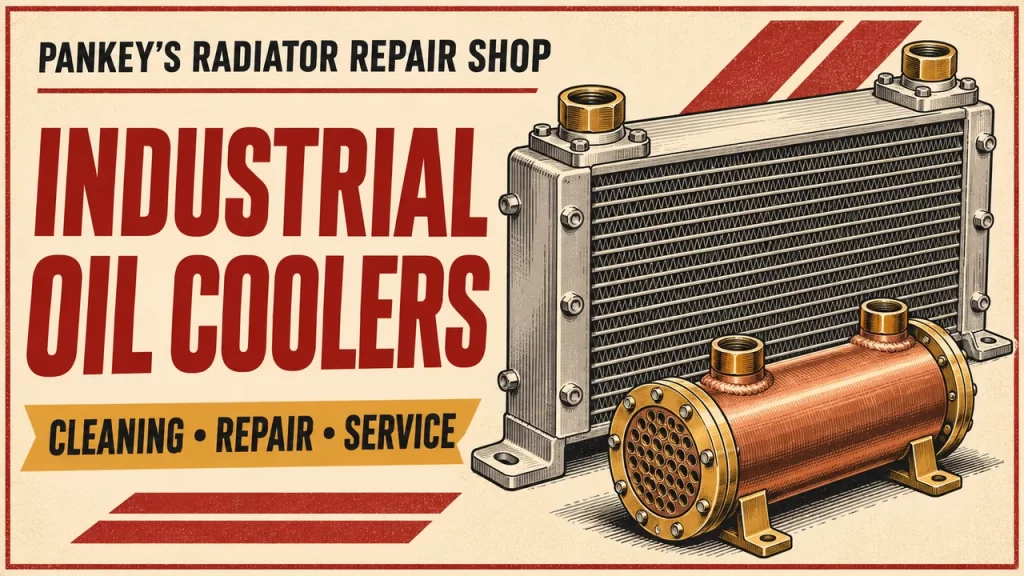
Oil cooling problems rarely arrive with a tidy explanation. A machine may run hotter under load, a cooler may collect oily dust or a connection may start leaving a mark on the ground. The useful question is which circuit needs attention and what the component’s condition shows. This guide covers industrial oil cooler cleaning and repair for equipment owners planning service, including aluminum air-cooled units and copper shell-and-tube designs. It separates observations you can report from decisions that need inspection.
What does an industrial oil cooler do?
Oil coolers come in different shapes, but their job stays simple: move heat away without mixing up the fluid circuits.
An oil cooler transfers heat from oil into another medium, commonly air or a separate cooling fluid. The equipment’s layout determines which arrangement is used. A finned air-to-oil unit depends on airflow across its exterior. A liquid-cooled exchanger depends on conditions on both sides of its heat-transfer surfaces. Knowing which design you have is more useful than judging the component by its size or color.
On a construction machine, the oil cooler may sit close to the engine radiator and charge air cooler. Those components can share a cooling compartment while carrying different fluids. A photograph of the whole package, followed by closer views of the affected unit, helps explain what is being discussed. A hose connection, available part number and machine identification can help distinguish similar-looking cores.
| Component | What it handles | Useful identification clue |
|---|---|---|
| Engine radiator | Engine coolant | Coolant tanks, hoses and the equipment parts listing |
| Air-to-oil cooler | Oil and outside airflow | Oil line connections and finned core |
| Liquid-cooled oil cooler | Oil and a separate cooling fluid | Distinct connection sets for the separate circuits |
| Charge air cooler | Compressed intake air | Large air connections rather than engine coolant hoses |
Do not use the table as a substitute for the machine documentation. Equipment arrangements vary and unfamiliar connections should not be opened to identify a component. If the name is uncertain, tell the shop that. A clear description with photographs gives the conversation a better starting point than assigning the wrong part name.
Which oil cooler symptoms should you report?
Warm oil does not tell the whole story. The useful clues are when temperatures change and what changed around them.
Report the equipment’s actual warning or temperature indication and the operating situation around it. Was the machine using a demanding attachment, working continuously or returning to service after maintenance? Did the reading change gradually or appear with visible fluid loss? These details do not diagnose the fault, but they help a technician understand the complaint before selecting checks.
A cooler can be part of an overheating investigation without being the only possible cause. Airflow, fan operation, oil condition, circulation and operating demand may require evaluation by the appropriate equipment technician. Replacing a core simply because the oil is hot can leave a surrounding system problem unresolved. Keep observations separate from conclusions on the work order.
A useful service note might read: “The warning appeared after sustained attachment work; there is a wet area near the lower connection, and the cooler face has collected oily dust.” That is an illustrative description, not a diagnosis or a Pankey’s case history. It tells the person assessing the equipment what to investigate and leaves room for the findings to change the plan.
Follow the operating manual if a warning occurs. Allow safe access and cooling before inspecting accessible areas, and leave isolation, disconnection and testing to people trained for the equipment. Do not open a hot or pressurized circuit to improve a photograph. A wider, safe view is enough to begin the discussion.
How is oil cooler cleaning different inside and outside?
A dirty outside and a contaminated inside need different conversations. Let’s sort those out before anybody reaches for cleaning equipment.
Exterior cleaning addresses material on heat-transfer surfaces and around airflow paths. On a finned cooler, dust and oily debris can collect where air needs to pass. Access matters: cleaning a visible front face is not necessarily the same as reaching contamination between stacked components. Ask which surfaces are accessible and what preparation the equipment manufacturer requires.
Internal cleaning concerns the oil passages or another fluid circuit inside the exchanger. That is a different scope from washing the outside. If contamination followed a system failure, describe that history before the cooler is assessed. The wider hydraulic or lubrication system may need its own investigation. A clean-looking exterior does not establish that internal passages are suitable for reuse.
| Scope | Question to ask |
|---|---|
| Exterior fin cleaning | Which surfaces and airflow paths will be reached? |
| Internal cooler cleaning | Which passage or circuit needs cleaning, and how will the component be prepared? |
| Contamination after a failure | What caused the contamination and what does the wider system require? |
| Return to service | What findings, checks and installation instructions should accompany the component? |
Cleaning methods depend on construction, deposits and manufacturer instructions. A procedure for one aluminum air cooler is not automatically appropriate for a copper tube bundle. Chemical compatibility, electrical components, surface protection and handling requirements can differ. Ask for the method appropriate to your unit rather than requesting a particular chemical or pressure based on a general online article.
When the component is returned, ask what was cleaned and what was observed. “Cleaned externally” and “internally assessed” communicate different work. A clear service record helps the equipment technician decide what still needs to be checked during installation and subsequent operation. The outcome should be documented as completed work and findings, not a promise that one cleaning step resolves every temperature complaint.
When should oil cooler repair or replacement be considered?
A leak changes the discussion, especially when two fluids share one component. Inspection helps separate repair possibilities from replacement decisions.
The repair conversation starts with the location and extent of the defect. A connection problem, localized damage and widespread deterioration present different questions. Construction also matters. The way a cooler was built affects access to the damaged area and the repair methods that can reasonably be considered. No single material label provides the answer by itself.
For an exchanger carrying two fluids, suspected internal leakage deserves a clear description of what was observed. Fluid appearance can be a useful clue, but it does not establish where contamination originated. Ask the qualified technician evaluating the system which checks are appropriate. Do not keep circulating a suspect component merely to see whether the symptom becomes more obvious.
| Finding or uncertainty | Service discussion |
|---|---|
| Localized defect | Can a suitable repair address the actual damaged area? |
| Repeated leakage | What does the surrounding material or installation show? |
| Internal contamination | Can the relevant passages be assessed for the intended service? |
| Replacement proposal | Which dimensions, connections and application details must match? |
Repairability is different from suitability for the intended application. A proposed repair should be discussed alongside the unit’s condition and the service conditions identified by the equipment documentation. Ask what can be checked after work and what limitations remain. Avoid converting a general statement about repair into an assurance about every cooler of the same material.
If replacement is proposed, preserve identification details from the original before it leaves the maintenance workflow. Photographs of the mounting points and connection orientation can support the parts conversation, but final selection belongs with the appropriate specifications. A component that looks similar can still differ in ways that matter for fit and operation.
What changes between aluminum and copper oil cooler service?
Aluminum and copper bring different construction details to the bench. The right service question starts with identifying your actual cooler.
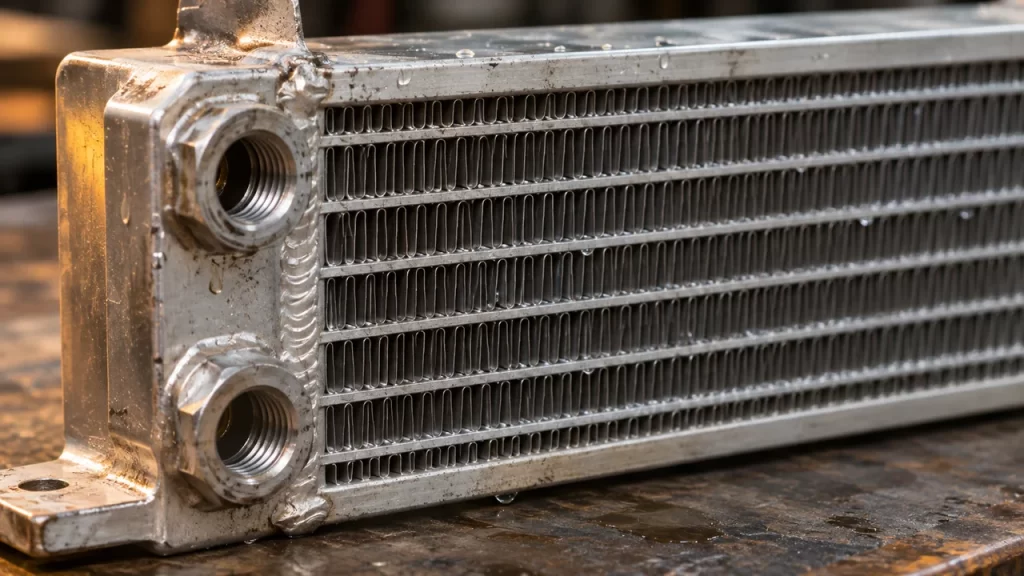
Aluminum air-cooled units often make their finned surfaces easy to recognize, while a copper-alloy tube design may place much of the heat-transfer area inside a shell. These are examples of different arrangements, not a rule that every aluminum or copper cooler follows. Confirm the exact construction from the component identification and manufacturer information.
For a finned aluminum unit, describe damage to the fins, end tanks, mounts and connections as separate observations. The extent and location matter. Do not assume a silver component can be repaired with the same technique used on a copper or brass radiator. The inspection should establish which methods, if any, suit that particular construction.
For a shell-and-tube cooler, access to the tube bundle, end covers and seals becomes part of the planning discussion. Deposits on a water side and contamination on an oil side may call for different attention. Ask which materials are present, which side is involved and what will be needed for reassembly. Removing an end cover is not a universal owner-level task.
You can explore the material-specific guides to aluminum oil cooler maintenance and copper oil cooler cleaning and repair. If the complaint concerns hot hydraulic oil, hydraulic oil cooler inspection questions helps frame the wider system discussion. These guides are meant to improve a service request, not to authorize a repair method from a photograph.
What should you prepare before asking for an oil cooler quote?
Before asking for a price, gather the details that explain the job. A useful service request makes room for inspection.
A quote depends on a defined component and scope. Equipment identification, the cooler’s available part number and clear photographs can help the shop decide what information is still missing. Explain whether the unit remains installed, has already been removed or belongs to equipment being assessed by another technician. Each situation changes the practical conversation.
Ask what an initial estimate includes and which findings could change the scope. Inspection, cleaning, repair, replacement parts and work elsewhere on the machine should be distinguished in the discussion. A phone description may help identify the next step without supporting a final price. That is especially relevant when the cooler’s internal condition is uncertain.
Do not assume component removal, lifting, pickup, field service or complete hydraulic diagnosis is included. Confirm arrangements before transport or disassembly. The person handling the equipment and the person arranging component work should share the same plan. For a fleet, label the job with the correct unit identity so similar-looking coolers do not lose their connection to the original complaint.
The separate guide to industrial oil cooler repair cost explains how to organize that conversation without relying on invented price ranges. The goal is to make the request clear enough for a useful response and to understand what needs inspection before the scope can be settled.
What questions do equipment owners ask about industrial oil coolers?
Oil cooler questions can get surprisingly tangled. Here are practical answers to help you describe the component and the problem.
Is an oil cooler the same as an engine radiator?
No. An engine radiator handles engine coolant, while an oil cooler removes heat from oil. They may share a compartment but belong to different circuits. Use the equipment’s parts information and connection layout to identify the affected component before discussing service.
Can cleaning fix an oil cooler leak?
Cleaning may make a damaged area easier to inspect, but removing deposits does not repair a leaking connection, tank or tube. Describe both the buildup and fluid loss. Ask which defect was identified and what separate work is proposed to address it.
Does hot hydraulic oil prove the cooler has failed?
No. A temperature complaint needs evaluation of the relevant system and operating conditions. Airflow, circulation, fluid condition and other faults may require attention. Record when the warning appears and let the appropriate technician determine which checks and components are involved.
Can aluminum oil coolers be repaired?
Some damage may have a suitable repair option, while another unit may require replacement. Construction, defect location and surrounding condition matter. Ask about the specific component after inspection rather than assuming every aluminum cooler is either repairable or disposable.
Should the inside and outside be cleaned together?
They are separate scopes to discuss. Exterior contamination affects accessible cooling surfaces, while internal cleaning concerns fluid passages. The unit’s history and inspection determine what is relevant. Ask which side is included and what findings will be documented before arranging work.
How often should an industrial oil cooler be cleaned?
Use the equipment and cooler manufacturer’s maintenance guidance, then consider the actual exposure and inspection findings. Dusty work and contamination history differ between applications. A universal interval can overlook those differences, so keep records of conditions, observations and completed service.
What if oil looks mixed with another fluid?
Report the observation and follow the equipment’s service instructions. Appearance alone does not prove where mixing occurred. A qualified technician should evaluate the affected circuits and determine what component testing or wider system work is appropriate before the equipment returns to service.
Can I bring a loose oil cooler to Pankey’s?
Contact the shop first with identification details, photographs and the symptoms. Explain whether the cooler has been removed and ask what work and handling arrangements are accepted. Removal, draining, lifting and transport need their own planning and should not be assumed from this guide.
How can Pankey’s help with industrial oil cooler service?
Have an industrial oil cooler concern in the Bay Area? Tell Pankey’s about your equipment, symptoms and the component involved.
Pankey’s Radiator Repair Shop in Hayward lists industrial aluminum oil cooler repair and copper oil cooler services. Those pages provide a starting point when the component you need help with is an oil cooler rather than an engine radiator.
Tell Mario or Paul what equipment the cooler belongs to, which symptoms appeared and whether there is contamination or visible leakage. Ask what inspection can be considered and what information is needed before arranging cleaning or repair. If your hydraulic technician is investigating a wider system problem, share that context so the component discussion supports the same work plan.
Bay Area owners can begin with a call or a service request. Include your location and explain whether the cooler is installed or removed. Confirm the accepted scope and component handling before moving equipment. The useful next step is an informed conversation about your unit, its condition and the arrangements needed for service.
Pankey’s Radiator Repair Shop · 21805 Foothill Blvd, Hayward, CA 94541 · Bay Area industrial equipment service inquiries.
