 21805 FOOTHILL BLVD, HAYWARD, CA 94541
 1-510-581-6804
What Affects Industrial Oil Cooler Repair Cost? How to Prepare for a Quote
“How much will the oil cooler repair cost?” is a reasonable first question, but the useful answer depends on knowing the component and the job. A photograph may support an initial conversation without revealing the full condition. This guide explains what can change an industrial oil cooler quote and how to prepare a request that separates inspection, cleaning, repair and replacement. It does not use invented price ranges or assume every unit needs the same work.
Why do industrial oil cooler repair quotes vary?
Two coolers can look similar while needing very different work. Identification, condition and the proposed scope shape a useful quote.
A quote reflects a particular component and a defined set of work. Construction, access to the damaged area and the extent of contamination can change what needs to be evaluated. A localized concern is different from repeated leakage or uncertainty about internal passages. Ask what is known and what still needs inspection.
The equipment application also matters when matching a replacement or discussing the intended use after work. Preserve the part number, mounting details and connection layout where available. A lower price on a superficially similar cooler is not a meaningful comparison until the specification and scope are understood.
| Detail | Question it answers |
|---|---|
| Cooler identification | Which design and application are involved? |
| Defect location | Is the concern a connection, tank, tube or core? |
| Contamination history | Which surfaces or passages need evaluation? |
| Installed status | What component handling remains outside the shop work? |
These are practical quote inputs, not a formula for calculating a price yourself. The shop still needs enough information to decide the next step.
What should an oil cooler estimate include?
Cleaning, repairing and replacing are separate decisions. Ask which work the estimate covers before comparing prices from different service conversations.
Ask the shop to describe the proposed scope in clear terms. Does the estimate concern inspection, exterior cleaning, internal cooler work or repair of an identified defect? If replacement is being considered, ask which component and parts are included. Keep the work elsewhere on the equipment separate unless it is explicitly part of the arrangement.
It is also useful to ask what will be documented after the work. Findings, completed scope and any relevant limitations help the equipment technician understand the component’s status. Avoid treating a general phrase such as “service cooler” as if it describes every cleaning and checking step.
Different estimates may reflect different work. Compare what each includes before comparing the totals. The aim is a clear decision, not the appearance of certainty while important condition questions remain unanswered.
When can inspection change the repair or replacement discussion?
An inspection can turn a simple request into a different conversation. The important part is understanding what the findings change.
The component may show damage beyond the area visible in a photograph, a different leak source or a construction that limits the proposed repair. Ask which finding changed the recommendation. That helps you understand whether the next step addresses the original complaint or another issue that has been discovered.
If replacement is proposed, ask how the correct unit will be identified. Dimensions and connection orientation are useful details, but the application specification remains important. If cleaning is proposed, clarify which side is involved and what condition will be evaluated afterward. There is no universal price or repairability rule for every industrial cooler.
| Change proposed | Useful question |
|---|---|
| Additional cleaning | What contamination was found and where? |
| A different repair | Which defect was identified? |
| Replacement | What limits the repair option for this unit? |
| More information needed | Which identification or system finding is missing? |
Agree how scope changes will be communicated before work proceeds. That is a routine coordination question, especially when the person arranging service is not the person who operates or maintains the machine.
How can you prepare a clearer oil cooler quote request?
Before requesting a number, build a short component story. The equipment, symptom and service history explain more than size alone.
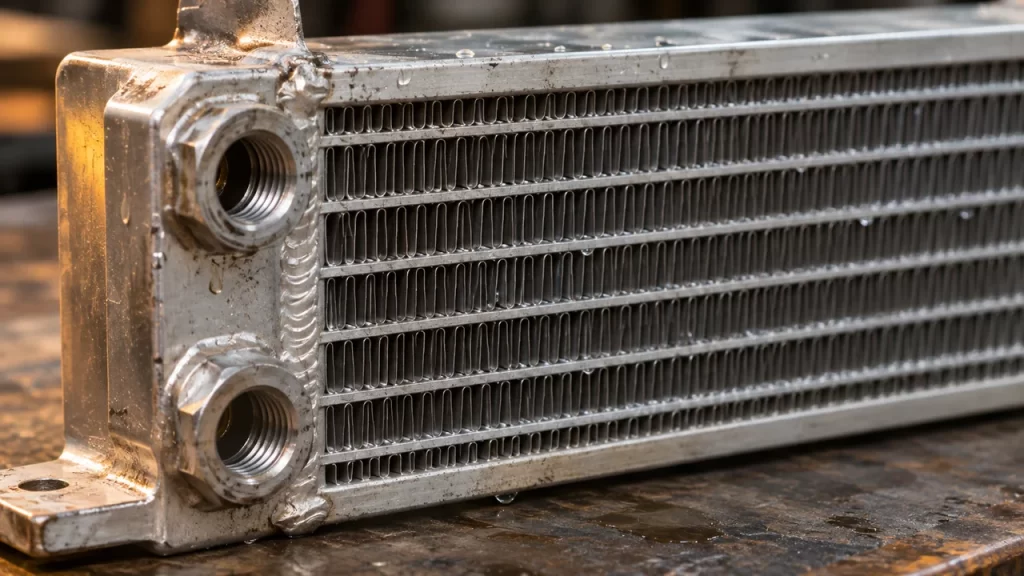
A useful request can be brief: identify the machine and cooler, describe the symptom and include clear photographs. Tell the shop whether another technician is investigating a wider failure. Explain whether the unit is installed or removed and provide your Bay Area location. Ask what information is needed for an initial assessment.
For technical context, review the aluminum oil cooler guide or copper oil cooler guide. They explain why construction and condition belong in the request. Do not remove a component or arrange transport until the accepted work and handling plan have been discussed.
What questions do equipment owners ask about oil cooler repair quotes?
A useful quote starts with shared expectations about the job. These answers explain what to clarify before approving component work.
Can a shop quote a final price from one photograph?
A photograph may help identify the component and visible concern, but it may not show the full condition. Ask whether the response is an initial estimate or a confirmed scope. Clarify what inspection or additional information is needed before treating it as the final job price.
Does a cleaning quote include leak repair?
Do not assume that. Cleaning and repair are different scopes, and the defect may not yet be identified. Ask which work is included and how leakage will be assessed. Clear wording prevents a cleaning estimate from being mistaken for an agreement to repair every fault.
Should I compare repair with replacement?
Ask whether both are suitable options for the identified component. The comparison should include the actual condition, specifications and proposed work, not only a price. Inspection may show that one option is not appropriate, so first understand what the recommendation is based on.
Does the quote include removal or transport?
Only if that is explicitly agreed. Component removal, draining, lifting, transport and reinstallation are separate arrangements to clarify with the responsible people. Tell the shop whether the cooler is installed and confirm accepted work before moving the unit or assuming those services are included.
How can Pankey’s help with oil cooler quote inquiries?
Planning oil cooler service in the Bay Area? Send Pankey’s the component details and ask what inspection supports a quote.
Pankey’s Radiator Repair Shop in Hayward lists industrial oil cooler service for industrial equipment. Begin by describing the component and the condition you want assessed, rather than requesting a repair method before anyone has seen it.
Tell Mario or Paul the equipment identity, your Bay Area location and whether the cooler is installed or removed. Share photographs, symptoms and relevant maintenance history. Ask what inspection, cleaning or repair options can be discussed and confirm component-handling arrangements before transport. For broader context, see the industrial oil cooler cleaning and repair guide.
Pankey’s Radiator Repair Shop · 21805 Foothill Blvd, Hayward, CA 94541 · Bay Area industrial equipment service inquiries.
