 21805 FOOTHILL BLVD, HAYWARD, CA 94541
 1-510-581-6804
Charge Air Cooler Problems: Cleaning, Leaks and Repair Questions
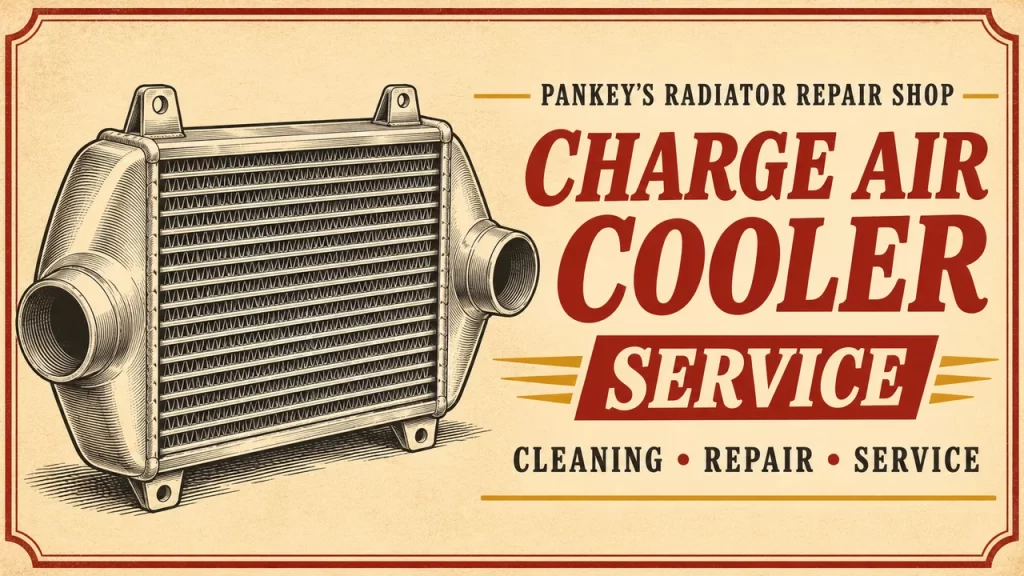
A charge air cooler can share space with the radiator while doing a different job. Confusing the two can send a service conversation in the wrong direction before it starts. This guide explains the intake-air component, separates exterior cleaning from leak assessment and outlines the information that helps discuss repair. It applies to relevant industrial and heavy commercial equipment, with Bay Area component inquiries through Pankey’s.
How is a charge air cooler different from an engine radiator?
The charge air cooler handles air, which changes the service conversation. Let’s separate it from the radiator before discussing symptoms.
An air-to-air charge air cooler removes heat from compressed intake air before it enters the engine. The engine radiator handles engine coolant instead. Both may have finned cores and share a cooling compartment, but they belong to different circuits. A similar outline does not make their connections or service requirements interchangeable.
Names such as aftercooler or intercooler can appear in equipment information. Use the actual component and engine identification to clarify the arrangement. This article focuses on the relevant charge air cooler inquiry; it should not be used to identify every cooling component from a general name alone.
| Component | What it handles |
|---|---|
| Engine radiator | Engine coolant. |
| Air-to-air charge air cooler | Compressed intake air. |
| Oil cooler | Oil in the identified lubrication or hydraulic circuit. |
If you are unsure which unit is involved, provide an overall photograph and available identification. Opening or disconnecting components to answer a phone inquiry is unnecessary; ask what further information the service team needs.
How should cleaning and possible charge air leakage be separated?
Exterior dirt and a possible air leak ask different questions. The starting point is the component and its actual condition.
Exterior contamination concerns the accessible cooling surfaces and airflow path. A possible air leak concerns a different boundary in the intake-air system. The engine technician should determine which observations and checks are relevant to the complaint. Do not assume that washing the outside establishes the condition of the air circuit.
Describe visible damage, contamination or relevant service findings without diagnosing an engine-performance complaint from appearance. If a qualified technician has identified a component concern, include that finding. It helps the shop assess the same unit and scope rather than begin with an unrelated interpretation of the symptoms.
Any internal contamination history should also be shared before service is planned. The responsible technician should determine what the wider engine and air system require. A general article does not supply a universal cleaning or test procedure for every charge air cooler.
What affects charge air cooler repair or replacement?
Repair decisions need more than a shiny aluminum surface. Construction, damage and the relevant specifications help define the service options.
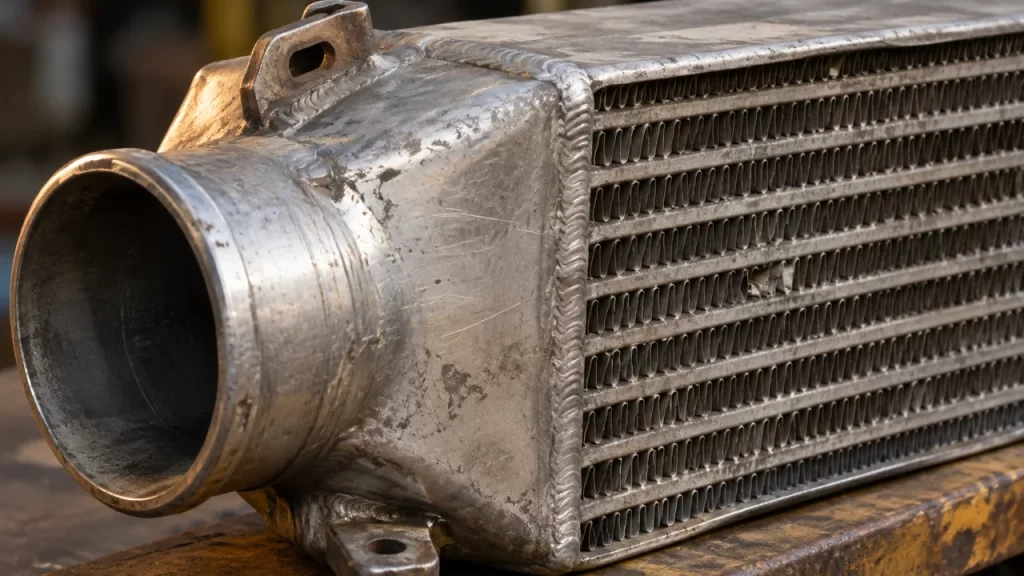
Ask what area is affected and what inspection shows about the surrounding condition. A localized connection or tank concern can raise different questions from extensive core damage. The construction and intended application matter when evaluating whether a repair option is suitable. Material alone does not settle the decision.
Appropriate checks and their limits should come from the identified component and qualified service procedure. Do not borrow a pressure value or improvised method from an unrelated cooler. The useful owner-level question is what findings support the proposed work and how the component’s condition will be evaluated afterward.
If replacement is proposed, preserve identification and photographs of the connection and mounting arrangement. A visually similar core is not a complete specification. Keep the component work linked to the responsible technician’s engine-service plan.
What information helps arrange charge air cooler service?
Before arranging charge air cooler work, collect the engine and component details. A clear inquiry leaves less room for confusion.
Tell the shop the equipment and engine identity, the available cooler number and the concern being investigated. Explain whether the unit remains installed and whether another technician has relevant findings. An overall photograph and a close detail serve different purposes, so include both where they can be obtained safely.
Confirm accepted work and arrangements before removal or transport. Pankey’s lists charge air cooler services; the URL’s wording does not change the component’s intake-air function. For wider coordination, see the heavy-duty cooling service guide.
What questions do equipment owners ask about charge air cooler service?
Charge air cooler names and symptoms can get mixed together. These answers keep intake-air component service separate from coolant work.
Is a charge air cooler filled with engine coolant?
An air-to-air charge air cooler handles compressed intake air rather than engine coolant. Equipment arrangements vary, so confirm the actual component from its identification and documentation. Do not infer the circuit solely from a finned appearance or its position near the radiator.
Can exterior cleaning repair an air leak?
No. Removing exterior contamination and addressing an identified air leak are different scopes. Ask what condition was found and which work is proposed. A clean surface does not establish that the component or the wider intake-air system has passed appropriate assessment.
Does an engine-performance complaint prove the cooler has failed?
No. The appropriate engine technician should evaluate the actual complaint and determine which checks are relevant. Share any identified component findings with the shop rather than choosing charge air cooler repair from a symptom or photograph alone.
Does this guide provide a charge air cooler test pressure?
No. Suitable checks and limits depend on the identified component, application and qualified procedure. A general article should not supply a universal test value or an improvised method that could be mistaken for the specification of a particular cooler.
How can Pankey’s help with charge air cooler inquiries?
Have a charge air cooler concern in the Bay Area? Tell Pankey’s which engine and component your inquiry is about.
Pankey’s Radiator Repair Shop in Hayward lists charge air cooler services. Start with the equipment identity and the actual complaint, then ask which component inspection, cleaning or repair work can be considered.
Tell Mario or Paul whether the unit is installed or removed, share available photographs and provide your Bay Area location. Confirm accepted work and handling before removal or transport. Keep the component inquiry aligned with the technician responsible for the wider equipment. The heavy-duty cooling service guide explains that coordination in more detail.
Pankey’s Radiator Repair Shop · 21805 Foothill Blvd, Hayward, CA 94541 · Bay Area industrial equipment service inquiries.
