 21805 FOOTHILL BLVD, HAYWARD, CA 94541
 1-510-581-6804
Caterpillar Radiator Repair or Replacement? What Equipment Owners Should Check
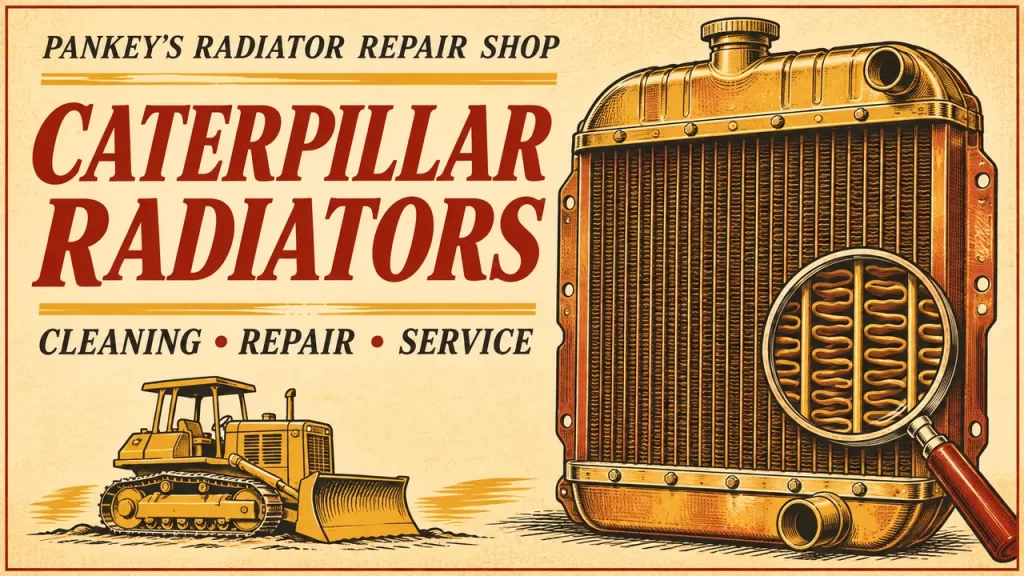
When a Caterpillar machine runs hot or loses coolant, it is tempting to jump straight to a replacement radiator. A better starting point is the component identity, reported symptoms and the condition found during inspection. This guide helps owners of Caterpillar construction equipment prepare questions about radiator cleaning, repair and replacement. It is written for an industrial service conversation, with links to Pankey’s Bay Area service pages. Use the manual for the actual machine when responding to warnings or planning maintenance.
For a wider look at cooling components, cleaning and service planning, start with our industrial radiator repair and cleaning guide.
What information identifies the Caterpillar radiator that needs service?
Two yellow machines can have very different cooling packages. Identifying your Caterpillar equipment is the useful first step before service.
Start with the complete machine model and available serial information. Add the radiator or cooling-component number when it can be read safely. “A Cat radiator” is a useful beginning, but it does not identify a specific core, mounting arrangement or connection layout. A clear equipment record helps everyone discuss the same component.
This matters when planning repair or replacement. Similar appearance does not establish interchangeability, and a general equipment category cannot confirm fit. Share photographs showing the component in context and its accessible labels. If the part has been changed before, include that history rather than assuming the installed unit is the original configuration.
Be clear about whether the concern is an engine radiator, oil cooler or charge air cooler. These components may be close together while doing different jobs. Pankey’s Caterpillar radiator page is a service destination; this article helps owners prepare a more specific conversation.
When should Caterpillar radiator cleaning be considered?
Dusty fins deserve attention, but appearances don’t explain every temperature warning. Let’s separate a cleaning concern from a broader diagnosis.
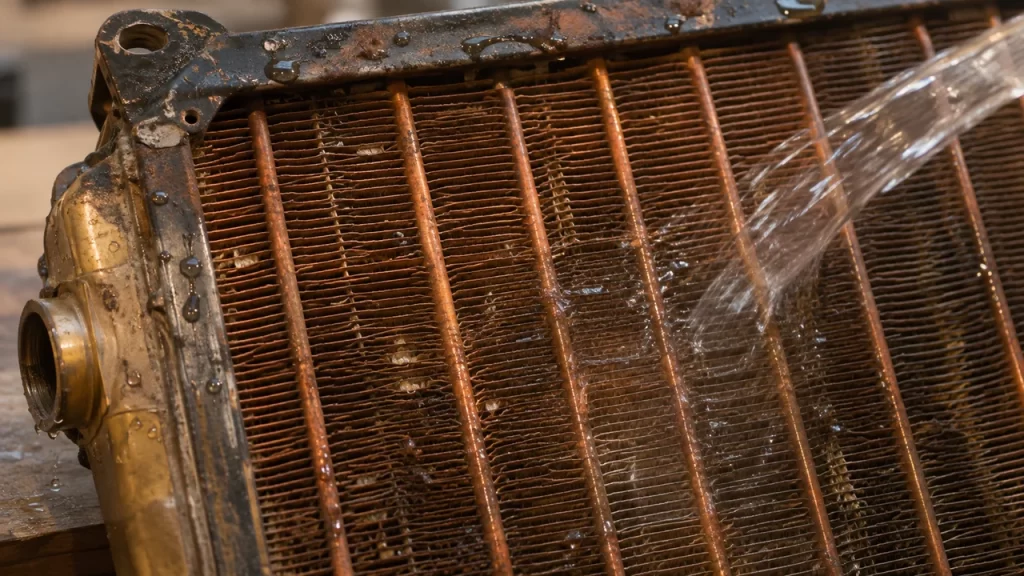
Discuss cleaning when cooling surfaces collect debris, access is difficult or routine attention has not resolved a contamination concern. Keep the operating complaint separate from the appearance of the component. A dirty core may need cleaning, while a temperature warning may also require evaluation elsewhere in the system.
Use the operation and maintenance instructions for the actual machine. Cleaning methods, access and limits are not universal across Caterpillar equipment. More force is not a reliable substitute for the right procedure. Avoid applying an unfamiliar chemical or washing method simply because another machine owner recommended it.
Ask what surfaces and components the proposed work addresses. Exterior cleaning concerns the airflow side; coolant service concerns a different part of the system. If several components form a cooling stack, explain what can and cannot be reached during routine maintenance. That is a useful service detail rather than a reason to guess at disassembly.
For dozers, tell the shop about the work and material exposure when describing the problem. For forklifts or loaders, use their equipment-specific details. The common brand does not erase those differences.
What determines whether a Caterpillar radiator can be repaired?
A repair decision starts with the actual component, not its paint color. Condition, construction and damage all belong in conversation.
The service team needs to assess the defect and the surrounding structure. A single damaged area in otherwise suitable material presents a different question from repeated leakage or widespread deterioration. Ask for an explanation of what is observable, what needs further inspection and which options are appropriate for that component.
| What to establish | Why the question helps |
|---|---|
| Defect location and extent | Defines the proposed repair rather than treating all leaks alike. |
| Condition beyond the obvious defect | Helps distinguish localized damage from broader deterioration. |
| Construction and component identification | Supports a method or replacement suitable for the design. |
| History of recurring failures | Raises questions about related operating or installation conditions. |
Avoid deciding solely from material names or an assumed age limit. Aluminum construction does not support a universal repair rule, and a radiator that has worked for many years still needs inspection before its condition can be judged. A replacement also requires a fit and specification check rather than a photograph-only match.
Ask what the estimate includes and how the scope relates to the reported complaint. A radiator repair should not be presented as proof that unrelated engine or fan-system issues are absent.
What should owners of Caterpillar dozers and construction equipment prepare?
A short equipment history can save a long guessing session. Gather the model, symptoms and recent work before discussing options.
Describe the task being performed when the temperature changed. Travel, sustained digging or pushing material can provide different operating context. Record warnings accurately and follow the machine’s instructions. Do not reproduce a warning condition deliberately or continue work to prove that the problem happens every time.
Confirm what the shop accepts before arranging removal or transport. Radiator service and whole-machine mechanical work are different scopes. Pankey’s has a Caterpillar dozer radiator service page; use it to describe the component inquiry without assuming transport or on-site arrangements.
Keep the machine’s manual and service records available to the people coordinating the work. A written handoff helps when an operator reports the symptoms but an office manager arranges the service.
What questions do equipment owners ask about Caterpillar radiator service?
Before deciding what happens next, it helps to ask specific questions. Here are practical starting points for your service conversation.
Can one cleaning procedure be used on every Caterpillar radiator?
Do not assume so. Access, construction and the cooling arrangement can differ between machines. Use the operation and maintenance instructions for the specific equipment and discuss the component with the service team. A method appropriate for one unit is not automatically suitable for another.
Does the Caterpillar name establish which replacement radiator fits?
No. The model, serial information and component identification help establish the appropriate unit. Connection and mounting details matter as well. Share available labels and photographs, particularly if the cooling package has been modified or a radiator has already been replaced during the machine’s service history.
Should a temperature warning be treated as a radiator diagnosis?
A warning indicates a condition requiring the response described in the operator’s manual. It does not identify the radiator as the only possible cause. Report the operating conditions and any coolant loss so the person evaluating the machine can consider the relevant cooling-system components.
Does using a radiator shop mean Caterpillar dealer service?
An independent component-service inquiry is different from dealer service. Discuss the exact work a shop offers and any manufacturer-specific requirements for your equipment. This article does not claim that Pankey’s is an authorized Caterpillar dealer or that every model or repair is accepted.
How can Pankey’s help with Caterpillar radiator repair and cleaning?
If your Caterpillar radiator needs attention, share the equipment details with Pankey’s. Ask which cleaning or repair options suit it.
Pankey’s Radiator Repair Shop lists services for Caterpillar radiators, Caterpillar dozer radiators and industrial forklift radiators. For a Bay Area owner, the service discussion can begin with the model, component and symptoms rather than a request based only on the machine’s brand.
Contact Mario or Paul to discuss Caterpillar radiator repair and cleaning. Explain what is happening, where the equipment is located and whether the component is installed. Ask what further information or inspection is needed before service is arranged. Related inquiries can go through the forklift radiator service page.
Call 510-581-6804 Request Service
Pankey’s Radiator Repair Shop · 21805 Foothill Blvd, Hayward, CA 94541 · Serving Bay Area equipment owners. Call to discuss your component, location and service needs.
