 21805 FOOTHILL BLVD, HAYWARD, CA 94541
 1-510-581-6804
Excavator Radiator Overheating? When Cleaning Helps and When Repairs Are Needed
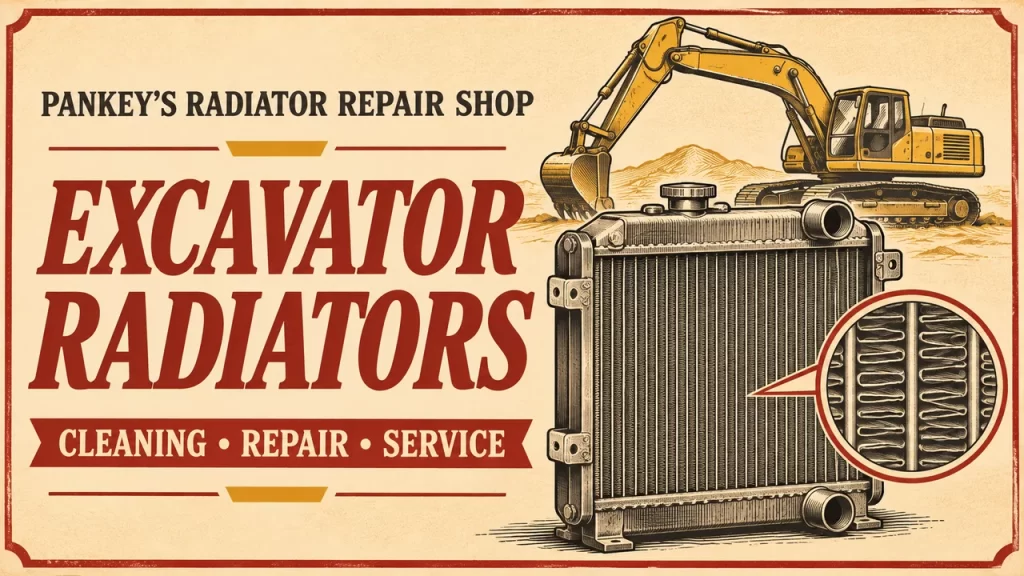
An excavator temperature warning is never a welcome addition to the workday. The useful next step is to understand what needs attention: airflow, coolant loss, radiator condition or another part of the cooling system. This guide explains the questions equipment owners can ask before arranging excavator radiator cleaning or repair. It covers industrial machinery, with a local service path for Bay Area owners through Pankey’s in Hayward. Follow the machine’s operating instructions when a warning occurs and leave diagnosis, removal and repair work to appropriately qualified people.
For a wider look at cooling components, cleaning and service planning, start with our industrial radiator repair and cleaning guide.
Why is an excavator radiator overheating during work?
When an excavator starts running hot, the whole job feels slower. Let’s look at what those temperature changes might mean.
Excavator radiator overheating is a reason to investigate the cooling system, not an automatic instruction to replace the radiator. Airflow restriction, coolant loss and other cooling-system faults can produce overlapping symptoms. Follow the machine’s warning procedure first. Once it is safe to assess the situation, describe what happened without assuming which component failed.
Think about the work immediately before the warning. Was the excavator tracking, digging continuously, idling or working with an attachment? Did the temperature rise gradually, or was there a sudden change accompanied by fluid loss? These observations help the service team understand the complaint. They do not replace inspection, but they make the description more useful than “it runs hot.”
Keep the difference between a repeated pattern and a single incident clear. A problem that returns at a similar point in the shift deserves a record of the conditions surrounding it. Note recent cooling-system work and any changes in the machine’s normal behavior. For wider context, see Pankey’s industrial radiator service catalog.
Can dust and blocked airflow cause excavator cooling problems?
Dust has a talent for collecting where you least want it. Cooling fins and stacked components deserve a closer look.
An excavator may work around soil, demolition debris and vegetation, depending on the job. Material that collects around cooling surfaces can interfere with airflow. However, a dusty worksite does not prove that dirt is the only cause of an overheating complaint. The cooling package and the rest of the system still need appropriate evaluation.
Where several coolers share a compartment, the easily visible surface may not show the full condition. Ask whether the inspection can reach the relevant areas of the stack. The question is not simply whether someone has washed the front; it is whether the component and airflow path have been assessed using the machine’s approved access and cleaning procedure.
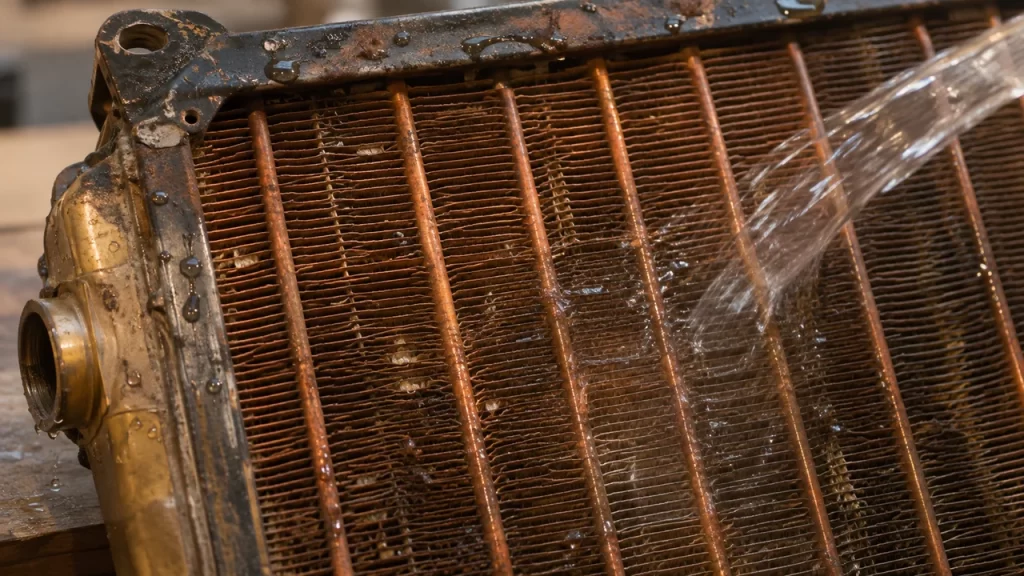
Use the manufacturer’s instructions for cleaning methods and limits. Do not turn an internet article into permission to pressure-wash a delicate core, bend fins or remove guards without the correct procedure. If debris is difficult to reach or contamination keeps returning, explain that to the shop. The right method depends on the component and what is on it.
Also distinguish radiator cleaning from coolant flushing. Cleaning exterior cooling surfaces addresses a different area from servicing the coolant circuit. Requesting one does not establish that the other has been completed.
Which leaks or damage may need excavator radiator repair?
Sometimes cleaning is only part of the story. Leaks, damaged fins and repeated overheating can change the next service discussion.
Visible coolant loss, a damaged tank or evidence of contact around the radiator are useful findings to report. A photograph may help explain the location, but the point where fluid appears is not always the point where it originates. A qualified technician should determine which component or connection needs attention.
| Observation | Useful question |
|---|---|
| Wet area near a connection | Is the source the connection, hose, tank or another part? |
| Damaged or flattened cooling fins | How much of the core is affected and what inspection is needed? |
| Leakage after earlier repair | Does the surrounding material or installation need evaluation? |
| Overheating without visible leakage | What other airflow or circulation checks are appropriate? |
Repair and replacement decisions depend on the specific radiator. Construction, damage extent and surrounding condition matter more than a blanket rule based on the machine’s age. Ask what work is being proposed and what has been observed. Cleaning may improve access for inspection, but it does not itself repair a defect.
For Caterpillar excavators, use the machine and component identification rather than assuming all Cat cooling packages are alike. Pankey’s also has a Caterpillar radiator service page for relevant inquiries.
What should you prepare before arranging excavator radiator service?
Before you call, gather a few useful details. Your machine model, symptoms and photos can help explain what’s going wrong.
Start with the excavator’s make, model and available serial information. Add a component number if it is accessible without unsafe disassembly. Include photographs showing the overall radiator and connection layout, not just a close-up of an unidentified wet spot. A wider image helps put the detail in context.
Confirm accepted work and handling arrangements before transport. Do not assume that a shop provides machine collection, field repair or removal and installation. These are separate services to ask about. Agreeing on the next step avoids moving a large component or machine before the shop has enough information.
If several people coordinate the repair, keep a short written handoff. The operator’s observations, fleet number and equipment details should stay with the job. That prevents a useful description from being reduced to “radiator problem” as it passes from the operator to the office and then to the shop.
What questions do owners ask about excavator radiator cleaning?
You don’t need a cooling engineering degree to ask good questions. These practical answers can make the next step clearer.
Does excavator overheating always mean the radiator is clogged?
No. The radiator is one part of the cooling system, and several problems can produce temperature warnings. Describe the operating conditions, coolant loss and recent service history. An appropriate inspection should determine whether airflow restriction, a component defect or another system issue needs attention.
Can cleaning fix an excavator radiator leak?
Cleaning can expose an area for closer inspection, but it is not the same as repairing a leak. A leaking connection, tank or core needs evaluation. Tell the service team about both contamination and fluid loss so one concern does not hide the other.
How often should an excavator radiator be cleaned?
Follow the maintenance instructions for the machine and adjust inspection planning to actual exposure. Dusty conditions may call for closer attention than cleaner work. Keep records of buildup and completed service. Avoid using a universal cleaning interval that ignores the excavator’s design and operating conditions.
Should I remove the radiator before calling the shop?
Discuss arrangements first. Explain whether the radiator is installed and provide machine details and photographs. The shop can tell you what information and component handling are needed. Removal, lifting and transport require their own planning and should not be assumed from an article about radiator service.
How can Pankey’s help with excavator radiator problems?
Have an excavator radiator question in the Bay Area? Tell Pankey’s what’s happening and ask about repair or cleaning options.
Pankey’s Radiator Repair Shop in Hayward lists excavator radiator repair and cleaning among its industrial services. The first conversation can focus on the component you have, the symptoms you noticed and the information needed to discuss service.
Tell Mario or Paul whether the concern is repeated overheating, contamination, visible leakage or damage. Include the machine identification and your Bay Area location. Ask what inspection or arrangements are needed before deciding whether cleaning, repair or replacement should be considered. For related construction equipment, see loader radiator services.
Call 510-581-6804 Request Service
Pankey’s Radiator Repair Shop · 21805 Foothill Blvd, Hayward, CA 94541 · Serving Bay Area equipment owners. Call to discuss your component, location and service needs.
