 21805 FOOTHILL BLVD, HAYWARD, CA 94541
 1-510-581-6804
Industrial Heat Exchanger Maintenance: Planning Seasonal Cleaning and Inspection
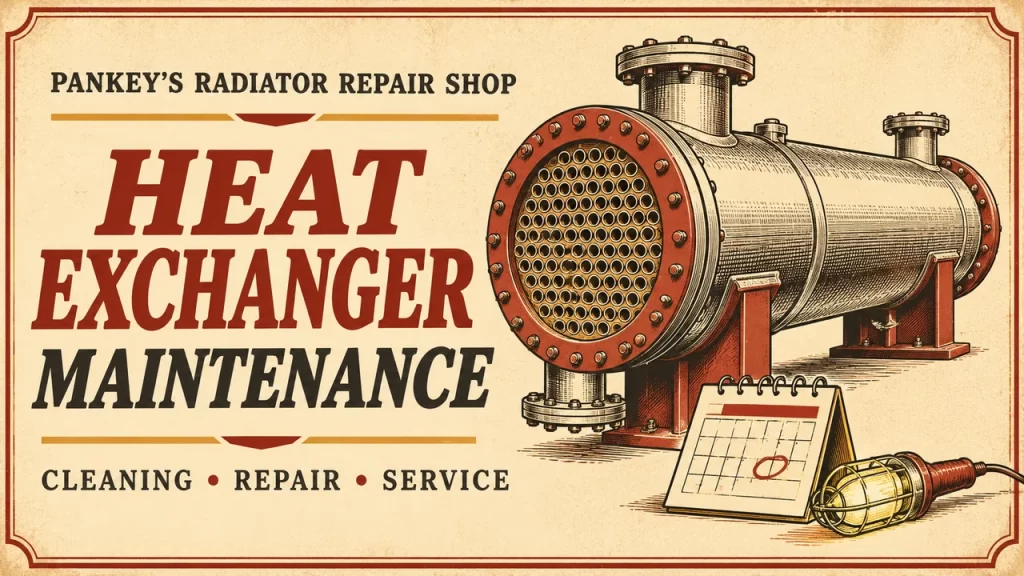
A planned equipment pause is a useful time to review heat exchanger condition, but it is not proof that every unit needs the same cleaning job. Industrial seasonal maintenance should follow the equipment’s guidance, actual use and service history. This guide helps Bay Area owners organize component work around downtime without confusing an industrial heat exchanger with a household furnace or inventing a universal winter checklist.
When should seasonal heat exchanger maintenance be planned?
Seasonal maintenance is a planning opportunity, not a universal cleaning date. Let the equipment’s actual use guide the next discussion.
Maintenance planning should begin with the equipment and component instructions. Exposure, operating pattern and storage conditions can vary between applications. A calendar date is a reminder to review the plan, not a diagnosis of fouling. Check what work is due, what concerns were recorded and which questions remain unanswered.
Planned downtime can provide a practical window for inspection or component work. It still helps to discuss the unit before booking transport or promising a return date. Identification, access and inspection findings can affect the scope. Give the shop the timing you are trying to coordinate without treating an initial conversation as a confirmed completion schedule.
| Situation | Planning question |
|---|---|
| Regular operation | What has changed since the last documented inspection? |
| Reduced use or storage | Which manufacturer procedures and records need review? |
| Scheduled downtime | What component work can be assessed and coordinated? |
| Recurring concern | What happened before and after the previous service? |
For Bay Area equipment, use the actual operating environment. Do not assume that one weather label describes every industrial yard, marine application or equipment enclosure.
What should be reviewed before equipment returns to use?
An equipment pause can hide changes as easily as reveal them. Review the history before treating storage as the explanation.
Look back at the original maintenance record and any unresolved warning, leakage or contamination concern. Explain whether the equipment was operating normally before the pause. A problem that existed before storage should remain visible in the work plan rather than being relabeled as a seasonal issue.
The responsible technician should determine which checks apply before operation. An exchanger’s external condition, relevant connections and known service history can be part of that discussion, but component inspection does not replace the wider equipment procedure. Avoid running a machine simply to see whether an unresolved warning returns.
Photographs and labels are especially useful when several similar components are handled during a shutdown. Keep the unit identity, orientation information and service notes together. That helps the person reinstalling equipment connect the returned component with the correct job.
When does cleaning belong in the seasonal work plan?
Cleaning belongs in a maintenance plan when the component and condition support it. Define the work before booking the downtime.
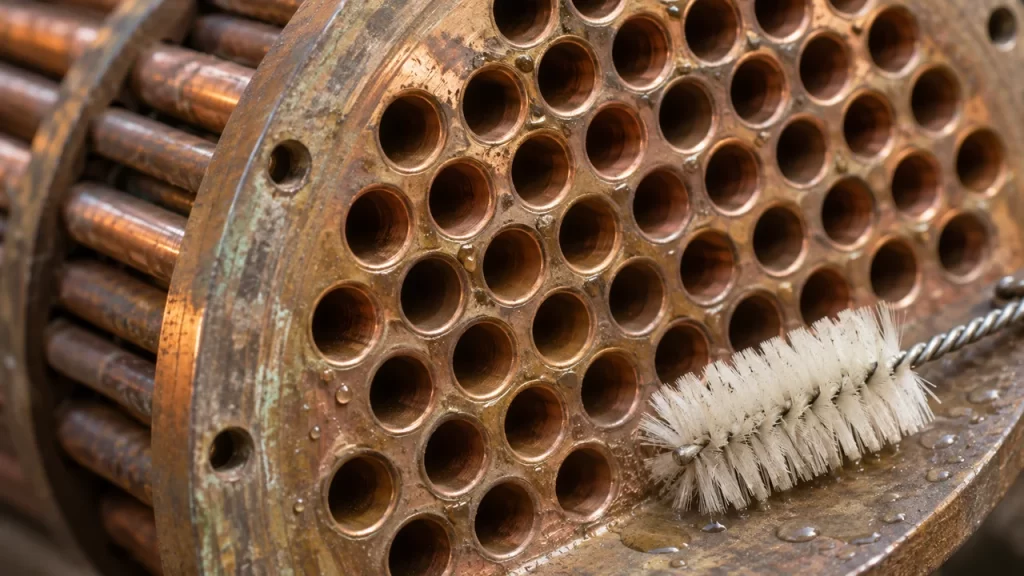
The cleaning discussion should identify the affected circuit, deposits and access. Exterior cleaning, flushing a passage and cleaning a removed tube bundle are different operations. Ask which work is relevant to the identified unit and what manufacturer information governs the method. Do not assume that one seasonal package fits every exchanger.
If leakage or suspected fluid mixing is also involved, describe it separately. Removing deposits does not establish that a defect has been repaired. Ask what inspection is needed and how the findings will shape the scope. The fouling or leak guide helps distinguish those concerns.
| Request | Clarify |
|---|---|
| Cleaning | Which surfaces or passages and which deposits? |
| Leak assessment | What observation needs investigation? |
| Reassembly | Which instructions and replacement parts apply? |
| Return to equipment | What findings and checks need to travel with the unit? |
Keep the maintenance record specific. A note saying only “winter service” does not explain whether the exchanger was cleaned, inspected, repaired or left for further assessment. Clear scope wording remains useful long after the season changes.
How can a seasonal service handoff be organized?
A seasonal checklist works best when somebody owns each task. Keep the component, system and transport responsibilities clear before service.
Start by identifying who is coordinating the job and who handles the wider equipment. Ask the component shop which work is accepted and what information is needed. Confirm removal, draining, lifting, transport and reinstallation arrangements with the responsible people rather than assuming they are all included.
When the work is complete, keep the findings with the equipment record. The industrial heat exchanger guide explains the broader cleaning and repair decisions, while the marine exchanger guide adds vessel-specific questions where that application is relevant.
What questions do equipment owners ask about seasonal heat exchanger maintenance?
Seasonal planning raises questions about intervals, storage and service scope. These answers keep the discussion focused on actual industrial equipment.
Does every heat exchanger need cleaning before winter?
No universal rule applies. Follow the component and equipment maintenance guidance, then consider actual exposure, operating history and inspection findings. A seasonal reminder can help organize a review, but it should not replace the condition-based discussion needed to define the work.
Is this the same as household furnace maintenance?
No. This guide concerns industrial cooling components and relevant marine applications. A household furnace has a different equipment context and service workflow. Identify the actual industrial exchanger and application so the inquiry reaches the appropriate component service discussion.
Can a shutdown guarantee enough time for every repair?
No completion assumption should be made before the scope and arrangements are understood. Share the timing you are coordinating, then ask what inspection, parts and handling information is needed. Keep operational planning flexible enough to reflect the actual findings.
What record is useful after seasonal service?
Keep the component identity, original complaint, inspection findings and completed scope together. Note which questions remain open for the wider equipment technician. Specific information is more useful than a broad seasonal label when another person reviews the machine or exchanger later.
How can Pankey’s help with planned heat exchanger service?
Planning industrial heat exchanger maintenance in the Bay Area? Tell Pankey’s about your component and the timing you are coordinating.
Pankey’s Radiator Repair Shop in Hayward lists industrial heat exchanger services. Share the component identification and application, then ask which inspection, cleaning or repair work can be considered for your unit.
Tell Mario or Paul what changed, which circuit is involved and whether the component remains installed. Include your Bay Area location and available photographs. Confirm accepted work and handling before removal or transport, and keep the component inquiry connected to the technician responsible for the wider system. The industrial heat exchanger service guide provides broader context.

Pankey’s Radiator Repair Shop · 21805 Foothill Blvd, Hayward, CA 94541 · Bay Area industrial equipment service inquiries.
