21805 FOOTHILL BLVD, HAYWARD, CA 94541
 1-510-581-6804
Where Can You Get Drill Rig Radiator Repair Near Dublin?
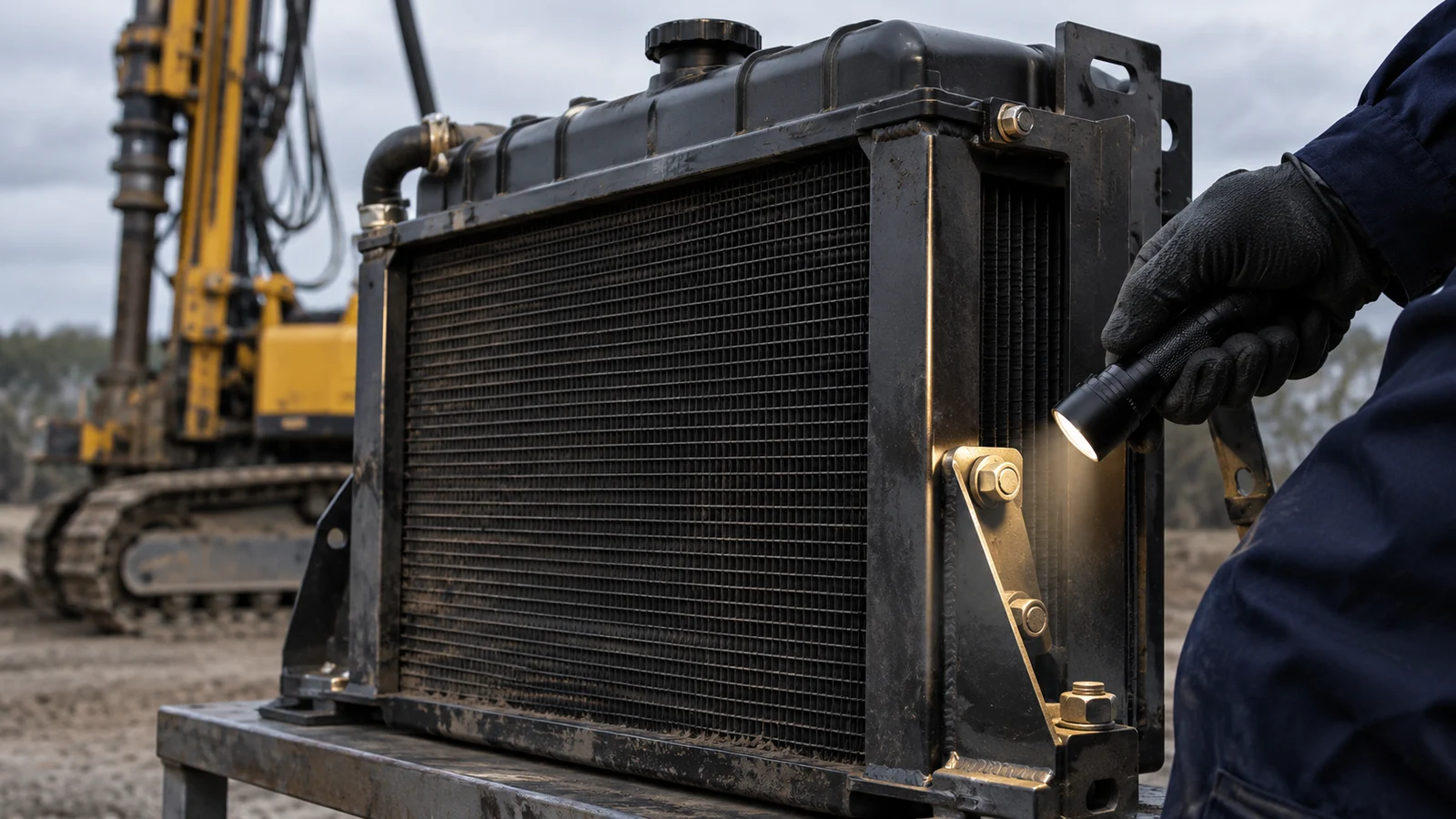
Dublin drilling contractors can contact Pankey’s in Hayward about drill rig radiator cleaning and repair. Identify the rig and installed radiator, document dimensions, mounts, connections and jobsite contamination and confirm handling before removal.
Drill rigs expose cooling packages to dust, vibration, transport and limited access. A useful radiator inquiry must do more than name the rig brand. The installed assembly, its mounting relationship and the conditions around the damage matter.
This guide is for industrial drill rig radiators near Dublin. It does not claim jobsite service, transport or experience with a particular local project.
Who services drill rig radiators near Dublin?
Choose a shop that lists industrial drill radiator work and describe the assembly clearly. A rig can have a radiator, oil cooler and charge air cooler in a stacked package, so identify the affected circuit.
Pankey’s lists drill radiator service from Hayward. Dublin contractors can contact that shop, but no Dublin branch, jobsite callout, pickup or delivery is promised.
Provide the rig manufacturer, model, serial or fleet ID and radiator markings. State whether the assembly is installed, loose or part of a removable cooling module.
Describe the concern: coolant loss, temperature behavior, dust or mud blockage, impact, vibration damage, cracked mount or previous repair. Keep operator observations separate from confirmed findings.
Confirm who diagnoses the complete rig and who owns safe shutdown, removal and reinstallation. Radiator component service does not replace engine, fan, hydraulic or control-system diagnosis.
What drill rig and radiator dimensions should I send before service?
Start with overall height, width and thickness only if the shop requests them, then document core dimensions, tank arrangement, hose connections, filler position, drain and mounting points. Use a consistent reference and label every measurement.
Photograph both faces and the cooling-stack order. Show shroud clearance, brackets, vibration isolators and any contact marks. A close-up of a cracked tab without the mating bracket can hide the condition that loaded it.
Caterpillar’s radiator maintenance guidance emphasizes the equipment manual and cautions against high-pressure water on fins. Use the drill rig’s exact instructions and isolation procedures.
Record contamination from drilling conditions without assuming that cleaning is the only need. Fine dust, oily residue, clay and packed debris can affect access and method differently.
| Detail | Document | Purpose |
|---|---|---|
| Rig identity | Model, serial and fleet ID | Establishes equipment context |
| Radiator geometry | Core, tanks, ports and mounts | Supports component identification |
| Cooling stack | Order and hidden faces | Distinguishes affected component |
| Damage context | Bracket, shroud and impact area | Shows external conditions |
Can drill rig radiators be repaired instead of replaced?
Repairability depends on construction, damage and overall condition. A localized tank or mount problem differs from a core with broad deterioration, severe impact or several prior modifications.
Ask which defect the proposed repair addresses and what assessment supports it. If vibration or alignment contributed, the rig-side condition also requires attention.
Cleaning and repair are separate. Removing packed debris does not mend a leak, and a leak repair does not ensure every layer in a cooling stack is clear.
Replacement comparison requires direct dimensions, connections, mounts and duty information. A radiator listed for the rig model may not match a modified or previously replaced assembly.
Preserve identification and as-found photographs until the work is complete. They support reinstallation and future maintenance.
What affects the cost of drill rig radiator service?
Cost depends on radiator size, construction, contamination, damage, testing, previous work and handling. Cleaning, leak assessment, mount repair and replacement are different scopes.
Ask what can be learned from the initial record and what requires the component. Confirm how additional findings are communicated and who may approve them.
Clarify lifting, draining, removal, transport and reinstallation. This Dublin article does not promise heavy-equipment handling, jobsite work or a completion time.
If the rig is scheduled for a project, share the operational constraint without asking for a guarantee before assessment. Plan equipment availability through the responsible contractor.
Keep the work description with the rig and radiator ID. Similar rigs can use different cooling assemblies after field modifications or replacements.
Create a removal plan before fasteners are loosened. Large rig radiators may be part of a module with guards, coolers and shrouds. Identify the weight and approved lifting points from the equipment documentation and use qualified handling resources. Never infer a lifting point from a convenient bracket or port.
Mark the installed top, front, airflow direction and connection names on the documentation, not on delicate fin surfaces. Photograph spacers, isolators and bracket stacks in place. These details help the rig technician reproduce alignment and explain whether a cracked mount was loaded unevenly.
If dust and oily film have combined into packed contamination, describe both parts of the condition. Oil may come from another component or maintenance event, and removing the radiator debris does not diagnose that source. The responsible rig provider should investigate any ongoing contamination path.
For a radiator that has previous field modifications, measure and photograph the changes directly. Added brackets, relocated ports, patched shrouds and nonstandard hoses can make a catalogue match unreliable. The shop should see what is installed rather than what the rig may have used when new.
Ask what testing is included after cleaning or repair and how results will be reported. Do not specify a pressure or acceptance value from a generic source. The component construction, equipment information and shop’s accepted method should control the actual test plan.
During transport, support the assembly so vibration and straps do not crush fins, bend necks or twist mounts. Photograph the packaged radiator and inspect it at receipt. A clear handoff protects the contractor and shop from confusing new handling damage with the original condition.
After reinstallation, the rig provider should check fan and shroud clearance, hose support, mounts, coolant service and system operation. These machine-side tasks remain important even when the radiator repair itself passes the agreed component assessment.
If the rig moves between sites, include transport history when damage appears around mounts or the cooling module frame. Road vibration and securing methods may be relevant context, but the article cannot assign cause. The contractor should review transport hardware and procedures through the qualified equipment provider.
Photographs should include a scale reference for damage and dimensions without placing tools against fragile fins. Use a ruler or documented measurement where safe. A wide-angle phone image can distort proportions, so label the actual numbers rather than asking the shop to estimate size visually.
When hoses or pipes are disconnected, protect ports under the owner’s procedure and record the condition of necks and sealing surfaces. A damaged neck can be part of the radiator question, while hose condition and clamp selection may remain with the rig technician.
After service, compare the completed scope with the original symptom. If the radiator was cleaned but the rig still runs hot, the maintenance team should continue the appropriate system diagnosis rather than assuming the cleaning failed or requesting the same work again.
The final rig record should name the specific radiator work, test or cleaning completed and any limitations. Avoid a broad note that cooling was repaired, because future technicians need to know whether mounts, hoses, fan clearance and other machine conditions were included or remained outside the component scope.
What questions should I ask before booking service near Dublin?
Does Pankey’s have a Dublin location?
No. Pankey’s is in Hayward. Dublin contractors can contact that shop about a drill rig radiator and confirm practical arrangements.
Which drill rig radiator measurements matter?
Ask first. Overall and core dimensions, ports, mounts and stack arrangement may help, but measurements should be labeled and tied to the installed component.
Can I pressure-wash drilling dust from the fins?
Do not assume high pressure is safe. Follow the rig and radiator instructions. Poorly directed pressure can damage fins or push material deeper.
Can repairing the radiator stop repeated mount cracks?
The component can be assessed, but a loose, misaligned or vibrating rig-side mount also needs attention or the damage may recur.
Does radiator work include complete rig diagnosis?
No such scope is implied. Fan, engine, hydraulic, control and other systems may require separate diagnosis by the responsible provider.
How can Pankey’s help with drill rig radiators near Dublin?
Pankey’s is one Hayward industrial cooling shop. Mario and Paul own it. Mario is the elder and most experienced, and Paul handles estimating and general management.
Dublin contractors can call with the rig identity, radiator measurements, photographs and the component decision they need to make. Confirm accepted handling before moving the assembly.
The drill radiator guide provides related background. Use the actual rig manual and confirmed scope for action.