21805 FOOTHILL BLVD, HAYWARD, CA 94541
 1-510-581-6804
Industrial Radiator Cleaning or Repair in Hayward: Which Service Do You Need?
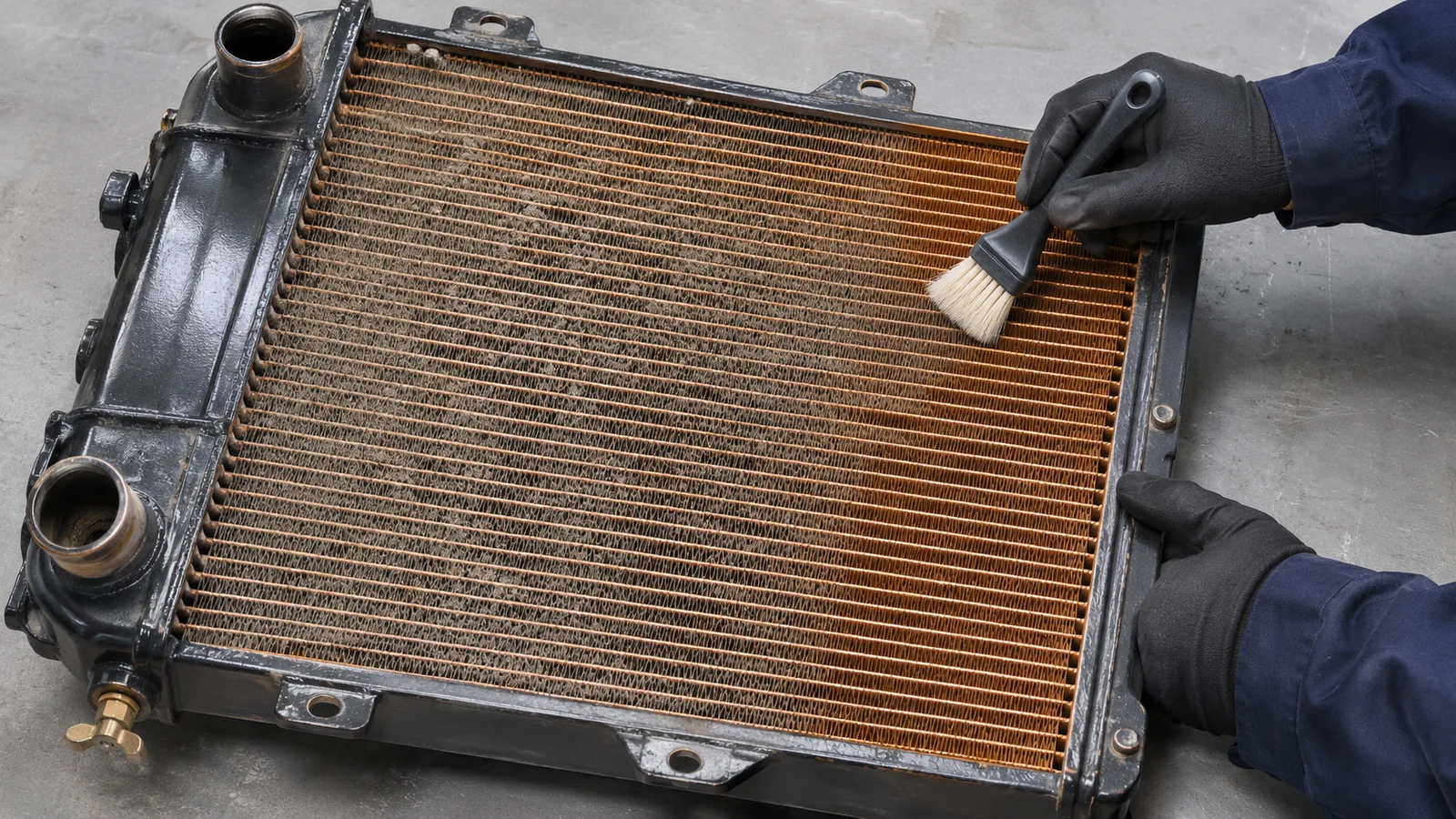
For industrial radiator cleaning or repair in Hayward, first identify the component and evidence. External debris points to a cleaning discussion, visible leakage or damage points to an assessment for repair and unresolved overheating may require wider machine diagnosis.
Cleaning and repair are often mentioned together, but they answer different questions. Cleaning addresses contamination or blocked airflow. Repair addresses a defect such as a leak, damaged tank, joint, core or mounting area. A machine can need one, both or neither if the temperature problem originates elsewhere.
Pankey’s is located in Hayward, so this guide focuses on choosing a useful component-service question before calling. It supports the established radiator service pages without replacing them or covering passenger cars.
Who services industrial radiators near Hayward?
Pankey’s Radiator Repair Shop is at 21805 Foothill Blvd in Hayward and lists industrial radiator cleaning and repair services. Begin by naming the equipment and component rather than asking for generic radiator service.
A heavy-duty truck radiator, generator radiator, forklift radiator, charge air cooler and oil cooler can occupy the same broad cooling category but carry different media and have different construction. Confirm which component is involved before selecting a service.
State whether the radiator remains installed and who has examined the whole machine. Component service can address an agreed radiator condition, while fan performance, coolant circulation, controls and engine operation may require separate diagnosis.
Use the established radiator repair page for the shop’s main service information. The unusual spelling in that URL is the established live address and should not be replaced by this local guide.
No price, free estimate, turnaround, pickup, delivery or on-site work is promised here. Confirm what applies to the actual equipment before planning removal or transport.
Which industrial radiators can a component repair shop assess?
A component shop may assess industrial radiators from heavy equipment, commercial trucks, generators, forklifts, tractors and other machinery when the particular assembly fits its scope. Equipment category alone does not prove that every configuration or integrated package can be handled in the same way.
Provide the machine manufacturer, model and unit identifier, then identify the radiator itself. Record labels, overall dimensions, connection positions, mounts and whether the component appears original or previously replaced.
Photograph the full cooling package before close-ups. A radiator can sit beside a charge air cooler, oil cooler or condenser. A wide view helps distinguish circuits and shows whether debris or fluid may be coming from another component.
If the radiator is removed, keep orientation and hardware records. Label ports and brackets according to the equipment owner’s maintenance process. Similar-looking assemblies can differ in connection geometry.
Ask what information supports an initial discussion and what requires the component itself. A photograph helps frame the inquiry but cannot show every internal passage, seam or pressure-related defect.
Can industrial radiators be repaired instead of replaced?
Repairability depends on construction, defect location and remaining condition. A localized tank or joint leak may present a different question from broad core deterioration, severe impact damage or several previous repairs.
Ask which defect the proposed repair addresses and what inspection or testing supports it. Fluid can travel from a hose or connection above the wet area, so the nearest seam should not be declared the source without evidence.
Damage at a mount, shroud or frame should be documented with the surrounding installation. Repairing the radiator does not correct a loose bracket, misalignment or contact that could damage it again.
If replacement is discussed, compare dimensions, materials, port positions, mounts and application requirements. A model-based listing is a starting point, not proof that an unverified replacement matches the installed component.
Record the completed work precisely. A repaired radiator does not automatically establish that every overheating symptom or machine-side condition has been resolved.
Can cleaning help when industrial cooling equipment overheats?
Cleaning can help when debris blocks airflow through fins or stacked cooler faces. Internal deposits raise different questions about fluid, materials and passage access. An exterior brush, air, water and chemical circulation are not interchangeable methods.
Caterpillar’s radiator maintenance guidance tells owners to use their operation and maintenance manual and warns that high-pressure water can damage fins. Use the actual machine instructions rather than a universal cleaning shortcut.
Document the contaminant before it is disturbed. Dry dust, fibers, oily buildup, chaff and mineral deposits can lead to different service questions. Unknown residue should not be assigned a chemistry from appearance.
| Evidence | Likely discussion | Important limit |
|---|---|---|
| External debris across fins | Airflow cleaning | Does not prove the cause of overheating |
| Coolant at tank or seam | Leak assessment and possible repair | Source must be confirmed |
| Bent mount or impact | Condition and repairability | Machine-side contact also needs attention |
| Temperature rise with no visible defect | Wider diagnosis plus component review | Radiator work may not be the only need |
Cleaning and repair may be sequential when deposits hide condition. Confirm how new findings after cleaning would be reported and authorized.
What affects the cost of industrial radiator service?
Cost depends on the exact scope, radiator size, construction, contamination, damage, testing and previous work. Cleaning, leak assessment, localized repair, recoring and replacement are distinct requests.
Ask what the initial information can support and what remains unknown until the component is assessed. Confirm how additional findings are handled and identify the person authorized to approve changes.
Clarify machine shutdown, removal, draining, lifting, transport and reinstallation responsibilities. Pankey’s location in Hayward does not mean every related task is included.
If downtime matters, share the operational constraint without converting it into a guaranteed completion date. A reliable plan follows identification and assessment.
Compare proposals only when they address the same defect and include the same testing or preparation. The lowest number can describe a different job rather than a better value.
Before authorization, restate the decision in plain language: which radiator, which observed condition, which service and which responsibilities remain with the equipment owner. If the scope changes from cleaning to repair after inspection, update the record instead of relying on a phone summary. This one step helps operators, managers and technicians understand the same work without treating a preliminary inquiry as a final diagnosis. Preserve the updated approval carefully.
What should I send before arranging industrial radiator service?
Send a concise handoff with the equipment ID, radiator markings, symptoms, recent maintenance, contamination description, leak evidence, installed status and safe photographs. Include dimensions only when requested and label them clearly.
Separate operator reports from technician findings. A temperature warning under load and a confirmed tank leak are different types of evidence. Preserve both without blending them into an unsupported diagnosis.
For fleets, label every record by unit. Previous replacement history can make similar machines use different radiators. Keep the as-found photographs with the final service description.
Ask how the shop prefers to receive supporting files and what preparation is required. The contact page starts the conversation but does not itself approve component delivery.
Do not run hot equipment, open a pressurized system or reach near a fan solely to gather content for an inquiry. Missing information can be discussed safely later.
What questions should I ask before booking service near Hayward?
Is radiator cleaning the same as radiator repair?
No. Cleaning addresses contamination or blocked passages, while repair addresses a defect. A component may need one, both or a different system diagnosis.
Can Pankey’s diagnose the entire machine from the radiator?
A radiator component can be assessed within the agreed scope. Fan, coolant circulation, controls, engine and other machine systems may require separate qualified diagnosis.
Does visible debris prove cleaning will stop overheating?
No. It documents a relevant condition but does not prove the radiator is the only cause. Report the debris and operating behavior separately.
Should I remove the radiator before contacting the shop?
No. Explain whether it is installed and ask what information is needed. Confirm removal and handling responsibilities before taking equipment apart.
Does Pankey’s service passenger-car radiators?
This guide and the current stated scope concern industrial equipment and commercial machinery, not passenger-car service.
How can Pankey’s help with industrial radiators near Hayward?
Pankey’s is the Hayward shop discussed throughout this guide. Mario and Paul are the owners. Mario is the elder and most experienced, and Paul is the estimator and general manager.
Call with the industrial radiator identification and evidence, then ask which next step fits the component: cleaning discussion, repair assessment or coordination with a wider machine diagnosis.
The heavy-duty cooling guide offers additional background. Use it to organize questions, not as a remote diagnosis or guarantee.