 21805 FOOTHILL BLVD, HAYWARD, CA 94541
 1-510-581-6804
Heat Exchanger Fouling or a Leak? What Different Symptoms May Mean
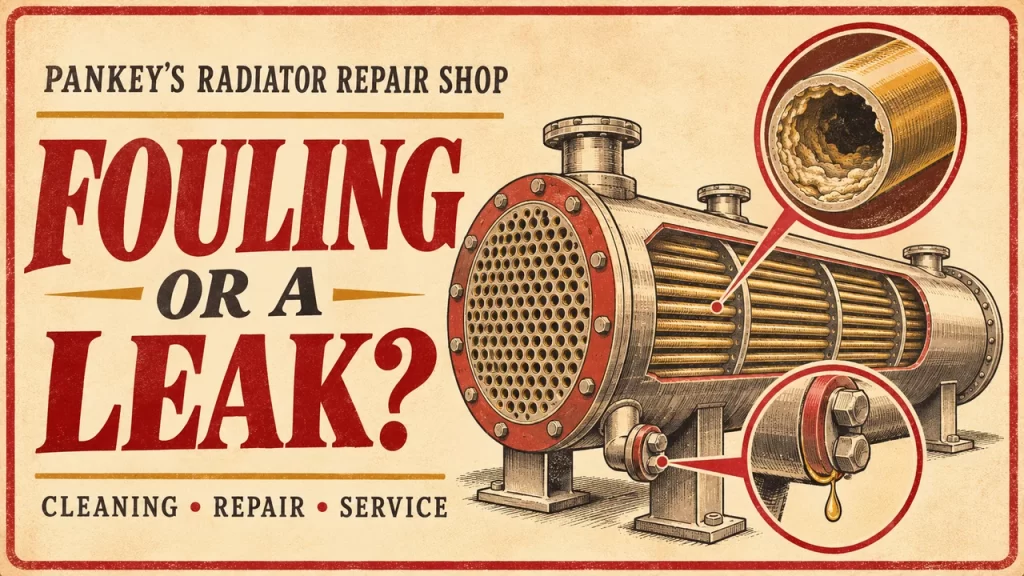
A heat exchanger that is dirty, leaking or linked to a temperature complaint needs a clear description before it needs a label. Fouling and a defect can coexist, but cleaning one concern does not automatically address the other. This guide offers a practical way to organize the observations you can report while leaving diagnosis and appropriate testing to the technician responsible for the system.
What is the difference between fouling and a heat exchanger leak?
Fouling and leakage can appear in the same story without being the same problem. Start by separating what you observed.
Fouling concerns unwanted material collecting on relevant surfaces or within passages. Leakage concerns fluid escaping its intended boundary, externally or between circuits. Those descriptions explain different kinds of concern; neither identifies a complete repair plan without the component and system context.
A unit may show visible deposits and a wet connection at the same time. Record both. If the inquiry asks only for cleaning, the leakage concern may be lost as the job passes between people. Likewise, requesting a leak repair does not explain whether deposits or internal contamination also need assessment.
| Observation | Question it supports |
|---|---|
| Accessible deposits | Which surface or passage needs inspection or cleaning? |
| External wet area | Where does the fluid originate? |
| Suspected mixing | Which circuits and components need evaluation? |
| Temperature change | What system conditions accompany the complaint? |
Use the table to organize a description, not to diagnose the source. The same visible symptom can have more than one explanation, and an appropriate assessment may change the initial plan.
When should a temperature complaint lead to a fouling discussion?
A temperature change needs context before it becomes a cleaning decision. The location of deposits matters as much as appearance.
Tell the technician when the change appears and what the equipment is doing. Include relevant maintenance, operating or contamination history. Fouling can be part of the investigation, but a temperature warning alone does not prove that deposits are the cause or that the exchanger is the only component requiring attention.
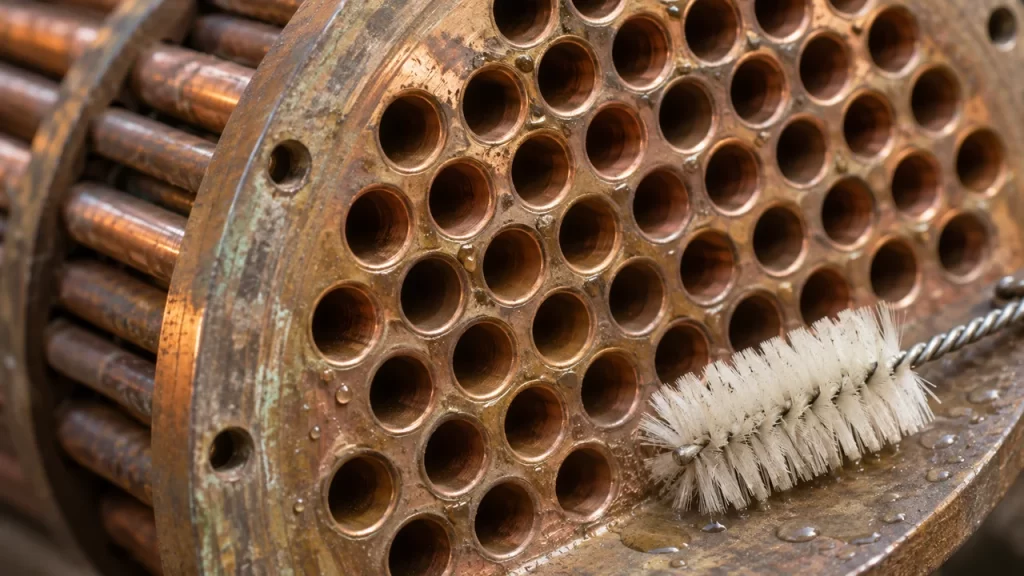
If material is visible, describe where it is found and which circuit is involved. Avoid guessing its composition from color. A water-side deposit and oil-side contamination present different questions. The identified design, materials and access should guide the cleaning discussion.
If cleaning has already been performed, explain the scope and what changed afterward. A recurring complaint deserves that history. The next step may involve the surrounding system, a different part of the component or a better-defined cleaning scope rather than repeating an assumption.
How should leakage or possible fluid mixing be described?
Wet marks can travel before you notice them. A careful description helps the technician investigate the source without guessing first.
Photograph the accessible wet area and include a wider view showing its position on the exchanger. Explain whether it appears during operation, after shutdown or at another observed time. Do not open a hot or pressurized system to make the evidence easier to collect. Safe observations are enough to begin the inquiry.
Possible mixing between circuits should be recorded as the actual fluid observation, not a confirmed internal failure. The qualified technician should determine which system checks and component assessments are appropriate. Follow the equipment’s instructions rather than continuing operation merely to gather a stronger symptom.
Ask how the proposed work addresses the identified defect and what appropriate checks follow it. Cleaning can improve inspection access, but it does not establish that a leak has been repaired.
What information helps choose the next service step?
Bring the symptoms together without turning them into a diagnosis. Clear evidence gives the service team a better starting point.
A useful inquiry combines component identity, application and a short record of the concern. Explain whether the unit remains installed and whether another technician is assessing the wider system. Ask what inspection is needed before selecting cleaning, repair or replacement.
The shell-and-tube service guide adds design and access questions, while marine exchanger cleaning questions covers vessel-related context. Keep the original observations with the component record so the person arranging service and the person reinstalling equipment are discussing the same job.
What questions do equipment owners ask about heat exchanger fouling and leaks?
Similar symptoms can lead to different service decisions. These answers help distinguish a cleaning question from a possible repair concern.
Can an exchanger be fouled and leaking at once?
Yes, more than one concern can be present. Report deposits and leakage separately so the work discussion covers both. Ask which inspection is appropriate and how the proposed cleaning or repair relates to the findings, rather than assuming one operation resolves every observed problem.
Does a temperature warning confirm fouling?
No. It identifies a condition needing attention, not a single cause. The operating circumstances and surrounding system may also require evaluation. Record what happened and follow the equipment instructions so the appropriate technician can decide which checks are relevant.
Can fluid appearance identify an internal leak source?
Appearance can be a useful observation, but it does not by itself establish the source. Report what changed and which circuits are involved. A qualified technician should determine which system and component assessments are needed before deciding on repair or return to service.
Should I request cleaning or repair first?
Start with the observations and ask what assessment is needed. Cleaning and repair address different concerns, and the scope may depend on access and inspection. An informed request is more useful than choosing a method before the component’s condition has been evaluated.
How can Pankey’s help with heat exchanger inspection inquiries?
Not sure whether your exchanger needs cleaning or repair? Tell Pankey’s what you observed and ask about the next inspection.
Pankey’s Radiator Repair Shop in Hayward lists heat exchanger cleaning and repair services. Share the component identification and application, then ask which inspection, cleaning or repair work can be considered for your unit.
Tell Mario or Paul what changed, which circuit is involved and whether the component remains installed. Include your Bay Area location and available photographs. Confirm accepted work and handling before removal or transport, and keep the component inquiry connected to the technician responsible for the wider system. The industrial heat exchanger service guide provides broader context.
Pankey’s Radiator Repair Shop · 21805 Foothill Blvd, Hayward, CA 94541 · Bay Area industrial equipment service inquiries.
