21805 FOOTHILL BLVD, HAYWARD, CA 94541
 1-510-581-6804
Who Repairs Semi-Truck Radiators Near Concord?
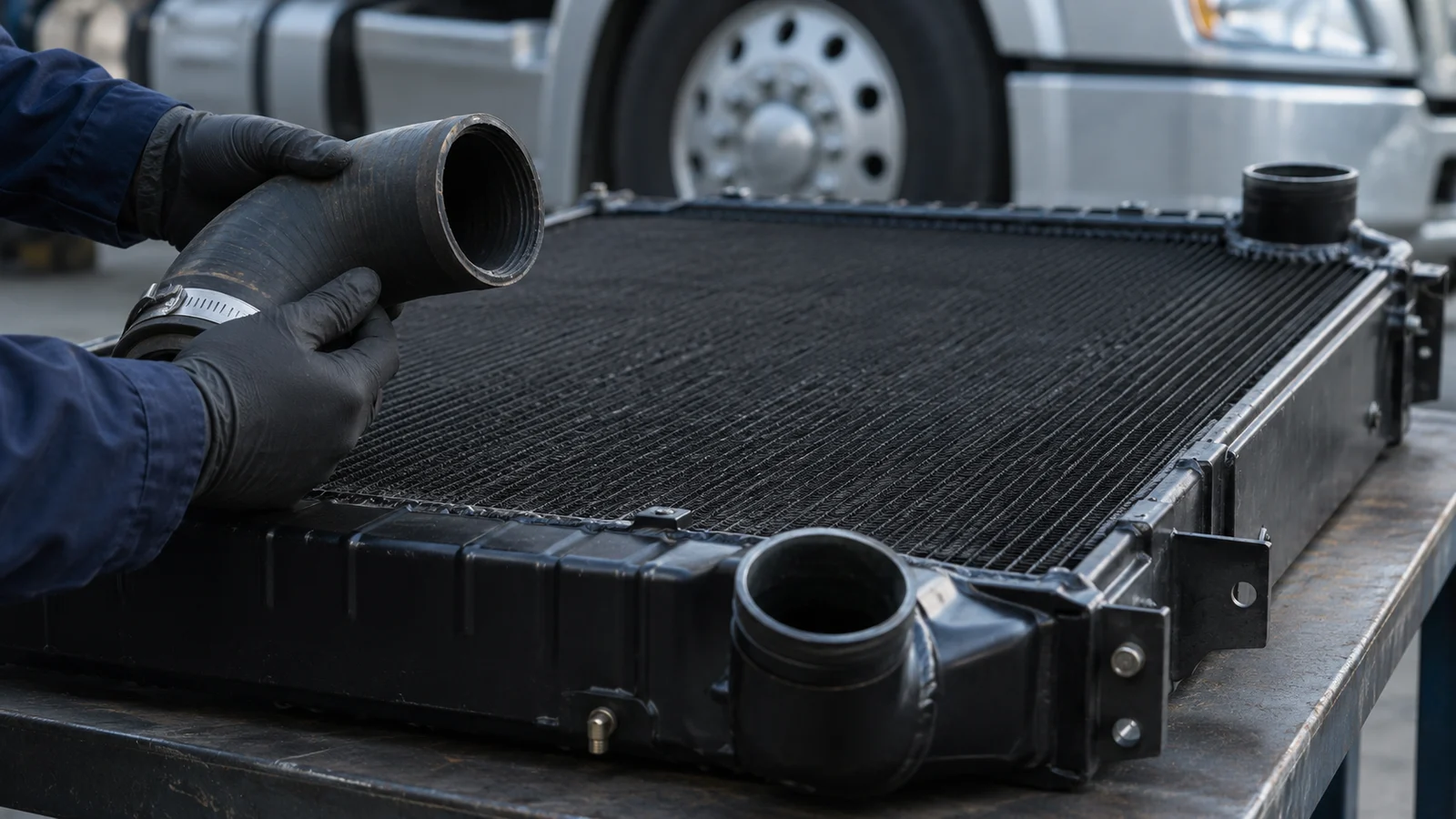
Concord fleet operators can contact Pankey’s in Hayward about semi-truck radiator cleaning and repair. Record the truck and radiator identification, describe coolant loss or temperature behavior and confirm the component service scope before removal or transport.
A driver may notice a temperature warning, a maintenance technician may find dried coolant and a fleet manager may see an out-of-service unit. Those are three useful views of the same problem, but none should be turned into a remote diagnosis. A semi-truck radiator inquiry works best when each observation stays attached to its source.
This guide helps commercial fleets around Concord prepare that inquiry. It focuses on the radiator as a heavy-duty cooling component, not passenger-car service, towing, roadside repair or a promise that radiator work will resolve every engine-cooling complaint.
Who services semi-truck radiators near Concord?
Look for a shop whose published work includes heavy-duty and commercial equipment. A request for semi-truck radiator service is different from a general vehicle appointment because the conversation may concern an already removed component, a cooling-stack assembly or a radiator that has not yet been positively identified.
Pankey’s lists semi-truck radiator service from its shop at 21805 Foothill Blvd in Hayward. Concord is not a second branch. Call the Hayward shop and ask whether the particular radiator and proposed work fit its accepted scope before arranging anything physical.
Start with the truck make, model, year, engine information used in your records and fleet unit number. Add the radiator’s markings and overall photographs when safely available. Previous replacements can make the installed assembly different from what a model-only parts search suggests.
Say whether the concern is coolant loss, a temperature pattern, airflow blockage, impact damage or an unidentified cooling-stack problem. A radiator, charge air cooler and other heat exchangers may sit close together but serve different circuits. If the component is uncertain, provide a wider view and say that identification is part of the question.
Confirm who is responsible for whole-truck diagnosis. A component shop can discuss radiator condition and agreed component work, while fan controls, coolant circulation, engine operation and other vehicle systems may require separate investigation.
What should a fleet report about a leaking semi-truck radiator?
Create a short incident record before memories blend together. Record when the warning or coolant loss appeared, whether the truck was loaded, the road or ambient conditions if relevant and what the driver did in response. Follow the truck manufacturer’s instructions for warnings and safe shutdown rather than using an online article as an operating procedure.
Maintenance observations should be separate. Note the location of visible residue, whether the source was actually confirmed, recent hose or cooling work and any physical contact marks. Never open a hot pressurized system or ask a driver to reproduce a leak for a photograph.
Photograph the complete cooling package, radiator label, tanks, connections, mounts and the area of concern. A wet hose above a tank can make the tank look like the source. A narrow close-up without context can hide that relationship, so pair detail views with an overview.
Freightliner’s 108SD and 114SD driver guidance includes checking the radiator and charge air cooler for damage and accumulated debris. Use the instructions for the actual truck, not this general example, when deciding how to inspect or maintain it.
| Record | Useful detail | Avoid assuming |
|---|---|---|
| Driver report | Warning, load and when it appeared | The radiator is the confirmed cause |
| Visible coolant | Location and whether the source is known | The nearest seam is leaking |
| Core blockage | Material and surfaces affected | Cleaning will resolve every symptom |
| Impact or vibration | Mounts, shroud and contact marks | A component repair corrects installation issues |
Can semi-truck radiators be repaired instead of replaced?
Repair versus replacement depends on the defect, construction and remaining condition. A localized tank or joint concern is a different assessment from extensive core deterioration, distorted mounts or several prior modifications. The size of the visible wet spot does not measure the work required.
Ask what the proposed repair is intended to address and what testing or inspection supports that scope. If the radiator has previous repairs, identify their locations. Adjacent material and recurring stress matter to the discussion even when the newest leak appears small.
If replacement is being considered, preserve dimensions, connection positions, mounting points and installed photographs. A truck model narrows the search but does not prove that every radiator offered under that model matches the unit in front of you.
Cleaning is a separate service decision. External debris may restrict airflow, while internal contamination raises different material and circuit questions. Cleaning does not mend a crack, and a repair does not establish that the core passages are clean.
The best comparison is between scopes that address the same problem. Do not compare a cleaning estimate, a localized repair and a complete replacement as if the line items were interchangeable. Ask what evidence would change the recommendation.
What affects the cost of semi-truck radiator service?
A useful cost discussion begins with component identity and condition. Radiator size, construction, access to the affected area, contamination, previous work and parts availability can all change what must be evaluated. An installed truck may also require work outside the radiator shop’s component scope.
Ask what the initial assessment includes, how additional findings would be reported and who may approve a changed scope. Fleet records should name one decision-maker so a driver, dispatcher and maintenance manager do not each believe someone else authorized the work.
Confirm removal, handling, transport and reinstallation responsibilities directly. This Concord-focused article does not establish roadside assistance, towing, pickup, delivery or on-site work. Make those arrangements only after the shop confirms what applies to the actual component.
If downtime affects dispatch planning, explain the planning constraint without turning it into a promised completion date. The shop needs the opportunity to understand the radiator and the work before anyone relies on a schedule.
Keep the estimate with the fleet unit record, photographs and radiator identification. That small documentation step reduces confusion when similar tractors have different cooling packages or when a component is removed from the truck.
Before approving a scope, compare the written description with the original service question. If the inquiry began with coolant loss but the proposed work addresses only exterior debris, ask how the two relate. If the shop identifies a different component than the one first reported, update the fleet record rather than carrying the old assumption forward. Clear language about what is included, what is excluded and what still needs vehicle-level diagnosis is more useful than a broad label such as radiator job.
What questions should I ask before booking service near Concord?
Does Pankey’s have a Concord location?
No. The shop is at 21805 Foothill Blvd in Hayward. Concord fleet operators can contact that shop about a semi-truck radiator and confirm the accepted component work and practical arrangements.
Can a driver’s temperature warning prove the radiator is bad?
No. The warning is important evidence, but several cooling-system or operating conditions may contribute. Record the circumstances and separate whole-truck diagnosis from the radiator component assessment.
Should I send the truck VIN or the radiator number?
Provide both when available, along with the fleet unit and photographs. The truck identity gives context while markings on the installed radiator help distinguish its actual configuration.
Can Pankey’s repair a charge air cooler in the same cooling stack?
Identify it as a separate component and ask about that specific service. A charge air cooler carries compressed intake air and should not be described as the engine-coolant radiator.
Do I need to remove the radiator before calling?
No. Explain whether it is installed and ask what information the shop wants first. Confirm removal and handling responsibilities before taking the truck apart or arranging transport.
How can Pankey’s help with semi-truck radiators near Concord?
Pankey’s Radiator Repair Shop is a single Hayward business serving industrial equipment and commercial machinery inquiries. Mario and Paul own the shop. Mario is the elder and most experienced, and Paul is the estimator and general manager. No manufacturer authorization or Concord branch is claimed here.
For a Concord semi-truck radiator question, call with the fleet unit, installed component details, symptom record and photographs you can obtain safely. Ask what can be assessed from that information and what requires a closer look.
The related semi-truck radiator guide provides broader background. Keep the current inquiry centered on the actual unit and the decision your team needs to make next.