 21805 FOOTHILL BLVD, HAYWARD, CA 94541
 1-510-581-6804
Marine Heat Exchanger Cleaning: When a Flush Needs a Closer Look
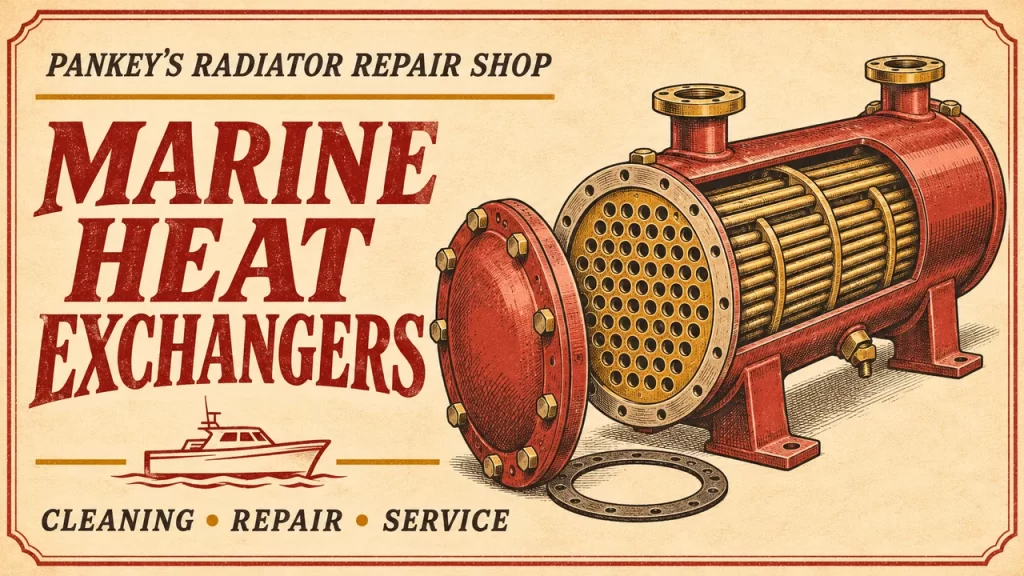
A marine heat exchanger can make a boat’s cooling conversation feel more complicated than it needs to be. Start with the engine and the separate circuits, then describe what changed. Cleaning, flushing and investigating a leak are different scopes. This guide helps Bay Area boat owners prepare a component-service inquiry while leaving diagnosis of the complete marine cooling system to the appropriate technician.
Which marine heat exchanger and cooling circuit are involved?
Marine cooling starts with knowing which water goes where. That small distinction makes a big difference to the service conversation.
Marine engine cooling arrangements vary. A heat exchanger can transfer heat between engine coolant and a separate water circuit, but the unit’s documentation should identify the actual layout. Avoid treating a hose location or the word “marine” as complete identification. The engine model and available exchanger number give the conversation a stronger starting point.
Send a wider photograph showing the component and connections before adding a close-up. If the boat has several coolers, explain which unit the technician has identified. Oil cooling, engine cooling and other heat-transfer duties should not be combined into one vague request simply because the components sit near each other.
| Information | Useful purpose |
|---|---|
| Engine and exchanger identity | Connect the inquiry with the correct arrangement. |
| Affected circuit | Keep coolant, water and oil concerns distinct. |
| Overall photograph | Show the connections and component orientation. |
| Maintenance record | Explain what has already been inspected or serviced. |
If you are unsure which circuit is involved, say so. The first call is an opportunity to clarify the information needed, not a test of whether an owner can diagnose the system from memory.
When might flushing leave unanswered cleaning questions?
A flush can be useful without answering every question. Access, deposits and the actual complaint determine what needs closer inspection.
A flushing operation and an inspection of accessible heat-transfer surfaces are different scopes. Flow through a unit does not by itself establish the condition of every relevant passage. Ask what was done previously, which side was involved and what concern remains. That helps avoid repeating a general request without understanding what needs assessment.
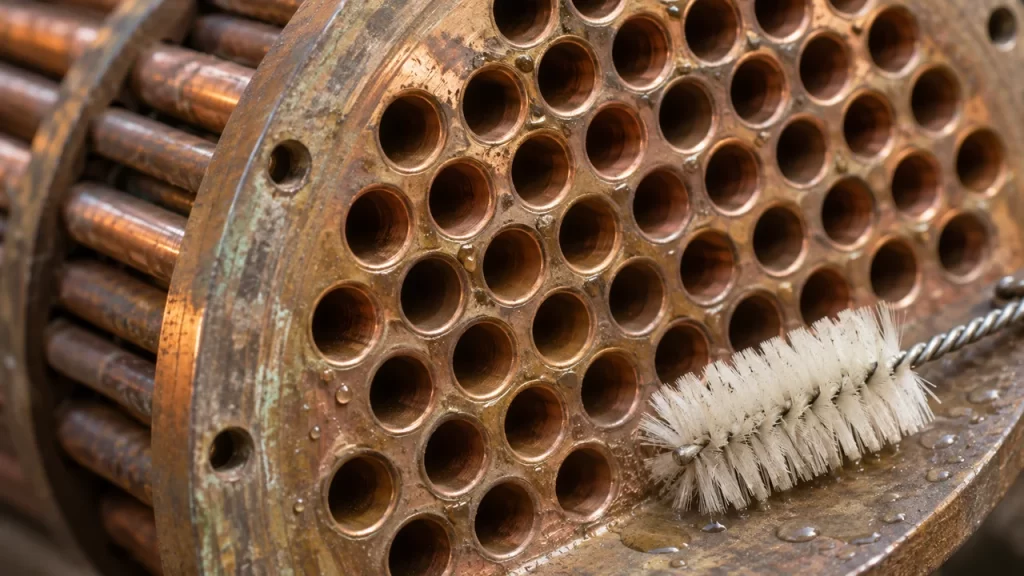
On a shell-and-tube design, the construction may provide access to particular surfaces through appropriate disassembly. Access and cleaning methods remain component-specific. Materials, seals and deposits can change the procedure. Leave removal of covers, selection of cleaning media and reassembly to people following the correct service information.
Do not choose a chemical because another boat owner used it successfully on a different unit. Compatibility depends on the actual construction. The shell-and-tube cleaning guide explains the access and material questions to discuss.
Does a marine engine temperature warning prove the exchanger is dirty?
A warm-running engine does not automatically identify a dirty exchanger. Keep the component question connected to the wider marine system.
A temperature warning is a reason to follow the engine’s operating instructions and arrange an appropriate investigation. The surrounding cooling system may require evaluation as well as the heat exchanger. Record the warning, the operating conditions and relevant maintenance changes. Avoid declaring the exchanger clogged simply because it is a familiar part to clean.
Leakage and suspected mixing between circuits deserve their own description. A visible stain or a change in fluid appearance can be a useful observation, but it does not establish the source. The marine technician should determine which system checks and component assessments are appropriate before the equipment returns to operation.
These distinctions help the component shop work from the same information as the person assessing the vessel. They also keep a cleaning quote from being mistaken for an agreement to diagnose every part of the marine cooling system.
What should accompany a marine exchanger service inquiry?
Before the exchanger leaves the boat, make sure its identity stays attached. Clear notes help everyone discuss the same component.
Ask about accepted work and handling before arranging removal. Explain whether the exchanger remains installed, who is coordinating the marine-system work and what information is available. Do not assume that a component shop provides vessel visits, pickup or removal and installation. Confirm the actual arrangements first.
Keep the original complaint and completed work together in the maintenance record. That is useful when the owner, marine technician and component shop each handle a different part of the job. For a related concern, see fouling versus leakage questions.
What questions do equipment owners ask about marine heat exchanger cleaning?
Boat owners often have practical questions about flushing, removal and leaks. These answers help prepare a clearer marine service inquiry.
Are boat and marine heat exchangers different service categories?
The terms can describe closely related components and applications. What matters is the actual unit, engine arrangement and work required. Use identification and photographs to discuss the component instead of assuming the name alone establishes its design, materials or accepted service scope.
Does water flowing through the exchanger prove it is clean?
No. Observed flow does not establish the condition of every relevant passage or heat-transfer surface. Ask what cleaning and inspection scope applies to the unit. A flowing rinse and a documented component assessment provide different information when a concern remains.
Should I remove the exchanger before calling?
Discuss arrangements first. Explain the component, symptoms and installed status, then ask what information and handling are needed. Removal, draining, protection and transport require appropriate planning with the people responsible for the vessel and should not be assumed from a general cleaning article.
Does Pankey’s perform complete marine engine diagnosis?
This guide does not establish that service. Pankey’s lists boat and marine heat exchanger work. Ask the shop which component services fit your inquiry, and coordinate wider engine and cooling-system diagnosis with the appropriate marine technician so responsibilities remain clear.
How can Pankey’s help with marine heat exchanger inquiries?
Have a marine heat exchanger question in the Bay Area? Tell Pankey’s about the engine, component and symptoms you noticed.
Pankey’s Radiator Repair Shop in Hayward lists marine heat exchanger services. Share the component identification and application, then ask which inspection, cleaning or repair work can be considered for your unit.
Tell Mario or Paul what changed, which circuit is involved and whether the component remains installed. Include your Bay Area location and available photographs. Confirm accepted work and handling before removal or transport, and keep the component inquiry connected to the technician responsible for the wider system. The industrial heat exchanger service guide provides broader context.
Pankey’s Radiator Repair Shop · 21805 Foothill Blvd, Hayward, CA 94541 · Bay Area industrial equipment service inquiries.
