 21805 FOOTHILL BLVD, HAYWARD, CA 94541
 1-510-581-6804
Shell-and-Tube Heat Exchanger Cleaning: Access, Materials and Service Questions
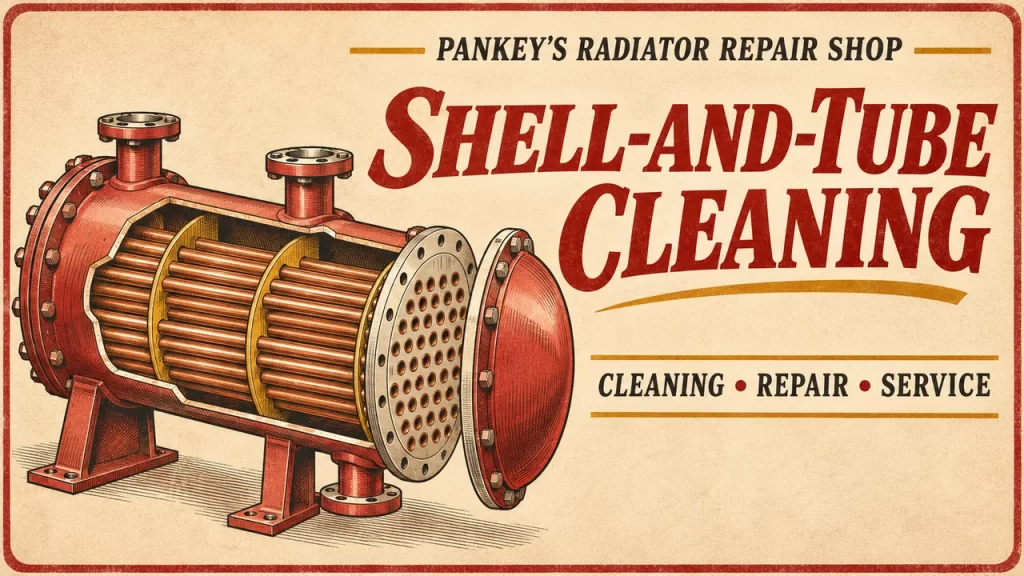
Shell-and-tube heat exchangers have a recognizable name and a wide range of actual constructions. Before arranging cleaning, it helps to know the unit, the affected circuit and what access its design allows. This guide focuses on questions equipment owners can use to discuss component service. It does not provide a universal disassembly, chemical-cleaning or pressure-testing procedure.
What should be identified on a shell-and-tube exchanger?
Shell-and-tube designs make the name sound like the whole explanation. The useful details are the actual construction, circuits and access.
A shell-and-tube exchanger uses a tube bundle within a surrounding body. The exact arrangement, materials and service access vary. The component number and manufacturer information help establish which unit is being discussed. A similar outline in another article is not enough to choose a maintenance method.
Explain what equipment the exchanger serves and which circuit is associated with the complaint. Include photographs showing the overall body, connections and available identification. If the unit has already been disassembled by a qualified technician, preserve the job’s orientation and parts information with the component record.
| Detail | Useful question |
|---|---|
| Component identity | Which design information applies? |
| Application | What equipment and operating context does it serve? |
| Circuits | Which side contains the relevant deposits or concern? |
| Existing condition | What was observed before removal or earlier work? |
Confirm that the shop accepts the actual unit and scope. The shell-and-tube label covers many applications, so it should not be treated as confirmation that every size, material or service condition fits one shop process.
How does access affect shell-and-tube cleaning?
A removable cover can create access without making cleaning a simple rinse. Ask which surfaces and passages need attention first.
Access determines what can be reached and assessed using the appropriate procedure. Some designs permit removal of a tube bundle or end cover, while other arrangements differ. Ask which areas can be inspected and what preparation is required. Do not assume a familiar-looking cover makes disassembly an owner-level task.
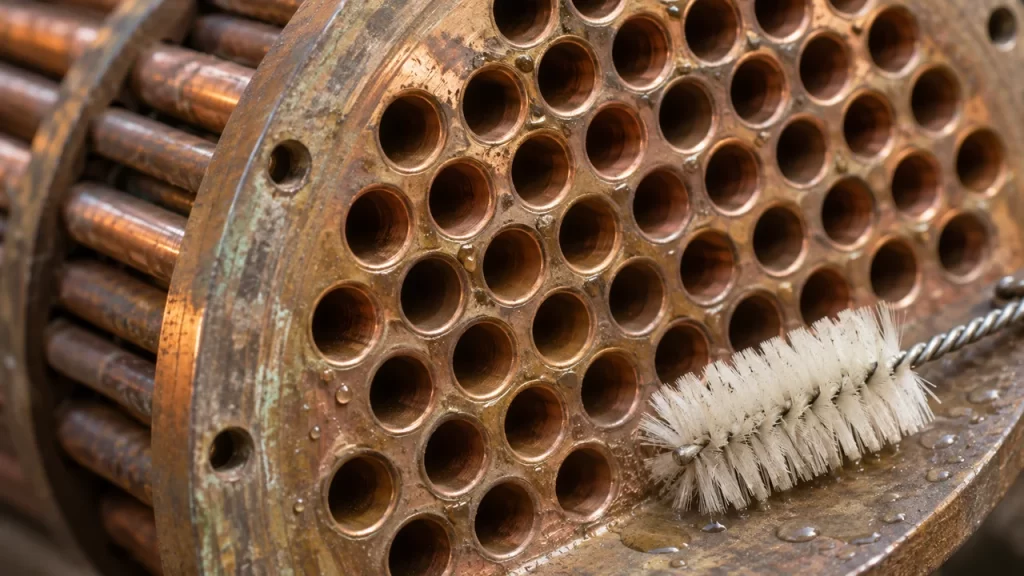
The proposed method should suit the actual deposits and materials. Mechanical cleaning and a chemical process are different scopes, each with component-specific considerations. A general cleaning recipe does not account for every tube material, seal or condition. Ask which manufacturer information supports the work rather than selecting a method from an unrelated unit.
If the complaint involves leakage as well as deposits, describe both before the job is arranged. Cleaning may reveal a concern, but it is not the same as repairing an identified defect.
What should be discussed about reassembly and checks?
The right cleaning discussion includes what happens afterward. Reassembly details and appropriate checks belong beside the plan for removing deposits.
A service plan should account for the unit’s reassembly instructions and required parts. Removed seals, covers and associated hardware should be addressed according to the identified component, not generic assumptions. Ask which replacement parts or specifications are needed before the work is treated as a complete component-service job.
Also ask which checks apply to the actual complaint and construction. An external leak, suspected internal mixing and a fouling concern can require different assessments. The qualified technician should determine the appropriate procedure and limits. This guide intentionally does not supply universal test pressures or a substitute workshop procedure.
A returned component and its service notes should tell the same story. That is useful when one company handles exchanger work and another person manages reinstallation or the wider system.
How can a shell-and-tube service inquiry be prepared?
A useful inquiry tells the shop more than the exchanger’s size. Application, identification and condition help define the next step.
Give the shop the available unit information, a clear symptom description and photographs that show context. Explain whether the exchanger remains installed and who is coordinating the equipment work. Ask what further information is needed before quoting or accepting the component.
Confirm removal, draining, lifting and transport responsibilities before moving the unit. The heat exchanger cleaning and repair guide explains the broader process, while fouling and leakage questions helps organize multiple symptoms. A clear inquiry leaves room for inspection to determine the appropriate scope.
What questions do equipment owners ask about shell-and-tube exchanger cleaning?
Tube bundles, seals and deposits bring understandable questions. These answers help you discuss shell-and-tube service without assuming a universal procedure.
Can every tube bundle be removed the same way?
No. Construction and service access vary between designs. Use the actual component instructions and qualified personnel to determine the procedure. The general shell-and-tube description does not establish which covers, seals or bundle arrangement a particular unit has.
Is one cleaning chemical suitable for all exchangers?
No universal cleaner should be assumed. Materials, seals, deposits and component condition can change the compatibility discussion. Ask which approach fits the identified unit and manufacturer guidance instead of borrowing a chemical recommendation from a different application.
Does this guide provide a pressure-test specification?
No. Appropriate checks and their limits must come from the identified component, application and qualified service procedure. A general article should not provide a universal pressure value that could be mistaken for the specification of a particular exchanger.
What should I keep with a removed exchanger?
Preserve the equipment and component identity, original complaint and relevant parts or orientation information from qualified disassembly. Confirm handling requirements with the shop. A clear job record helps connect the component’s service work with the correct equipment and reinstallation plan.
How can Pankey’s help with shell-and-tube service inquiries?
Have a shell-and-tube exchanger inquiry in the Bay Area? Share the component identification and application with Pankey’s before arranging service.
Pankey’s Radiator Repair Shop in Hayward lists heat exchanger component services. Share the component identification and application, then ask which inspection, cleaning or repair work can be considered for your unit.
Tell Mario or Paul what changed, which circuit is involved and whether the component remains installed. Include your Bay Area location and available photographs. Confirm accepted work and handling before removal or transport, and keep the component inquiry connected to the technician responsible for the wider system. The industrial heat exchanger service guide provides broader context.
Pankey’s Radiator Repair Shop · 21805 Foothill Blvd, Hayward, CA 94541 · Bay Area industrial equipment service inquiries.
