 21805 FOOTHILL BLVD, HAYWARD, CA 94541
 1-510-581-6804
Forklift Radiator Overheating: Cleaning, Leaks and Repair Questions
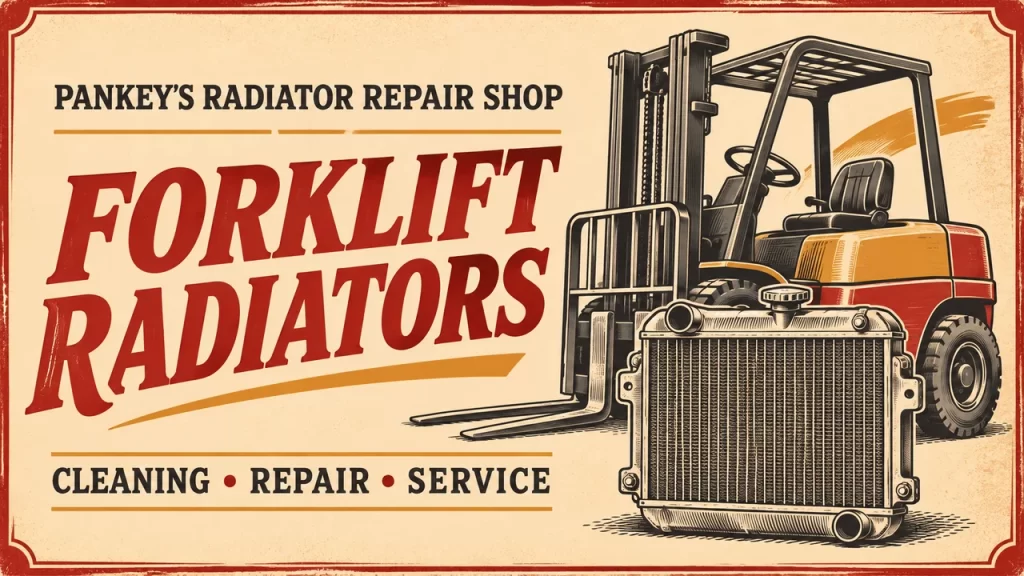
A forklift that starts running hot can disrupt a loading schedule quickly. Before arranging radiator cleaning or repair, it helps to identify the equipment, describe the warning and separate what you observed from what you suspect. This guide covers applicable radiators on engine-powered industrial forklifts, including questions about contamination, leakage and service preparation. It gives Bay Area owners a way to discuss component service with Pankey’s in Hayward. Follow the forklift’s operating and maintenance instructions whenever a warning occurs.
For a wider look at cooling components, cleaning and service planning, start with our industrial radiator repair and cleaning guide.
Why is an industrial forklift overheating during a shift?
A forklift running hot can interrupt a busy shift. The useful question is what changed before the temperature warning appeared.
For an engine-powered industrial forklift, overheating may involve the cooling system, its working environment or operating conditions. Toyota’s discussion of forklift overheating considers maintenance, environment and operation, which is a useful reminder to describe more than the radiator’s appearance. A warning needs the response required by the truck’s operator instructions, not a guess about which part to replace.
Start by identifying the forklift and its power type. This article concerns engine-cooling radiators on applicable industrial forklifts. It is not advice about battery overheating or a claim that every electric forklift uses the same cooling arrangement. Accurate identification keeps the service request tied to the actual equipment.
Report when the concern occurs: repeated travel, a particular work area, sustained operation or another recognizable situation. Note visible coolant loss and recent service. A written description helps the person evaluating the forklift distinguish a cooling-component concern from a broader operating or mechanical issue.
Can radiator contamination and airflow restriction contribute?
Dust doesn’t respect warehouse schedules or yard boundaries. Describe the working environment before assuming a dirty radiator explains the problem.
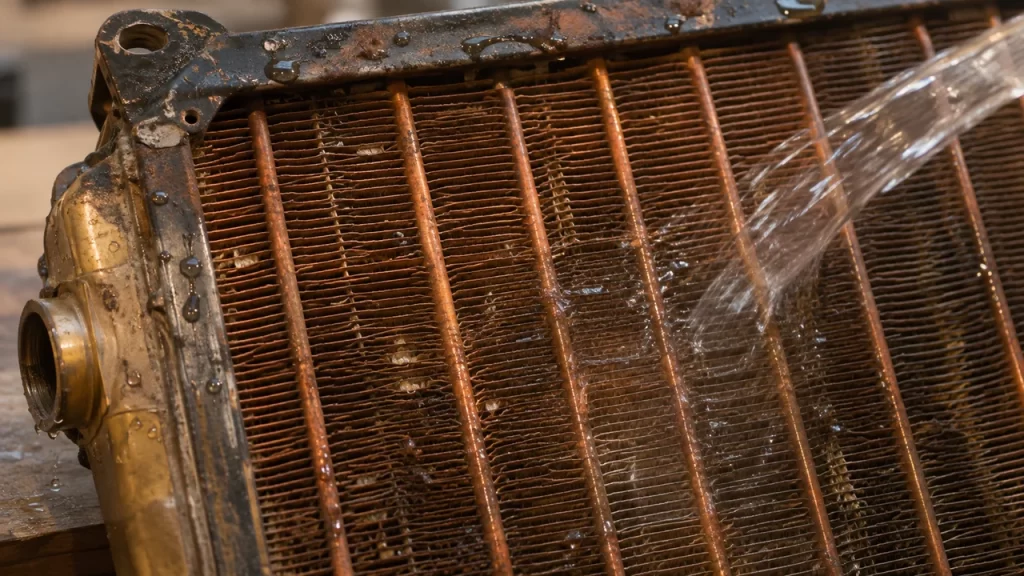
A forklift working around building materials, packaging or a busy outdoor yard may encounter different contamination from one used in a cleaner setting. Material around a cooling surface is worth reporting, but an overheating diagnosis should not stop at “the yard is dusty.” The component, airflow path and operating conditions still need appropriate evaluation.
Ask how the radiator can be inspected within the manufacturer’s procedure. Guards, access covers and nearby components are there for a reason. Do not improvise access or reach toward a running fan to inspect a dirty area. Follow the equipment’s shutdown, cooling and isolation instructions before trained maintenance personnel work on it.
Discuss exterior cleaning separately from coolant service. Washing an outer surface and servicing the coolant circuit address different areas. If routine maintenance has already been performed, record exactly what was done. “Radiator cleaned” is difficult to evaluate when no one knows whether it means a quick exterior rinse or attention to the full accessible cooling area.
Toyota also discusses cooling and ventilation in high-heat applications. That context supports asking where the forklift works; it does not establish that Pankey’s changes forklift ventilation or services every cooling-system component.
Which leaks and damage should be discussed with a radiator shop?
A wet spot tells you where fluid appeared, not necessarily where it started. Clear observations help the next inspection begin.
Describe leakage carefully. Record where fluid is seen, whether the level has changed through approved checks and whether there are deposits or obvious damaged areas. A connection, hose or nearby component can complicate the picture. An inspection should determine the source before radiator repair is treated as the answer.
| Observation | Information to share |
|---|---|
| Fluid beneath the forklift | When it appeared and any safely observed location details. |
| Damage near the radiator | Photographs showing both the area and its surrounding context. |
| Recurring temperature warning | Task, location and operating duration before the warning. |
| Recent cooling-system work | What was changed or cleaned and whether the symptom changed. |
A repair decision depends on the unit’s construction and condition. Ask whether the proposed work addresses an identified defect and whether other mechanical investigation is needed. Cleaning, component repair and complete forklift service are different scopes. The right handoff between a radiator shop and the forklift maintenance team matters.
Pankey’s industrial forklift radiator page describes the relevant component-service inquiry.
What details help when arranging forklift radiator cleaning or repair?
A useful service request starts with the forklift itself. Gather its identification, symptoms and location before planning the next step.
Provide the make, model and available serial or radiator identification. Include the power type and a clear description of the complaint. Pictures should show the component and connections, not just an isolated close-up. If the installed radiator differs from the original equipment record, explain what is known about the change.
For a fleet, include the internal forklift number and the operator’s account of the problem. Equipment identification and component labels should stay with the job. That helps prevent a radiator or a symptom description from being assigned to the wrong truck when several forklifts are maintained together.
Discuss the required scope with the appropriate maintenance provider. Do not assume that radiator cleaning includes complete forklift inspection, transport, lifting or removal. Confirm those arrangements separately.
What do owners ask about industrial forklift radiator service?
You can ask useful cooling questions without diagnosing the truck yourself. Start with these details before deciding how service proceeds.
Does this advice apply to every electric forklift?
No. This article focuses on applicable engine-cooling radiators on industrial forklifts. Electric equipment may have different cooling systems and maintenance needs. Identify the machine and follow its own documentation rather than applying engine-radiator advice to a battery or another unrelated thermal concern.
Can overheating be caused by something other than a dirty radiator?
Yes. Maintenance, working conditions and operation can all be relevant to an investigation. A dirty radiator may need attention, but it should not become the only assumption. Record when the warning occurs and let an appropriately qualified person determine what needs evaluation.
Should I request cleaning or a repair first?
Begin by describing the symptoms and what is visible. Cleaning may address contamination, while a repair concerns an identified defect. Inspection determines which work is appropriate. Asking for a particular procedure before the condition is understood can leave part of the original complaint unaddressed.
Can I assume the shop will accept the complete forklift?
Confirm first. Explain whether you have a loose radiator or an installed component and ask about accepted work. Transport, removal and whole-truck maintenance are separate arrangements. A short call before moving equipment helps clarify the next step and the information required.
How can Pankey’s help with industrial forklift radiator problems?
For a Bay Area forklift radiator inquiry, tell Pankey’s what truck you use and which symptoms prompted the service question.
Pankey’s Radiator Repair Shop lists industrial forklift radiator services from its Hayward location. Start with the forklift radiator repair and cleaning page and describe the component and operating complaint. The catalog includes Caterpillar forklift radiator inquiries; ask about your particular machine and proposed work.
Tell Mario or Paul where the equipment is located, whether the component is installed and what recent service has been performed. Ask which cleaning or repair options can be discussed and whether further inspection is needed. The goal is to establish the relevant component-service next step without promising a diagnosis from a description alone.
Call 510-581-6804 Request Service
Pankey’s Radiator Repair Shop · 21805 Foothill Blvd, Hayward, CA 94541 · Serving Bay Area equipment owners. Call to discuss your component, location and service needs.
