 21805 FOOTHILL BLVD, HAYWARD, CA 94541
 1-510-581-6804
Tractor Overheating Under Load: What to Record Before Service
What should you record when a tractor overheats under load?
Record the task, warning and observed conditions so technicians can compare the operating complaint with the requirements of the tractor.
Record whether the tractor was pulling an implement, operating a stationary attachment, climbing, transporting a load or doing another task. Include the engine setting and gear or speed only if they were actually noted. Preserve any fault or warning wording. A general statement such as “hot after lunch” leaves several conditions open.
Note the elapsed run time and whether the warning appeared gradually or suddenly. If the operator saw a reading, record the instrument and units. If the report was based on a smell or visible fluid, describe that observation separately. Avoid converting an impression into a measured temperature.
Use the equipment instructions and the responsible technician’s direction for an active warning. The inquiry can begin from the existing record. Another field run solely to recreate the complaint can add risk and may erase the original sequence of events.
Which radiator observations add useful context to a load complaint?
External debris, residue and cooling package work can help direct inspection when each finding remains distinct in the maintenance record.
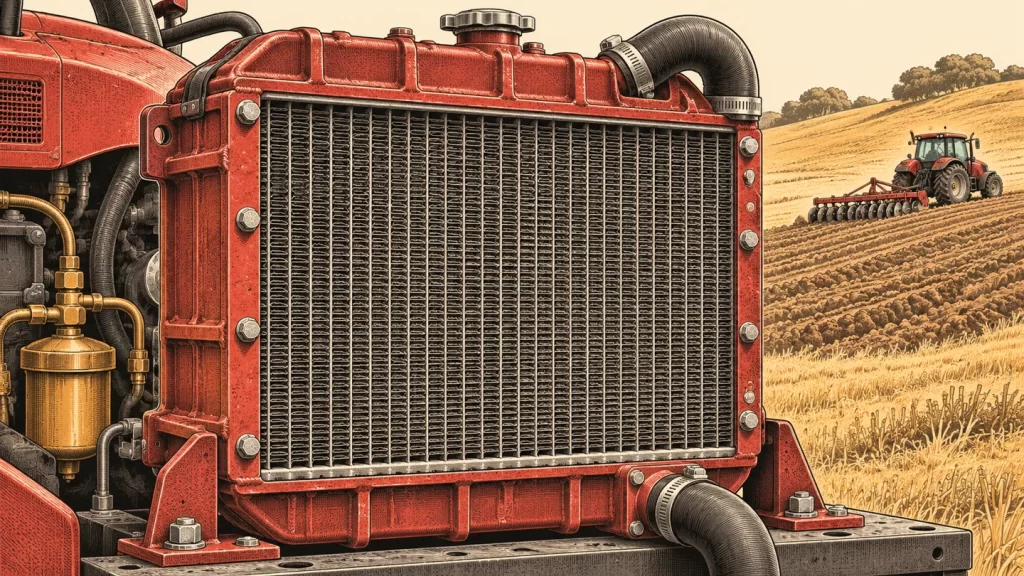
From a safe accessible position, an overall photo can show screens and adjacent coolers. Note which faces remain hidden. If a patch is packed with chaff, document its location and the crop task. If the area is wet, preserve the trace and the neighboring connections before cleanup.
| Operating record | Related question to raise |
|---|---|
| Warning during baling with screen packed in chaff | What was inspected behind the screen and which core surfaces are affected? |
| Temperature concern soon after cooling-system work | What parts were disturbed and what did the technician verify afterward? |
| Warning on a sustained pull, external face looks clear | Which airflow, coolant or other system checks remain open? |
| Visible coolant trace noticed after shutdown | Where was moisture first seen and has the source been located? |
A clear exterior does not establish the coolant side’s condition. A dirty screen also does not prove it explains every warning. Keep the inspection facts and the operating complaint together so the technician can decide which checks apply to the identified tractor.
How can recent work change the next inspection?
A timeline of parts and observed conditions helps the technician distinguish the first complaint from work performed during earlier repairs.
Include recent radiator removal, hose replacement, coolant work, fan or belt work and access-panel changes if known. Record the date or approximate sequence. If the same warning occurred before and after a repair, say so. If its timing or severity changed, preserve that difference without assuming the cause.
The machine model and serial number matter because instructions and installed parts can vary. John Deere’s maintenance information, for example, separates screen, radiator, hose and other cooling maintenance items for particular tractors. Use the actual equipment’s manual and any technician’s report when reviewing the work sequence.
A useful handoff reads like a short history: “Screen cleaned Monday. Warning returned after sustained pulling Tuesday. No located leak finding yet.” That keeps completed work separate from verified outcomes and gives the next technician a concrete unresolved question.
When does the radiator become a component service candidate?
The component scope becomes clearer when inspection identifies buildup, a localized leak or damage that a radiator shop can assess.
Ask the equipment technician what evidence supports removal or shop work. The scope might be external cleaning, a tank concern or a core condition requiring closer assessment. If the wider diagnosis remains open, include that fact. A removed radiator should arrive with the identity and findings that led to the decision.
Before arranging transport, collect the radiator number and installed photos of ports and mounts. Let the technician coordinate draining, protection and handling under the equipment instructions. Confirm accepted work with the receiving shop, particularly for a large or modified assembly.
After component work, keep the service record in the tractor’s maintenance file. The equipment technician should decide how to verify the installed system under appropriate conditions. The original field-task report remains valuable for comparing that assessment with the complaint.
Consider a tractor that completes light transport normally but produces a warning during a sustained implement task. Record that difference, the implement, elapsed time and the actual warning. Add any earlier screen cleaning or coolant work with its scope. These details give the equipment technician a condition to compare with the machine’s requirements. They also keep the radiator inquiry focused: a component shop should receive whatever buildup, leak or damage was actually found during the investigation. The operator’s report remains the starting evidence even when the final work concerns another part of the system.
When reviewing a warning report, keep the value that was actually observed attached to its instrument. A dash warning, a temperature read by a technician and the operator’s impression of reduced power are different records. The distinction matters when several cooling components share a package or the tractor has recently changed tasks. The equipment technician can decide which additional measurements would help; the owner’s record should retain the original observation.
What do owners ask about tractor overheating under load?
These answers turn an operator’s report into useful service information while keeping the radiator inquiry connected to the tractor system.
Does overheating under load mean the radiator needs replacement?
It gives the technician an operating condition to investigate. The component decision should follow inspection and the applicable diagnostic process.
Should I include the implement being used?
Yes. The task and operating conditions can make the report more specific and easier to compare.
What if the tractor runs normally at idle?
Record that distinction. Idle and field load are different conditions for the technician to evaluate.
What if cleaning did not resolve the warning?
Provide the cleaning scope and later operating record so the technician can review which questions remain open.
How can Pankey’s help with a tractor radiator service inquiry?
When the technician identifies a radiator concern, share that finding with Pankey’s shop to discuss component work for your tractor.
Pankey’s handles inquiries about tractor radiator services. Tell the shop the tractor and radiator identity, the condition found and whether the unit is installed. Add safe photos, the operating complaint and any technician’s report. Ask which cleaning or assessment work can be considered and confirm arrangements before transport. Keep the wider overheating diagnosis with the equipment technician.
