 21805 FOOTHILL BLVD, HAYWARD, CA 94541
 1-510-581-6804
Tractor Radiator Repair or Recore: What Makes the Difference?
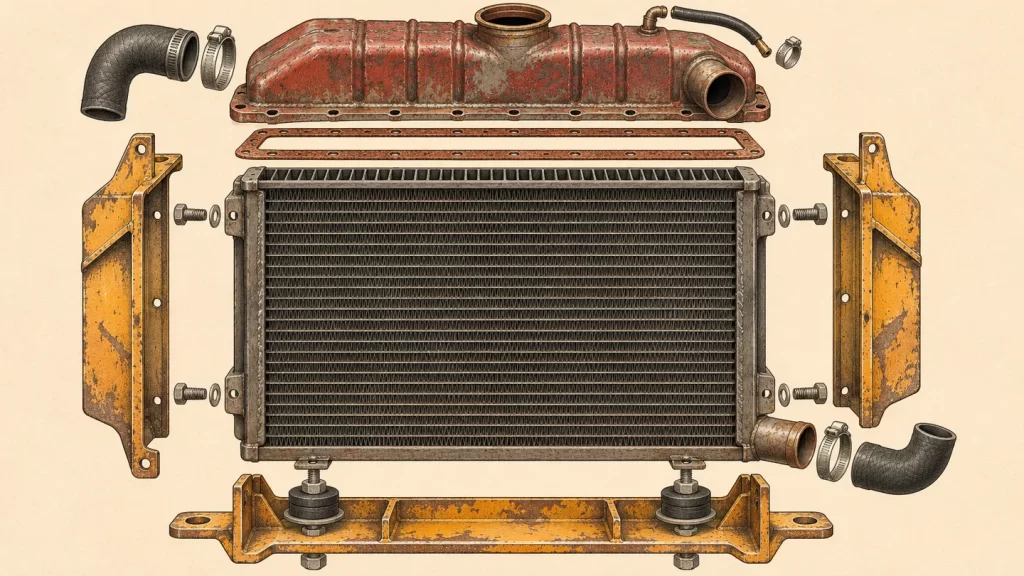
How do repair, recore and replacement differ?
A repair addresses a defect, while recore and replacement change more of the assembly according to construction and component condition.
A localized repair may concern a particular tank, connection or joint. A recore generally replaces the heat-transfer core while retaining suitable associated parts where the construction permits. A replacement substitutes an assembly that must meet the tractor’s application and fitment requirements. Ask the shop which parts its proposal includes and which remain from the original.
These terms are incomplete without the identified radiator and inspection findings. A different core arrangement may affect tank compatibility, mounting and clearances. Some designs present different reuse options from others. The component shop needs to assess the construction and condition before making a recommendation.
Keep the original part number and the tractor model and serial number. If the radiator was changed previously, provide that history. A component that fits the opening can still have a different port arrangement or nearby clearance requirement, so appearance alone should not settle the choice.
Which findings help compare the available options?
The defect and assembly condition help determine whether a localized job or broader component work can be considered for service.
Ask where damage was found and whether it is isolated. A wet hose neck, a damaged tank seam, widespread core deterioration and a bent mount are distinct findings. A proposal should explain the relationship between the reported defect and the parts it addresses. If another cooling-system concern remains open, keep it listed separately.
| Finding or constraint | Question for the shop |
|---|---|
| Localized defect with sound surrounding material reported | Which repair option can be assessed and what limits apply? |
| Core deterioration with potentially reusable tanks | Are the tanks and connections suitable for a compatible recore? |
| Extensive damage across core and tanks | Which assembly option addresses all affected parts? |
| Uncertain ports or mounting arrangement | What identification and installed measurements are needed before selecting a unit? |
If a pressure or other check is part of the assessment, ask which procedure and boundary it covers. A documented result gives the equipment technician a clearer handoff. It should be associated with the identified component and the work performed.
Why do ports, mounts and clearances matter to a recore?
The core and retained parts must fit the tractor’s arrangement, so dimensions and connection positions need reference points everyone understands.
Have the equipment technician document the radiator in place before removal. Include hose routes, fan and shroud relationship, mounting supports and neighboring coolers. Record which brackets or fittings accompany the unit. A drawing or measurement should state its reference points, especially where a total height differs from a core-only dimension.
The shop should specify which measurements it needs for the actual construction. A photo can orient the assembly, while an identified dimension answers a different question. Use both with the original component number where available. If the tractor has been modified, include that fact before comparing another assembly.
A replacement or recored assembly still needs proper handling and installation. Let the equipment technician manage these steps using the machine instructions. Keep any fitment questions open until the receiving and installing teams have agreed on the relevant details.
How should you compare service proposals beyond the price?
Compare included parts, findings and responsibilities so each proposal can be reviewed against the same radiator condition and equipment job.
Ask whether a proposal covers the core, tanks, fittings, mounting parts or a combination. Clarify what the shop has already inspected and what could change after closer assessment. If reuse is proposed, ask which retained parts were considered suitable. If replacement is proposed, ask how its identity and configuration are matched.
Keep the wider tractor job separate in the record. Component service may be one part of removal, coolant work, installation and operating verification managed by the equipment technician. A price for one component scope cannot be compared fairly with a proposal that includes additional tasks unless those differences are visible.
Retain the written scope and any checks when the unit returns. Add them to the tractor’s maintenance history with the original complaint and part identity. That record will help the next service decision if the radiator is inspected again.
Consider two proposals for the same radiator, one describing a localized tank job and another describing a new core with retained tanks. Ask which inspected findings support each scope and which retained parts were assessed. Compare port positions and mounting details using the same reference points. Keep removal and installation responsibilities visible too. This makes the proposals reviewable as different amounts of work on one identified assembly. A low component price by itself cannot show whether both proposals address the same defect or include the same fitment and verification tasks.
Ask how the proposed component will be identified in the final record. A recored unit may retain an original tag that describes its previous assembly, while a replacement may carry a different part identity. Keep the shop’s work description with the tractor record so a later technician can understand what was retained or changed. This supports the next fitment discussion without assuming that an old number describes every part currently installed.
What do owners ask about tractor radiator repair and recore?
These answers explain the component options while leaving construction, condition and application decisions with the technicians assessing the tractor radiator.
Can every tractor radiator be recored?
Construction and the condition of reusable parts affect feasibility. Ask the shop to assess the actual component.
Does a recore keep the original tanks?
It may retain suitable parts depending on the design and scope. Ask which items the proposal includes or reuses.
Is a similar-looking replacement enough?
Confirm identity, connections, mounts and clearances against the tractor’s requirements.
What should the final work record explain?
It should identify the component, included work and any documented checks, along with remaining installation or system questions.
How can Pankey’s help compare tractor radiator component options?
Share the radiator identity and inspection findings with Pankey’s shop so it can discuss which component options may be considered.
Pankey’s lists tractor radiator services. Tell the shop what condition was found, whether the radiator is installed or removed and what part information is available. Ask about assessment of cleaning, repair or a broader component scope for that unit. Confirm arrangements before transport and keep the tractor technician involved in fitment, installation and operating checks.
