 21805 FOOTHILL BLVD, HAYWARD, CA 94541
 1-510-581-6804
Tractor Radiator Cleaning and Repair: A Guide for Working Equipment
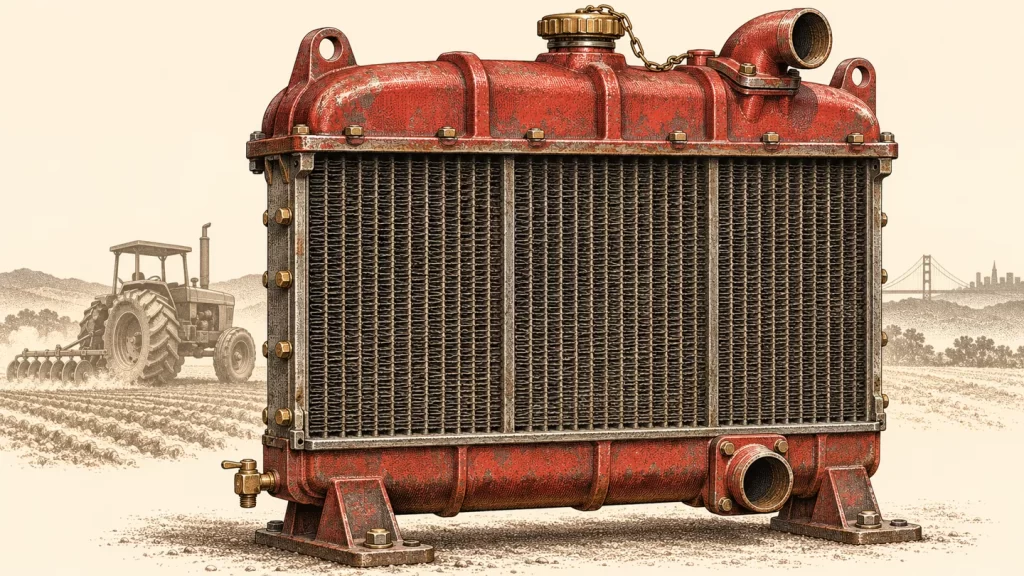
Which part of the tractor cooling package needs attention?
Begin with machine identity and the arrangement so the radiator, screens and neighboring coolers remain distinct in the service record.
A tractor may have more than one exchanger in the front cooling package. The engine radiator handles coolant, while an oil cooler or another component serves a different circuit. They may share an outside airflow route and have similar finned faces. A photo of one exposed surface can leave the rest of the assembly out of view.
Use the tractor model and serial number to find the correct documentation. The radiator’s own label or part number can add useful information, especially if the unit has been changed. If the number is unreadable, record that fact and collect an installed overview. Describe which connections and mounts are visible instead of guessing a part match from an online photo.
John Deere’s maintenance material for particular tractors distinguishes grille and screen work from radiator and oil cooler fin maintenance. That distinction is useful when defining a service scope, while the intervals and methods need to come from the manual for the actual tractor. A requirement for one model should not become a universal schedule for a fleet.
Ask the equipment technician what has been established. A report may identify external buildup, a located coolant leak, damaged fins or a wider overheating complaint still under investigation. Keep those as separate entries. That makes it easier for a component shop to understand what work is being requested and which questions remain with the tractor technician.
How do screens, chaff and stacked coolers affect cleaning?
The airflow route includes multiple surfaces and gaps, so a clean screen does not establish the condition of every core.
Crop residue can collect on a grille or removable screen, against fin rows or between neighboring coolers. The visible surface may be the easiest one to clean and the only one an operator can safely inspect. Record which layers were examined and which remained hidden. A wide image gives a close-up its position in the assembly.
The material itself also matters. Loose straw, fine dust and an oily mat can raise different cleaning and source questions. If the same corner repeatedly packs up, keep matching photos and the field-task history. A technician can compare the pattern with the installed screen, panels and access arrangement.
| Surface or finding | Useful cleaning question |
|---|---|
| Chaff on a removable screen | What does the model’s manual allow and is the core behind it visible? |
| Debris between neighboring exchangers | Which layers are affected and what access is needed? |
| Oily dirt on one core section | Was a source located and what cleaning compatibility applies? |
| Folded fins or an impact mark | What damage needs assessment before cleaning proceeds? |
The service team should select a method compatible with the identified core and nearby parts. Access may involve components that an operator should not move for an inquiry. Preserve the condition from safely accessible areas and let the technician manage guarded access, isolation and the equipment procedure.
If a temperature complaint led to cleaning, keep the original warning and task in the work record. The completed cleaning scope should state the surfaces included. The equipment technician can then decide how to evaluate the tractor afterward in relation to that original concern.
What does a coolant trace near a tank or hose mean?
Fluid can travel before collecting, so the observed wet point may be more informative than the stain on the radiator.
A hose joint above the core can wet a tank seam. A nearby fitting can leave a trail along a support. The area where coolant drips may be the collection point rather than the source. Record where moisture was initially seen and whether a technician has traced the leak. Keep suspected and confirmed locations distinct.
Take an overall view showing the nearby hose and connections, followed by a detail tied to a port or corner. If the radiator has been removed, preserve photos from before removal where available. A receiving shop can use those images to orient the reported area and understand the surrounding arrangement.
Construction affects the component discussion. A radiator with a metal tank and soldered joint presents different questions from a design using other tank materials and attachments. The actual part, damage and surrounding condition should guide which options a shop can consider. Color or apparent age alone is not a complete construction record.
If a technician performs a check, retain what was included, which procedure applied and where a defect was found. Owners should collect the report and its units or findings rather than borrow a test value from another radiator. Any wider cooling-system concern should remain in the tractor technician’s plan.
Ask about nearby mounts if the affected corner also shows contact or displacement. The record can preserve those observations without assigning an unverified cause. A repaired wet spot and an unresolved support concern would be different entries in the later service history.
How should overheating under field load be documented?
Record the task, warning and operating sequence so the equipment technician can connect the complaint with the inspection and diagnosis.
Identify what the tractor was doing: pulling an implement, baling, mowing, traveling on a grade or another task. Include the load and settings only when known. A recorded instrument value should include the instrument and units. A warning, smell or visible fluid should be described as observed rather than converted into a measured temperature.
Time matters. Record whether the warning appeared soon after starting, gradually during a shift or after a sustained task. If the tractor behaved differently at idle, preserve that difference. Those conditions can help the technician compare observations using the actual equipment instructions.
Include recent work in order. Radiator access, hose replacement, coolant work and fan or belt service can be relevant to the next inspection. Keep the earlier work description with any follow-up result. “Screen cleaned Monday; warning returned during baling Tuesday” is a clearer unresolved question than “cleaning failed” when the deeper core faces were never assessed.
For an active warning, follow the equipment maker’s instructions and the responsible technician’s direction. An owner can begin a service discussion using the existing records. Another field run solely to reproduce the warning is unnecessary for preparing the inquiry.
A component shop needs the identified radiator finding that comes from this process. If the technician has located a leak or documented buildup, share that evidence. If the wider diagnosis is still open, say so. The radiator’s work scope can then be discussed without losing the complete operating complaint.
When should repair, recore and replacement be compared?
Compare options after identifying the defect, radiator construction and which surrounding parts remain suitable for the tractor’s application and arrangement.
A localized repair concerns an identified area. A recore generally replaces the heat-transfer core while retaining suitable associated parts when the design permits. Replacement substitutes an assembly that must fit the equipment requirements. Ask which parts are included and which remain from the original in each proposal.
A tank seam concern with otherwise sound surrounding material can lead to a different discussion from extensive core deterioration. A bent support or a damaged connection can add fitment or mounting questions. The shop should assess the actual component before stating feasibility. Material alone does not establish that a given repair is suitable.
For a recore, retained tanks, ports and mounting features need to work with the proposed core. For replacement, confirm the identified application, hose-neck positions, overall dimensions and clearances. Have the shop specify which measurements it needs and the reference points it uses. A core-only height and a complete assembly height are different dimensions.
| Option | Question that helps compare the scope |
|---|---|
| Localized repair | Which defect was located and what surrounding condition was assessed? |
| Recore | Which tanks or fittings may be reused and how will configuration be matched? |
| Replacement | How is the proposed assembly identified for this tractor and its installed arrangement? |
| Further assessment | What is still unknown and what access or inspection would resolve it? |
Keep removal, installation and wider system work visible alongside the component proposal. A quoted component scope may cover different tasks from a complete equipment-service job. Retain the written work description and any documented checks so the installing technician has a clear handoff.
What information helps arrange tractor radiator component service?
Gather machine identity, component findings and arrangement before removal so the receiving shop can ask focused questions about the radiator.
Start with the tractor model, serial number and radiator number where available. Tell the shop whether the unit is installed, removed or only suspected. If it was replaced or modified previously, provide the available record. The original part identity and the actual installed assembly both matter.
Add a safely obtained overview showing mounts, ports, hose routes and neighboring components. Include details of the affected area and any technician’s report. If a dimension is requested, record the units and endpoints. Photographs explain orientation, while written dimensions answer a different fitment question.
- Tractor model, serial number and available radiator identification
- Original warning or operator complaint with task and timing
- Located leak, buildup or damage findings from the technician
- Wide installed photos and oriented details of the affected area
- Recent component or cooling-system work and any later result
- Installed or removed status and handling needs to confirm
Let qualified personnel manage removal, draining, protection and transport preparation under the machine instructions. Confirm the receiving shop’s accepted scope before moving a large assembly. Ask which loose brackets or fittings should accompany it and keep them identifiable in the record.
When the radiator returns, retain its work description and checks in the tractor’s maintenance file. The equipment technician should coordinate installation and operating verification. A useful final record connects the completed component work with the original complaint and notes any wider question that remains open.
Consider a tractor assigned to a crop task that generates much more chaff than its previous work. The operator cleans the accessible screen, yet the same warning appears during a longer pull. The useful record includes the changed task, screen work and which core surfaces remain hidden. The equipment technician can decide whether access to a gap or another exchanger face is needed. If component service follows, the receiving shop gets the actual buildup finding rather than a general overheating label.
For a second example, coolant is found below a tank after a hose connection was disturbed during maintenance. Preserve the hose-work record and a wide image of the upper connection with the seam below it. If a technician later localizes the concern to the seam, add that finding as a separate entry. A shop discussing repair then has both the original observation and the evidence that narrowed it, while the machine’s service history retains the sequence.
A radiator comparison can also include what must return with the unit. Ask which tank, bracket or fitting is included in the component scope and which items remain with the tractor. A written fitment record should use the shop’s requested reference points. Keep uncertain dimensions labeled, especially if the assembly is still installed and a clear measurement cannot be obtained safely. This helps the receiving and installing teams resolve the missing detail before choosing a different assembly.
Owners can make the next service visit easier by retaining the record after the tractor returns to work. Keep the part identity, work description and operating assessment together. If a later concern appears, compare its task, timing and location with the earlier event. The purpose is to make the evidence usable across technicians and seasons, particularly when several similar tractors share a farm or work site.
What do owners ask about tractor radiator cleaning and repair?
These answers connect common cleaning, leak and fitment questions with evidence that helps an equipment technician plan the service step.
Does a temperature warning prove the radiator is bad?
It identifies a complaint to investigate. The equipment technician should assess the relevant system and operating conditions before selecting a component scope.
Can a clean screen hide debris behind it?
Yes. The screen, core faces and gaps between adjacent coolers are separate areas to inspect under the equipment procedure.
Does dried coolant on a seam locate the leak?
It shows an area to investigate. Fluid can travel from a hose or fitting before collecting on the seam.
Can every radiator be recored?
Construction, damage and the condition of reusable parts affect feasibility. Ask the shop to assess the actual unit.
Is overall size enough to select a replacement?
Confirm the equipment application, connections, mounts and clearances as well as dimensions.
Should I use another tractor’s cleaning interval?
Use the manual for the identified model and discuss actual work conditions with the equipment technician.
What helps explain a repeat overheating complaint?
Keep the original warning, task, work performed and later findings in order.
What should I have before calling the shop?
Share machine and component identity, installed status, safe photos and any technician’s findings.
How can Pankey’s help with your tractor radiator?
Bring the radiator identity and technician’s findings to a Hayward service inquiry so the shop can discuss the component work.
Pankey’s Radiator Repair Shop lists tractor radiator services. Tell Mario or Paul whether the concern is external buildup, a located leak, damaged fins or another confirmed component finding. Share the tractor and radiator identity and the photographs or report available.
Ask what cleaning or assessment can be considered for that unit and confirm handling before transport. Keep the tractor technician involved in the complete cooling system, installation and operating decisions. The service inquiry can begin with the information you already have.
