 21805 FOOTHILL BLVD, HAYWARD, CA 94541
 1-510-581-6804
Chaff in Tractor Radiator Fins: Cleaning Around Screens and Coolers
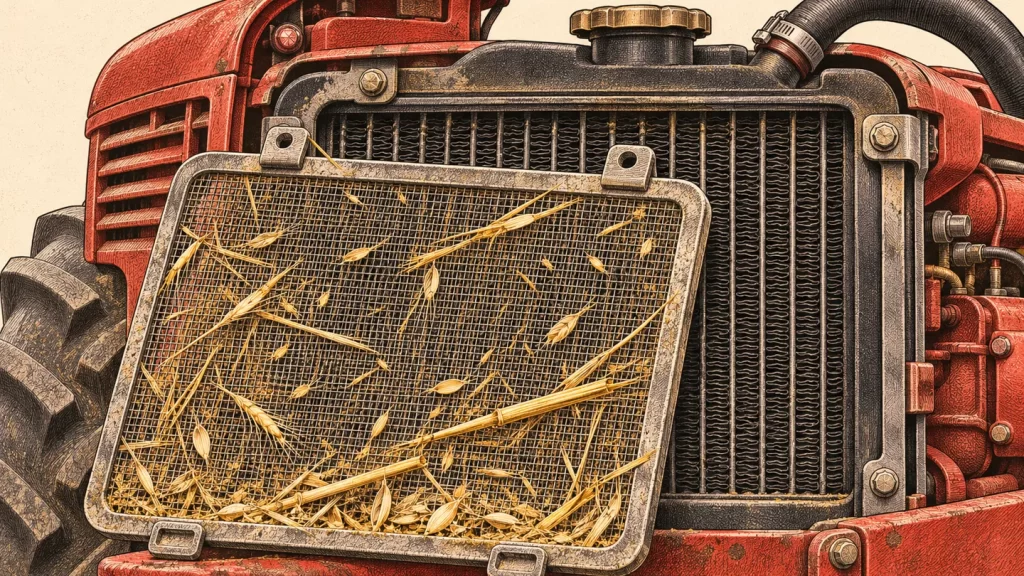
Where can chaff collect in a tractor cooling package?
The grille, screen and exchanger faces form distinct layers that should remain identifiable when you document where chaff has collected.
Crop residue can lodge on the outside screen, against fin rows or in a gap behind another cooler. Identify each layer in an overall photo before focusing on the blocked area. A clean screen after routine maintenance does not establish the condition of the radiator behind it. Note which parts the operator can actually see.
John Deere’s 1025R maintenance guide distinguishes grille and screen care from radiator and oil cooler fin cleaning. Other machines use different screens and cooling package access. Use the model and serial number to find the applicable operator’s manual. Have the technician decide whether a cooler or panel needs to be moved for further inspection.
A useful report distinguishes “screen packed after baling” from “material visible between the radiator and adjacent cooler.” That tells the receiving shop whether you are asking about a routine accessible surface or a more involved component cleaning question.
Why do crop conditions change the inspection conversation?
Record the material and field task so the technician can relate buildup to the machine’s instructions and tractor working conditions.
Record whether the tractor was cutting, baling, mowing or working in another residue-heavy environment. Describe the material as seen: loose straw, fine dust, seed fluff or an oily mat. Different deposits can raise different cleaning questions. If the same corner repeatedly packs up, photograph that area and the surrounding screen or panel.
| Observed condition | Useful detail to record |
|---|---|
| Loose chaff on an accessible screen | Task, run time and whether the radiator behind it was visible |
| Debris between two exchanger layers | Which layers are involved and what inspection access exists |
| An oily dust mat on the core | Location and whether a technician identified an oil source nearby |
| Same area blocks soon after cleaning | Cleaning date, operating task and comparison photographs |
The maintenance record can show whether a change in work conditions coincided with the complaint. Keep that history factual. A more demanding shift may justify asking the technician about inspection frequency, but the record should not invent a universal interval for every tractor or field.
What should be assessed before the core is cleaned?
The technician needs the condition of fins, neighboring components and access points before selecting a cleaning scope for the assembly.
Packed debris and bent fins can occur together. Record any impact mark, flattened area or damaged screen separately. If a pressure stream or tool was used previously, tell the technician when and where. A visible change after cleaning is relevant to the next inspection, even if nobody knows exactly how it happened.
The operator’s manual may distinguish screen care from radiator and oil cooler cleaning. John Deere’s 1025R guide, for example, lists these as identifiable maintenance items. Use the correct version for the actual model. Cleaning compatibility and access should be checked against that equipment, including the seals, wiring and other components nearby.
If an operating temperature warning led to the inspection, preserve its wording and the task at the time. The technician needs to assess the original complaint along with the external debris. A cleaned surface should become part of the record of work, with wider cooling questions kept visible.
How do you record whether cleaning addressed the original concern?
Keep before and after observations with the component and operating history so the technician can compare what the cleaning addressed.
Photograph the same identifiable area before and after the permitted work. Record which surfaces were included and which remained inaccessible. If another cooler was moved for access, keep the technician’s notes about the completed assembly. If a nearby leak was found, give it a separate line in the work order.
The equipment technician should decide how to evaluate the tractor after service. An idle run and the field task that originally brought up a warning are different operating conditions. Owners can preserve the first report and later findings without attempting to reproduce a warning themselves.
If material returns rapidly, compare the new photos with the original location. Ask whether the current screen, seals, panel arrangement and work environment need further review. That question keeps a recurring problem connected to the installed cooling package instead of repeatedly cleaning only the easiest face.
Consider a tractor whose removable screen is cleaned routinely after baling, yet the operator reports a warning during the next long task. An overview may show another cooler in front of part of the radiator. The useful question is whether the service team inspected the gap and both accessible faces, using the machine’s instructions. Record the screen work separately from any deeper cleaning. If a technician later identifies a second affected surface, the work scope can address it specifically while the operating complaint remains available for comparison.
What do owners ask about chaff in tractor radiators?
These answers help owners distinguish screen maintenance from deeper core cleaning and preserve evidence about the conditions behind recurring buildup.
Is a clean front screen enough to assess the radiator?
It shows the screen’s condition. Ask whether the core face and gaps between adjacent coolers were also inspected.
Should all tractors be cleaned at the same interval?
Use the applicable manual and discuss the actual crop and shift conditions with the equipment technician.
Can chaff and a leak occur together?
Yes. Keep debris observations separate from any located coolant or oil leak so both questions stay in the service plan.
What if the same patch becomes blocked again?
Record the task, time since cleaning and matching photos. Ask the technician to review the installed airflow path and work conditions.
How can Pankey’s help with a chaff affected tractor radiator?
Show Pankey’s shop which surface is affected and what the technician found before discussing the component cleaning scope for service.
Pankey’s lists tractor radiator services. Share the tractor and radiator identity, photos of the affected layers and any related warning or technician’s finding. Tell the shop whether the radiator is installed or removed. Ask what cleaning or assessment can be considered for the identified unit and confirm handling before transport. Keep the tractor technician involved in access and operating verification.
