 21805 FOOTHILL BLVD, HAYWARD, CA 94541
 1-510-581-6804
Tractor Radiator Leak at a Tank Seam: What Photos Help a Shop?
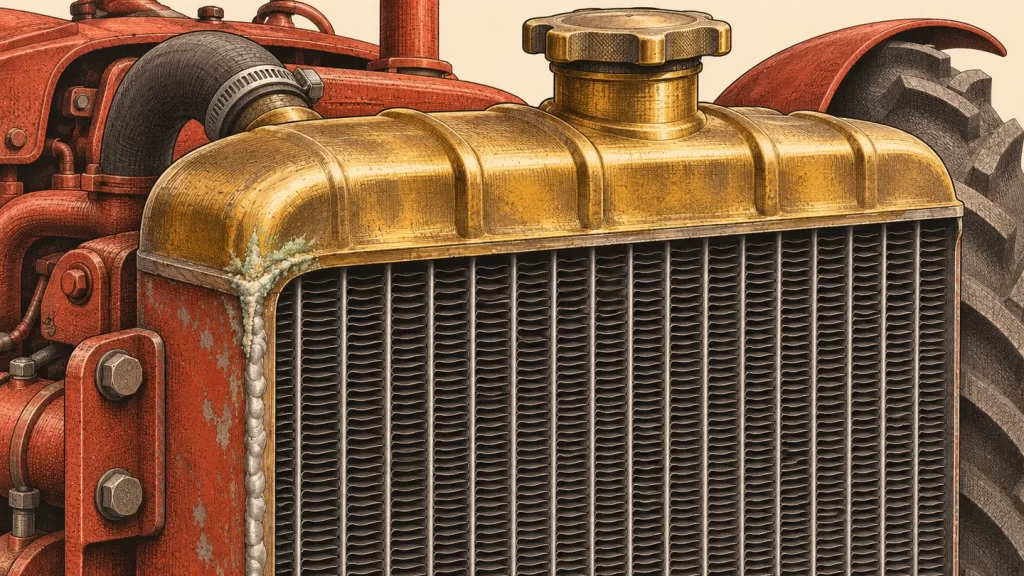
What is the difference between a tank seam and a nearby connection?
The tank, joint and hose neck are distinct areas that technicians may need to inspect when tracing a coolant leak.
A radiator tank distributes coolant into or out of the core passages. Its construction and the way it joins the core vary by radiator design. A hose attached near the top can release coolant that runs down over the seam. A mark on the seam therefore belongs in the evidence record with the surrounding connections.
Identify the machine and component before describing a proposed repair. A brass tank with a soldered joint raises different construction questions from a design using other tank materials and attachment methods. Let the shop establish the actual construction from the part and documentation. Color and age alone are incomplete identifiers.
Take a wide photo from a safe accessible position, then a detail of the suspect area. Include a recognizable corner, port or mount. If another technician has already traced the leak, keep that result separate from the original owner observation.
Which photos help a shop interpret a wet radiator seam?
An overall view and detail show the reported area together with neighboring paths that could carry fluid toward the seam.
Try to preserve the original trace before cleanup. Say whether the photo was taken while the area was dry, after a technician’s inspection or after the component had been removed. If nobody saw the first wet point, record the location as suspected. A clear statement of uncertainty helps a shop choose the next assessment.
| Photo or record | Why it matters |
|---|---|
| Radiator with upper hose and nearby fittings visible | Shows potential paths from a connection to the tank seam |
| Close detail tied to a corner or port | Lets a receiving shop locate the same area after removal |
| Mount and support near the affected corner | Preserves evidence of contact, displacement or surrounding damage |
| Technician’s located leak result | Separates a confirmed component defect from an owner’s visual suspicion |
If the radiator has been repaired previously, include any available invoice and before-service photos. A repeat concern at the same corner may raise questions about the surrounding condition or mounting arrangement. Describe the history without assigning a cause that has not been established.
What can influence a tank or seam repair discussion?
The defect location, construction and surrounding condition help shops determine which component options can be assessed for the tractor radiator.
Ask whether the issue is confined to a connection, extends along a seam or involves adjacent core damage. The condition of nearby metal and joints can affect the scope. If the tank appears distorted or a support contacted it, document that observation with the leak finding. The installed assembly may need attention beyond the wet spot.
A localized repair, a recore using suitable reusable parts and a replacement assembly are different options. The shop needs to inspect the identified radiator before saying which is feasible. Keep the tractor’s ports, mounts and clearance requirements in the discussion if an alternative assembly is proposed.
If a check is performed, ask what was assessed, which procedure applied and what result was documented. A useful record states the inspected boundary and located defect. The responsible equipment technician should coordinate any wider cooling-system diagnosis that remains open.
What should accompany a radiator removed for seam assessment?
Keep the machine identity and leak location photos with the removed component so the receiving team can orient that area.
Record the tractor model and serial number, radiator number if available and whether the unit was changed previously. Ask the technician to photograph the installed mounts, hose routes and clearances before removal. These images can help with a fitment discussion if the component cannot be returned in its original configuration.
Let qualified personnel plan removal, draining and handling using the equipment instructions. Confirm the receiving shop’s arrangements before transport. If fittings or brackets are removed, identify them in the record and ask which should accompany the radiator. A loose part without a label may be difficult to place later.
When the component returns, retain the work description and any inspection or check results. The tractor technician should manage reinstallation and the operating assessment. Keep the first leak photos with that record so a continuing complaint can be compared with the original area.
Consider coolant seen below a top tank after recent upper-hose work. One photo shows the stained seam, but another reveals the hose connection above it. The technician’s record should identify where moisture was first seen and whether the neck, hose and seam were assessed. If removal becomes necessary, retain those installed views. They preserve a relationship that can be lost when the hose and radiator arrive separately. The resulting inquiry can ask about the located component finding, rather than directing the shop to a seam that was only a collection point.
What do owners ask about tractor radiator tank seam leaks?
These questions help owners preserve location evidence and compare component options without assuming every wet radiator corner has that defect.
Does dried coolant on a seam prove the seam leaks?
It identifies an area to investigate. The technician should consider nearby hoses, necks and fittings as possible sources.
Should the radiator be cleaned before photos?
Preserve the original condition first where safely accessible. The technician may later clean the area to locate a source.
Can a tank seam always be repaired?
Construction, damage and surrounding condition matter. Ask the shop what the identified unit supports after assessment.
Why photograph the mounts?
They preserve the installed arrangement and any visible contact or displacement near the reported area.
How can Pankey’s help with a tractor radiator seam concern?
Give the Hayward shop the radiator identity and location photos so the service discussion follows the condition your technician found.
Pankey’s lists tractor radiator services. Tell the shop whether the leak is confirmed or suspected, where it was observed and whether the unit remains installed. Share photos and any technician’s report. Ask which component assessment or repair can be considered and confirm handling before moving the radiator. Keep the tractor technician involved in wider system checks and reinstallation.
