 21805 FOOTHILL BLVD, HAYWARD, CA 94541
 1-510-581-6804
Hydraulic Oil Running Hot? Oil Cooler Cleaning and Inspection Questions
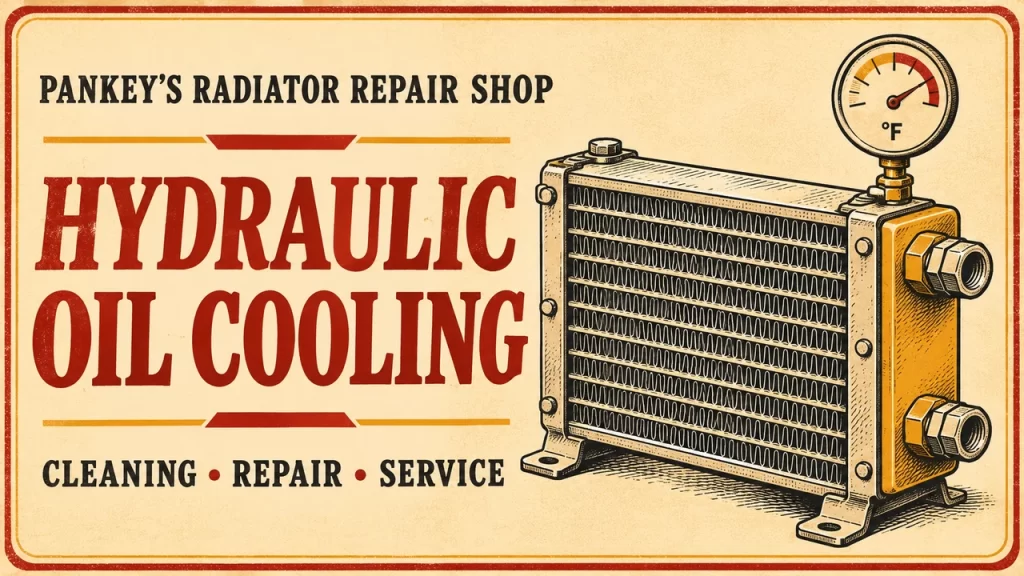
Hot hydraulic oil can slow a job and tempt everyone to blame the cooler first. A clearer approach starts with the actual warning, the task underway and the condition of the cooling arrangement. This guide helps equipment owners discuss hydraulic oil cooler cleaning while leaving diagnosis of pumps, controls and the wider hydraulic circuit to the appropriate technician. The aim is a useful handoff, not a parts guess.
Does hot hydraulic oil mean the cooler has failed?
Hydraulic oil can run hot for different reasons. The first useful step is describing the conditions instead of choosing parts.
A temperature warning identifies a condition that needs attention; it does not identify a failed cooler by itself. The hydraulic system, operating demand and cooling arrangement may all need evaluation. Tell the technician whether the complaint appears during a particular attachment task, after sustained work or following maintenance. Include any other observed change.
Avoid comparing one machine’s normal temperature with a different model’s limits. Use the actual equipment instructions and display information. The operator’s role is to follow the warning procedure and report what happened. Testing or changing hydraulic settings requires the appropriate training and equipment, not a general blog checklist.
| Record | Useful detail |
|---|---|
| Timing | When in the shift or task the warning appears. |
| Workload | The attachment or function being used. |
| Recent work | Fluid service, repairs or changes before the complaint. |
| Other observations | Leakage, unusual behavior or recurring contamination. |
A complete description allows the cooler to be considered within the investigation instead of becoming the default explanation for every hot-oil complaint.
When can airflow restriction be part of hydraulic cooling trouble?
Dusty fins can attract a lot of blame. Let’s look at access, buildup and the airflow path before making assumptions.
On an air-to-oil cooler, exterior contamination can collect on heat-transfer surfaces and around the available airflow path. The visible face may be only part of a stacked cooling package. Describe what can be seen safely and whether material appears between components. An accessible clean patch does not establish the condition of the whole arrangement.
Ask which surfaces require access and which equipment procedure governs cleaning. Fan systems and electrical components add their own isolation and protection requirements. Keep a general cleaning inquiry separate from permission to remove guards or reach near a fan. The correct method should suit the identified cooler and the machine around it.
A service record that says where buildup was found is more useful than a note saying only “washed.” It helps the next person understand which areas were reached and what remains to be assessed.
How should oil cooler cleaning and hydraulic system work be coordinated?
A clean cooler cannot explain every hydraulic complaint. Component service and wider system checks need a clear handoff between technicians.
The person investigating the hydraulic system and the shop assessing the cooler should work from the same complaint. Share relevant findings, contamination history and the reason the component is being removed. That reduces the chance of cleaning the cooler while the cause of the original temperature problem remains unknown.
Internal contamination after a failure deserves a specific conversation. Ask the hydraulic technician what the wider circuit needs and what information should accompany the cooler. Exterior fin cleaning, internal cooler cleaning and servicing the hydraulic system are different scopes. One should not be recorded as if it automatically completes the others.
If repair or replacement is proposed, ask which finding supports the recommendation and what specification must be maintained. The industrial oil cooler guide covers that decision at component level. It does not replace the machine’s hydraulic troubleshooting procedure.
What should you send with a hydraulic oil cooler inquiry?
A few clear notes can save a confusing conversation. Bring the machine’s identity, the actual symptoms and the cooler details.
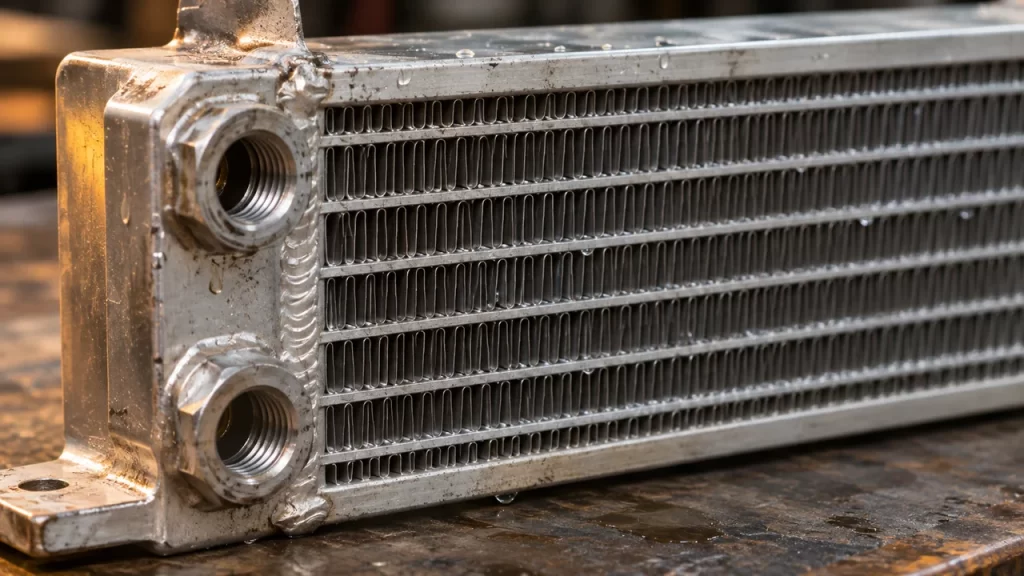
Photographs should show the complete cooler and the connection arrangement as well as the detail that concerns you. Explain whether it is still installed and who is coordinating the wider equipment work. If the component name is uncertain, say so and provide identification rather than choosing a repair from appearance.
Ask what work is accepted and what handling arrangements are needed before moving the unit. The repair quote preparation guide explains how identification and scope affect an estimate. Clear coordination matters more than requesting a fast cleaning before the equipment’s condition is understood.
What questions do equipment owners ask about hydraulic oil cooler cleaning?
Hydraulic cooling questions often mix component work with system diagnosis. Let’s separate those jobs so your next request stays useful.
Is the hydraulic oil cooler the engine radiator?
Usually they serve different fluid circuits, even when they share a cooling compartment. Confirm the machine’s arrangement with the parts information and connection layout. If you are unsure which component is involved, send identification and photographs rather than assuming every finned unit handles engine coolant.
Can a clean exterior rule out a cooling problem?
No. A visible surface is only part of the cooling arrangement. Access, internal condition, airflow and the wider hydraulic system may still require assessment. Report the actual symptom and completed work so the technician can decide what needs checking instead of relying on appearance alone.
Should cooler cleaning follow a hydraulic component failure?
Discuss the failure and contamination findings with the hydraulic technician before deciding the cooler scope. Internal cooler work and cleaning exterior fins are different tasks. Ask what the entire circuit requires and how the component will be assessed before it is considered for reuse.
Does Pankey’s diagnose the entire hydraulic system?
This guide does not establish that service. Pankey’s lists industrial oil cooler work; ask the shop which component services fit your inquiry. Keep wider hydraulic diagnosis, component removal and reinstallation arrangements explicit with the people responsible for the machine.
How can Pankey’s help with hydraulic oil cooler inquiries?
Have a hydraulic oil cooler concern in the Bay Area? Tell Pankey’s about the component and ask which work fits.
Pankey’s Radiator Repair Shop in Hayward lists industrial oil cooler service for industrial equipment. Begin by describing the component and the condition you want assessed, rather than requesting a repair method before anyone has seen it.
Tell Mario or Paul the equipment identity, your Bay Area location and whether the cooler is installed or removed. Share photographs, symptoms and relevant maintenance history. Ask what inspection, cleaning or repair options can be discussed and confirm component-handling arrangements before transport. For broader context, see the industrial oil cooler cleaning and repair guide.
Pankey’s Radiator Repair Shop · 21805 Foothill Blvd, Hayward, CA 94541 · Bay Area industrial equipment service inquiries.
